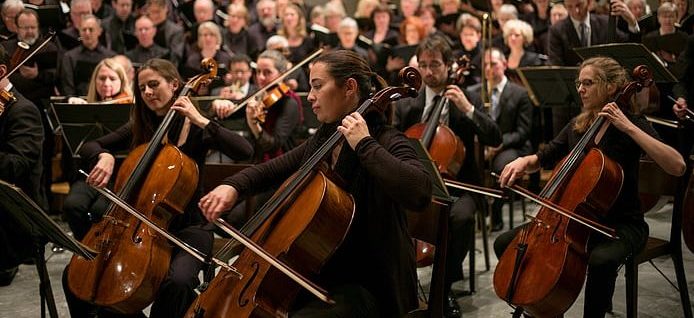
Colonialism, Covid-19 and TikTok: Has the art of classical music been lost?
It’s 2026. We’re all listening to the same three genres: indie/alternative, pop, rock, or an amalgamation of the three. Sure, we all picked up a violin back in primary school, but when was the last time you listened to classical music?
Regardless of whether you think that classical music is facing a drastic decline, the facts suggest that fewer and fewer people are listening nowadays compared to even just twenty years ago. While Warwick students report consistent listening, with 76% of poll respondents listening to the genre on a regular basis, wider society is reporting an entirely different message, and the cause of this seems ambiguous.
We can be certain of classical music origins from as early as the 12th century, from which we still have recorded sheet music. Medieval populations created an array of melodies; those preserved are commonly associated with the Church, an institution amalgamated with the monarchy at the time. Due to the royal adoration of the genre, classical music – when we, in the modern age, reflect on its history – has come to be conflated with aristocracy and domination. Orchestral scores have soundtracked many a coronation and, being a symbol of wealth and power, also underscored the pursuits of the British Empire. This association with both colonisation and discrimination sees many educated, young advocates distance themselves from both the music and its connotations.
Unfortunately, the genre continues to sponsor inherent underrepresentation
Consequently, due to the elitist nature of composition, many stereotypes characterise the style – I often created the music for it to be played by an orchestra alongside a female soloist. This isn’t to say that a vast number of pieces haven’t empowered diversity, but simply that the generalisation isn’t overwhelmingly positive (as they often aren’t). Unfortunately, the genre continues to sponsor inherent underrepresentation, as while there are many individuals learning the skills of both playing and composing, the industry’s biggest contemporary names are still white males: Arvo Pärt, Alberto Giurioli, and Ludovico Einaudi populate many publications’ lists of the best of 2025. Despite this, representations are growing – only three out of eleven of last year’s Ivors Classical Awards going to men.
The COVID-19 pandemic sent shockwaves of fear through the music industry, the uncertainty of what live music post-pandemic would look like threatening the artform undeniably. Taylor Swift’s The Eras Tour and Harry Styles’ Love On Tour are two of the biggest concerts in history. However, being held after the pandemic, they proved our doubts wrong, and mainstream artists are perhaps coming back bigger than they did pre-COVID. For example, Swift’s 2017 Reputation Stadium Tour saw 53 shows, which brought in nearly $350 million gross profit, whereas The Eras Tour generated a staggering $2.1 billion over 149 shows – over six times more than her last world tour. Music is definitely back better than ever, but does the same stand for classical?
The U.S. National Endowment for the Arts found that in 2017, 8.6% of U.S. adults attended a live classical music performance, whereas in 2022, that figure had fallen to just 4.6% – nearly half the pre-COVID rate. The UK figure is not quite as devastating but still sees an approximate 30% fall following the pandemic (according to Capital Current). The question is, then, why has classical music not been able to bounce back as well as other genres?
Many of the reasons for the decline seem to be intuitive, from children being out of standard education for nearly two years leading to a lack of classical introduction, to mature audiences being unable to get out to shows. Moreover, live orchestra performances thrive on small, intimate settings. The sense of community accompanies the strings, percussion, and woodwind seamlessly; music – regardless of genre – is an unparalleled way of bringing people together. Pandemic restrictions saw these venues forced to remain closed (or sponsor limited usability) while the world became accustomed to social distancing: unlike open-air stadiums, these venues had to take further steps to minimise the spread of the virus, and so couldn’t host orchestra showcases as quickly.
This alone, however, doesn’t seem to be the be-all and end-all for classical music, suggesting there is perhaps another reason for its decline. There are many more aspiring mainstream-genre artists attempting to get into the industry, and a comparatively low number of classical artists. Why this seems uncertain: are lyrics a better mode of expression, or is a pop career more likely to bring sustainable income? One thing is for sure, though: aspiring artists use TikTok to advertise their budding talent.
It seems that social media has contributed to falling numbers of classical listeners
Technological advancements have had an undeniable impact on every form of art, making it both easier to create in the first place and simpler to advertise products with a higher likelihood of being seen. The music industry is no different – there are many artists who began as content creators, bridging into music for more longevity (think Addison Rae and Alex Warren), and there’s an even greater number of smaller artists who use the platform to break out and build a fanbase (think Erin LeCount). It seems that social media has contributed to falling numbers of classical listeners, but why is this?
The public’s modern, sensationalist consumption of art necessitates something to immediately grab viewers’ attention to prevent a quick scroll to the next video. Diverse classical music is to mainstream music what YouTube is to TikTok: it is the battle of long-form versus short-form all over again. Orchestral, instrumental pieces build slowly – that is how they tell their stories, taking listeners on an emotional journey, from nostalgia to hope, heartache to new love, and grief to peace. Reduced attention spans simply infringe on composers’ ability to suggest a narrative: if the track doesn’t begin with a bang or a relatable lyric, viewers aren’t interested.
While TikTok doesn’t push original classical music out onto most music lovers’ for-you-page, it doesn’t hide the genre completely. Videos which combine classical (albeit usually just piano) with other big moments in pop culture definitely get pushed by the algorithm: only a few months ago, alongside the release of Stranger Things 5, one creator (@emma.morrowmusic) saw their video of a piano mashup of the show’s beloved soundtrack amass over 1.1 million likes. This is a huge achievement; however, does it simultaneously imply that classical music can no longer be enjoyed for itself, perhaps instead becoming simply a secondary way to enjoy other music?
A staggering 85% desire to listen to more classical music than they currently do
Nothing seems conclusive: there are many factors (far more than the three in this article) which have led to a decline in classical listening, each pertaining to different demographics. One group of people that seems to sit outside the general population, though, is the students at the University of Warwick. As aforementioned, over three-quarters of those who responded to the poll listen to classical, Bach and Einaudi cited as the most common favourite composers; over half believe classical music is not losing its contemporary relevance, and a staggering 85% desire to listen to more classical music than they currently do.
News Editor, Tom Ryan, made an overwhelmingly good point regarding how classical music is perceived by younger generations: often, people see the genre as reserved for older people, and so derive the implicature that we cannot, or do not have the capacities to, access its profits. Perhaps if we spent time and resources improving access to classical music, its popularity would grow again – after all, our TikTok for-you-pages are built by our own interaction.
It certainly seems change is on the way – more and more younger people want to consume classical music and hopefully feel empowered to seek it out! All we need now is some new, upcoming, passionate composers …
Comments