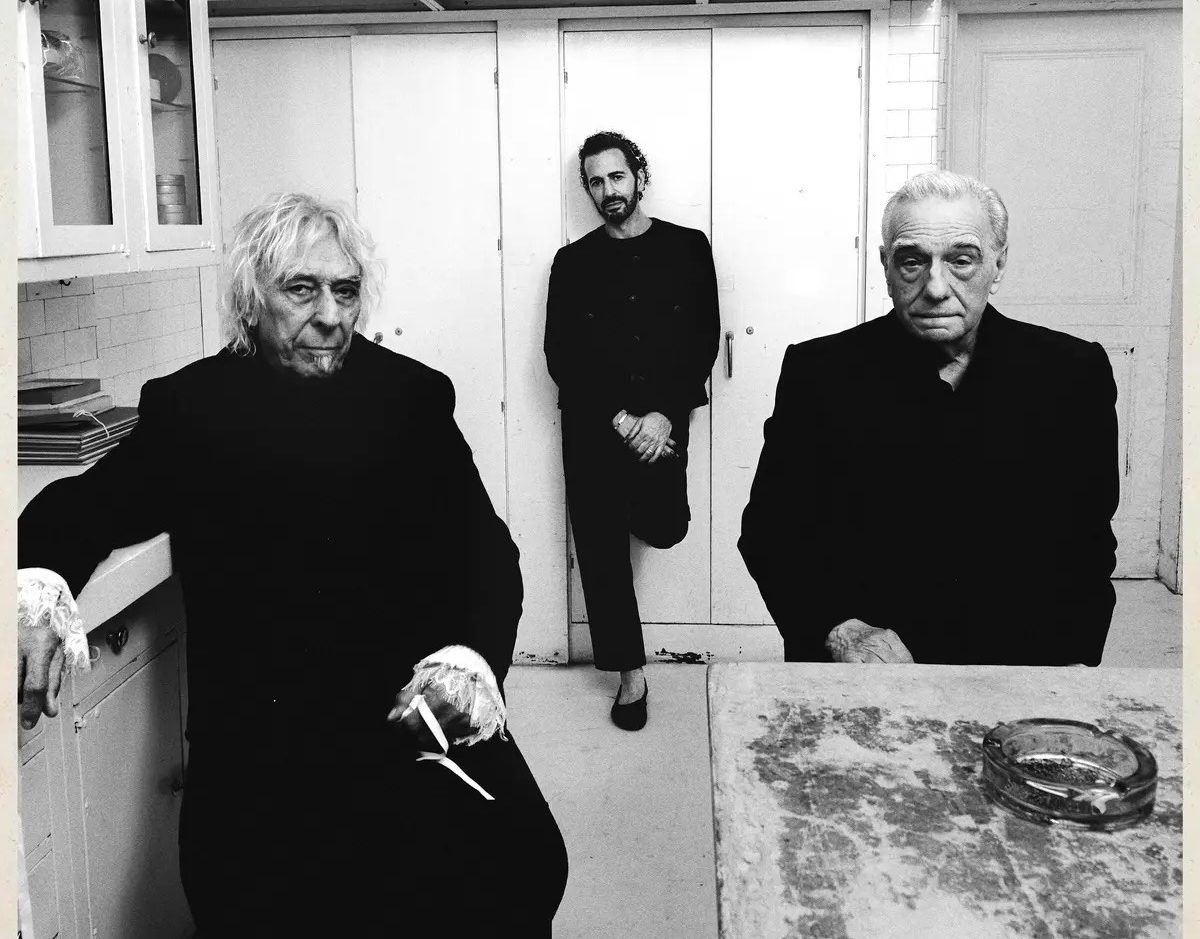
‘Music, Fashion, Film’ by Music, Fashion, Film
Charli XCX released her seventh studio album, Music, Fashion, Film, on 24 July – a guttural, earnestly heart-breaking record recovering from the legacy of brat as XCX attempts to rebuild her identity following her conflation with the ‘partygirl’ archetype. With the album seemingly a dissection of the three biggest culture industries, we decided to review the album collaboratively: one Music writer, one Fashion writer, and one from Film. Together, we discussed the album for hours, journeying from the confusion of the first listen, to a slight head-bop and toe-tap, to some fleeting understanding of what it is to interpret Music, Fashion, Film. It’s safe to say that the record is not solely a think-piece on industry; rather, it is an exploration of belonging, anxiety, and ephemerality. With that, I give you Music, Fashion, Film by The Boar’s very own Music, Fashion, and Film.
MUSIC – Luca Beech, Deputy Music Editor and Deputy Editor-in-Chief
FASHION – Jack Thompson, Lifestyle Columnist (‘Fashion Focus’)
FILM – Sam Capper, Film Editor
‘Rock Music’ – Luca Beech
The album opens with ‘Rock Music’, and – while it certainly possesses a somewhat misleading title – the track intensely foregrounds the album’s overarching theme: the death of brat. XCX’s sixth studio album was not just a record, but an entire era, everything she did during the album’s rollout fully in keeping with the aesthetic and world she had created. Whether it was doing lines under a set of DJ decks at Ibiza’s Boiler Room, creating a stage within a wall in Times Square, or strutting down the SWEAT TOUR stage alongside frequent collaborator Troye Sivan, brat was extraordinary from start to finish.
‘Rock Music’ abandons aesthetic with the same gusto that brat embraced it with, evident through the satirical lyricism which accompanies a totally ‘not-rock’ instrumental: “Wow / I’m really banging my head / I’m really hurting my neck”. Not only does the lyrical-sonic juxtaposition set Music, Fashion, Film apart from brat, but “really hurting my neck” also refers to the nerve damage XCX endured on the SWEAT TOUR – the last era not only mentally changed how she viewed her career, but it also had a permanent, physical impact on XCX’s life.
After listening to the track some more though, there seems to be an even deeper theme which emerges: it’s not just a bad imitation of a rock song; it’s not just ‘brat is over’; it’s that music is art, and temporal art at that. The irony which emerges from the conflicting lyrics and instrumental suggests XCX’s frustration with the current cultural phenomenon of ‘labelling’. There seems to be some need in today’s society to say, ‘Oh – I’m X’, or ‘That thing is Y’: XCX appears to be resisting the urge to put things – but, in particular, art – in boxes. Art doesn’t have to be X or Y; rather, art is art, and it is as simple as that.
‘SS26’ – Jack Thompson
‘SS26’ [Spring Summer ‘26], as it was released, finds itself on the album once again succeeding ‘Rock Music’. As a single it emerged in the wake of divided opinions lingering from its predecessor. With its release, it covertly hinted at the album title, employing it as a lyric, and also introducing “fashion” as a central theme within the album. ‘SS26’ focuses on the limitations of culture, specifically in the era of today. Amongst chill drums and distorted guitars, Charli expresses concerns about the endurance of artistic expression. The intricate relationship between the instrumental and lyrics cements ‘SS26’ as a stand-out on Music, Fashion, Film.
A layer of chaos is sonically introduced with said distorted guitar. It’s prevalent during the pre-chorus, in which Charli discusses aspects of her identity – “my politics”, “my heritage” – which she would be able to use “as a press strategy” or a “USP” in which it becomes capitalised on. These ideas, of identity as a source of profit, but also simply the necessity for the artist to become the commodity, instead of it being possible for their art to be the only thing consumed, are sonically surrounded by disorder. This disorder perfectly reflects the conflict between Charli xcx as a creative and, in this industry, a commodity.
These feelings are able to be placated at the chorus, in which now “look[ing] good in the clothes”, is able to circumvent the chaos and guitars. We’ve lost the chaos, but concern about engagement with the arts remains as a throughline. In the chorus, the focus primarily regards our ability to engage with them. ‘SS26’, while stating nothing in particular, warns that our ability to create art is at risk, and the art alone can no longer spark the inspiration, nor enact the change required to rescue us, nor itself. As it repeats, the distorted guitars re-emerge, and although the lyrics remain the same, her change in vocal tone evidences that comfort of the clothes is waning, affirming its own message: “nothing’s gonna save us, not music, fashion or film”.
“But all I know is how it makes me feel / And it makes me feel how it makes me feel”
‘Card Declined’ – Jack Thompson
The first non-single appearing on this album, ‘Card Declined’, is – frankly – a gruelling track, with an instantaneously dampening instrumental. This nature derives from its production. A. G. Cook and Finn Keane, core collaborators for Music, Fashion, Film, credited as executive producers and writers, crafted a much faster pace instrumental that Charli didn’t personally align with. Cook, more so as a joke, suggested slowing it down, and by nine varispeed – reducing speed and lowering pitch – created a much more droning track, which Charli argued spoke to her in a “big way”. It’s far moodier and much bleaker in this state.
‘Card Declined’, centred on shopping, approaches the idea of material items and fashion as transformative, allowing you to alter who you are, or at least how others may perceive you. In this track we hear Charli list a diverse range of fashion she intends to buy “a handbag”, “some shoes”, “some jewelry”. She also says she’ll “buy a smile”, very concisely confirming the track’s tone. These are all purchasable, but as she lists “a personality / A whole backstory” it is followed by “card declined”. This repeats with different items, “a Mah Jong sofa / A new apartment, Jaeger Lecoutlre”, but when she adds to the list “A whole new life” it is once again followed by “card declined”. You can consume and fashion yourself and your lifestyle as you please, but you can’t change your history and who you truly are.
This idea of “being able to change, but not really” is a constant of Music, Fashion, Film, being present in the first verse of ‘SS26’, being central to ‘Card Declined’, and being explicit in upcoming track ‘Wink Wink’. Expanding the scope, this concept exists throughout Charli’s discography, found in ‘Track 10’, for example.
The song develops at around halfway, with the pitch increasing, which conjures images of a more youthful experience. In utilising the same lyrics, the same experience is recounted, but the youthful energy provided by the pitch change makes it feel as if it is from a more authentic, less jaded perspective, one in which material items are still sought, but they are yet to be corruptive. There is a level of calm and acceptance surrounding the card being declined. This section feels like reminiscing, yet with the instrumental evoking broader feelings of hope, the overall messaging of the track becomes cloudy. The track tapers out into a hard cut to the chorus of ‘I Keep On Thinking Bout You Every Single Day and Night’, the B-Side to ‘Rock Music’. It’s perfectly out of place, inciting feelings of longing for a past identity, likely for the authentic version which remains under all the fashion.
‘Camera’ – Luca Beech
‘Camera’, at least for me, was the weakest out of the four singles released from Music, Fashion, Film prior to release. I didn’t really get it – it was sonically grating, and the lyrics seemed underdeveloped and part of the typical ‘you just don’t get it’ XCX trope (“But all I know is how it makes me feel / And it makes me feel how it makes me feel”). Four listens later, it all clicks: wait, this isn’t trashy and boring – it’s ridiculously poignant, hinging on everything it is to be woman.
The aforementioned lyrics encapsulate the yearning which has accompanied the last few years of XCX’s career, her desperate to express something which seems so intangible. There is some feeling – that of being on camera, be that literal with Aitchinson’s recent work in the film industry, or symbolic, the feeling of eyes on her permanently as she shines in the public eye – which is so fascinatingly central to her character, and yet also so alien to human experience that it cannot be explained coherently: “it makes me feel how it makes me feel”.
Again, the death of brat theme arises again in the outro of ‘Camera’, “I can be anything that I wanna be” revealing how the success of the album gave XCX the power to be totally unadulterated whilst simultaneously being praised; it’s no longer that she is too simplistic and overly confessional in her lyricism, but rather – now – she encapsulates universal feelings in a brutally honest way. “I can finally be totally honest / It’s like I’m looking down the barrel of a gun” is yet another example of the double-entendre writing that makes XCX so genius: she can be raw and scathing because these are her last moments, but she can also be so in her position of stardom, her platform one which she chooses to utilise in order to show others that they are not alone in adversity.
Regardless of the reading we take, the metaphorical gun seems tinged with melancholy, XCX throwing away “Fucking shoot me” after the line. Brat was positive, in that it made XCX a pop superstar, yet it certainly had its drawbacks, exposing the duality of female existence. Such prowess blurred the line between ‘what she is expected to’ and ‘what she wants to do’: XCX wanted to create brat, wanted to be raw, and wanted to stun, yet that quickly became public expectation, the capitalisation of her authenticity discouraging her creation. Such feelings parallel the broader feminine experience, personal and patriarchal desires amalgamated to the point of oppression; by contrast, XCX’s commentary empowers in a universal, matter-of-fact way.
“I can take you to heaven like it’s 2007 / Pop star in my bedroom like it’s 2007”
‘2007’ – Sam Capper
In ‘2007’ we are offered a pulsing, glitchy invitation into the intimate teenage bedroom-heaven of Charli’s nostalgia, reminiscent of brat’s ‘Rewind’ but reaching even further into the past. A lyrically-simple and production-heavy track, the song seems at first to provide a safe space, frozen in memory and detached from the ever-changing climate of modern pop culture.
By the second verse though, the memory is met with its modern equivalent. Charli repeats: “Pictures on the sofa become pictures on the screen”, hinting at the promotional qualities of social media career-making, and the pursuit of stardom so many modern artists engage in through short-form video. With this line, Charli XCX suggests that the Myspace-era in which she made her breakthrough may not be so different to the TikTok generation she finds herself within today.
At the bridge, tinged with anguish, XCX sings directly to us: “You’re the way I wanna feel”. It’s a yearning for the bliss of anonymity, an admission that regardless of whether you ‘made it’ in 2007 or 2026, the step into stardom is always a binding contract, and your innermost thoughts and feelings will forever be demanded as fuel for your art.
‘I’m Afraid’ – Luca Beech
‘I’m Afraid’ thematically parallels ‘I think about it all the time’ from brat, XCX revealing her deeper insecurities about her personal life, feeling further behind than others her age, not yet a mother and only recently married. The opening instrumental feels fragile, a deep bass accompanying the confessional lyricism in short, successive notes, almost as though each pluck is another anxiety creeping in from behind the narrator’s perspective, slowly encroaching on her every move. XCX’s vocals seem youthful, her pitch lace with naivete, symbolic of her self-perception as ‘behind’ – that is, until the chorus: “I’m a wife, I’m a kid / I’m destroyed, I’m a bitch” shatters any illusory immaturity, horns almost like sirens travelling between listeners ears, oppressive strings bringing both urgency and uncertainty, the pressure of others wholly inescapable.
The harsh dichotomy of the verse and chorus cuts deep into introspection, positioning the individual at odds with some older version of the self where they imagined they would have been ‘further ahead’ by this point. Such conflict could be read as the effect brat had on both Charli XCX and Charlotte Aitchinson (the birth name of the artist), the album and its rollout ruining Aitchinson’s private identity whilst simultaneously reinforcing XCX’s public one. The ‘partygirl’ aesthetic made XCX’s career, justifying her every desire as she reached global stardom; at the same time, it clawed every part of Charlotte away from her as XCX felt pressured to perform at the risk of losing her personal life. Such feelings are invoked by the instrumentation in the song’s outro, distorted electric guitars alongside collapsing drum hits capturing the feeling of being torn apart while a horde of spectators jeer from the sidelines.
“Here’s the truth, and I gotta be honest / I’m not a bad girl anymore, I promise”
‘Yeah’ – Jack Thompson
With only 16 unique words, ‘Yeah’ prior to release, with leaked lyrics, presented itself as quite the cause for concern. Its simplicity in lyricism however, much like many other songs on Music, Fashion, Film, allows for the sonic messaging to take centrestage. ‘Yeah’ discusses an often unspoken conflict between creative and consumer, in which their desires and dreams can be misaligned.
Calling back to ‘Rock Music’, Charli feels as if, for her, “the dancefloor is dead”, and – as discussed with Rolling Stone – was ready to take a break from music, not feeling inspired. These feelings inspire the first verse composed of “I don’t wanna” and “I don’t want to”. Yet, as it happened, inspiration strikes, at the pre-chorus, in which Charli comments “Wait, now I wanna feel it”. At this point, the instrumental becomes crowded, mirroring a jamming session in the studio.
By the second verse, Charli is aware that the audience aren’t interested (“You don’t wanna,”) and thus the jamming is cut short until “you wanna feel it”. The second chorus reflects the jamming session, now as produced music, being shared with the audience. As it transitions into the outro, the jamming becomes disjointed, less passionate and less energetic, likely reflecting the process of becoming tired or disconnected with your own art when it’s being consumed. On Music, Fashion, Film, ‘Yeah’ operates as an impactful turning point from introspection within “I’m Afraid” and “Camera” to confrontation found in “Wink Wink” and “Persona”.
‘Wink Wink’ – Sam Capper
‘Wink Wink’, the album’s third single, is a witty, anecdotal and undeniably sexy affirmation of individuality. Through intensely specific yet contradictory verses, Charli asserts an unpredictable and indefinable character for herself. Summertime strawberries, semi-naked trampolining, and dressing “like a slut” define one facet of Charli XCX, but the song playfully attempts to convince us Charli is now an “angel girl”, has thrown out the skimpy clothing and sold the Porsche.
The “point”, she says, is that “people can change”. Perhaps then, the song’s twofold personality is a retaliation against the hedonistic “bad girl” image XCX was restricted to during the months of spotlight she received post-brat. Force someone like XCX into a box long enough, and she’s bound to eventually burst out, joyfully teasing that she might have “fucked your dad”.
“Don’t fucking choke on your ego when you see me coming”
‘Persona’ – Luca Beech
‘Persona’, much like ‘Camera’, was a track I wasn’t initially drawn to upon the release of the album, however, after sitting with it for a few days, I realised an interpretation which set my passion for the song alight. Before you continue reading, I urge you to listen to ‘Persona’ again but hear it as a conversation between brat and Music, Fashion, Film, the latter as the narrator. Whereas my analysis of ‘I’m Afraid’ was a lot more production-forward, allow me to turn to the lyricism for this one.
“Sometimes I wonder if you realise the way you come across / It’s kind of crazy” immediately foregrounds my interpretation, a present-day XCX reflecting on the last era of her career and its performative nature. Both her hyper-productivity and intense marketing were abrasive, but in a way that enchanted audiences, them not considering how it may have taxed the artist behind it – aesthetic enveloped confessionalism (“Wish you could be honest about your internal dialogue”). “You like the sound of your voice / And I like the sound of mine” calls to XCX’s fascination with art’s ephemerality; brat succeeded in the moment, XCX proud of the record and all it achieved, but now it is time to turn to something new – namely, Music, Fashion, Film.
“Don’t fucking choke on your ego when you see me coming” serves almost as reassurance to a past XCX, the decision to let the cultural phenomenon die rather than over-abuse it one of strength and confidence, not arrogance. The new record isn’t trying to replace brat; it’s simply the natural progression, and fans of brat shouldn’t resent this with attempts to prolong its sensationalism. “You know I see you when you see me” reiterates this notion, both albums able to survive in the same space without constantly fighting over the limelight – in fact, both become better works after hearing the other. While Music, Fashion, Film is all about brat and yet not about brat at all, its strength comes from XCX’s experience (which came in abundance during recent years): “You call me your best friend, I secretly love it”.
‘Magic Metal Montana’ – Jack Thompson
‘Magic Metal Montana’, the album’s penultimate track, is a platonic love song towards Charli’s long-term collaborator A. G. Cook. Falling as the 10th track on Music, Fashion, Film, it’s notable that Cook produced ‘Track 10’ for Pop 2, as well as featuring on ‘So I’ on brat and it’s completely different but also still brat and crafting the score for Charli xcx’s The Moment.
In appreciating their similarities (“With only child stuff, we’re the same”) and their differences (“You don’t drink, so I’ll drink for two”), Charli is incredibly vulnerable and personal on this track, confessing bluntly “I’d cry if you died”. Just as ‘So I’ on BRAT venerated Sophie, ‘Magic Metal Montana’ intends to celebrate A.G. The importance of their partnership for Charli on an intimate level, the focus on this as a personal relationship, away from the creation and consumption of culture, is an important moment before the album concludes with its enduring message.
“They are dead, they are gone, no one lasts forever”
‘No One Lasts Forever featuring David Cronenberg’ – Sam Capper
The closing track of the album begins with a crunchy, upbeat, and optimistic reflection on life as Charli XCX. She’s living in the moment, far away from home, surrounded by fleeting instances of beauty, and fuelled by an ever-changing, ever-moving career. For what seems like the first time on this record, she reflects on her fame without any indication of resentment: “Since everyone knows my name / All the parties got better”.
An effortless image is conjured within a few words, and we can picture Charli at the “Parisian apartment”. She’s “with a French girl talking ’bout philosophy”, and it’s instantly believable. In this verse, the character XCX has built throughout the album is at last given a physical space to occupy. It seems almost cinematic, and perhaps it’s a scene drawn by XCX, a proud cinephile, from her wealth of film knowledge, inspired by similar moments of connection. A pair, detached from the party down the hall, sit together and realise the very moment they occupy will only happen once.
The second verse takes a more realistic approach to public scrutiny, reckoning with the nature of a parasocial pop culture in which strangers feel entitled to comment on your character. As in ‘Wink Wink’, Charli rejects the arrogant, chaotic, drugged-up hedonism she has grown to be associated with. In this way, the song seems to be a much more serious exploration of the themes XCX addressed with her now-frequent creative collaborator Aiden Zamiri in The Moment, her semi-autobiographical mockumentary about an over-exaggerated, industry-controlled version of brat. Where The Moment fell flat in its attempt at profundity, ‘No One Lasts Forever’ earnestly embraces the transitory nature of art.
With no silver screen glamour to cast a film over the truth, the song shifts Charli’s conversation with the French girl has from elevated and aspirational “philosophy” to cold, hard, “reality”. Charli is singing from a a post-growth perspective: she’s suffered under the interrogative pressure of the public eye, and here she argues that the “crushing highs and lows of ego” provoked by validation and criticism are vital to reaching this fearless realisation of the complete ephemerality of art. The track descends into an ironic repetition of the word “forever” – the vinyl version ends here, and the word repeats… forever – and XCX’s distinctive production style swells and distorts as the song ends.
And then, director of Crash and The Fly, David Cronenberg. In a section from an hour-long conversation between XCX and the iconic horror auteur about a near-death experience, Cronenberg reflects on what came to mind as he lay on the ground. He thought of “people” and “life”, rather than “art”. Art, argues Cronenberg, is not “endurance” or “immortality”. And even when art outlives its creator, the artist is “dead” and “gone”, unable to experience it.
The idea that ‘No One Lasts Forever’, in a way, should be reassuring to the insecure Charli XCX we hear throughout this album, as Cronenberg, a kind of mentor figure, foregrounds the integral nature of the artist to the art, implying that the death of the artist removes something essential from the work. He’s assuring that, even if the music of Charli XCX does last forever, she’ll never know about it. This is the liberation XCX has been pursuing throughout Music, Fashion, Film. Regardless of how nuanced and unpredictable an artist’s work is, no matter much an artist evolves and rejects their former self, the art is ultimately unimportant against the infinite expanse of ‘forever’.
Music, Fashion, Film is – by far – one of Charli XCX’s most prestigious records to date. Its dissection of femininity, ephemerality, and modern-day culture perfectly articulates feelings which many grapple with incessantly yet remain unable to voice for fear of scrutiny. While the album is initially somewhat sonically grating, taking the time to appreciate the messaging reveals how the instrumentation only aids its fascinating impression; put together, the two create a record which swells with courage and prowess. Whether the album will stand the test of time is another question, but – then again – maybe it isn’t a question at all: after all, “Oblivion is freedom.”
★★★★
Listen to Music, Fashion, Film here:
Comments