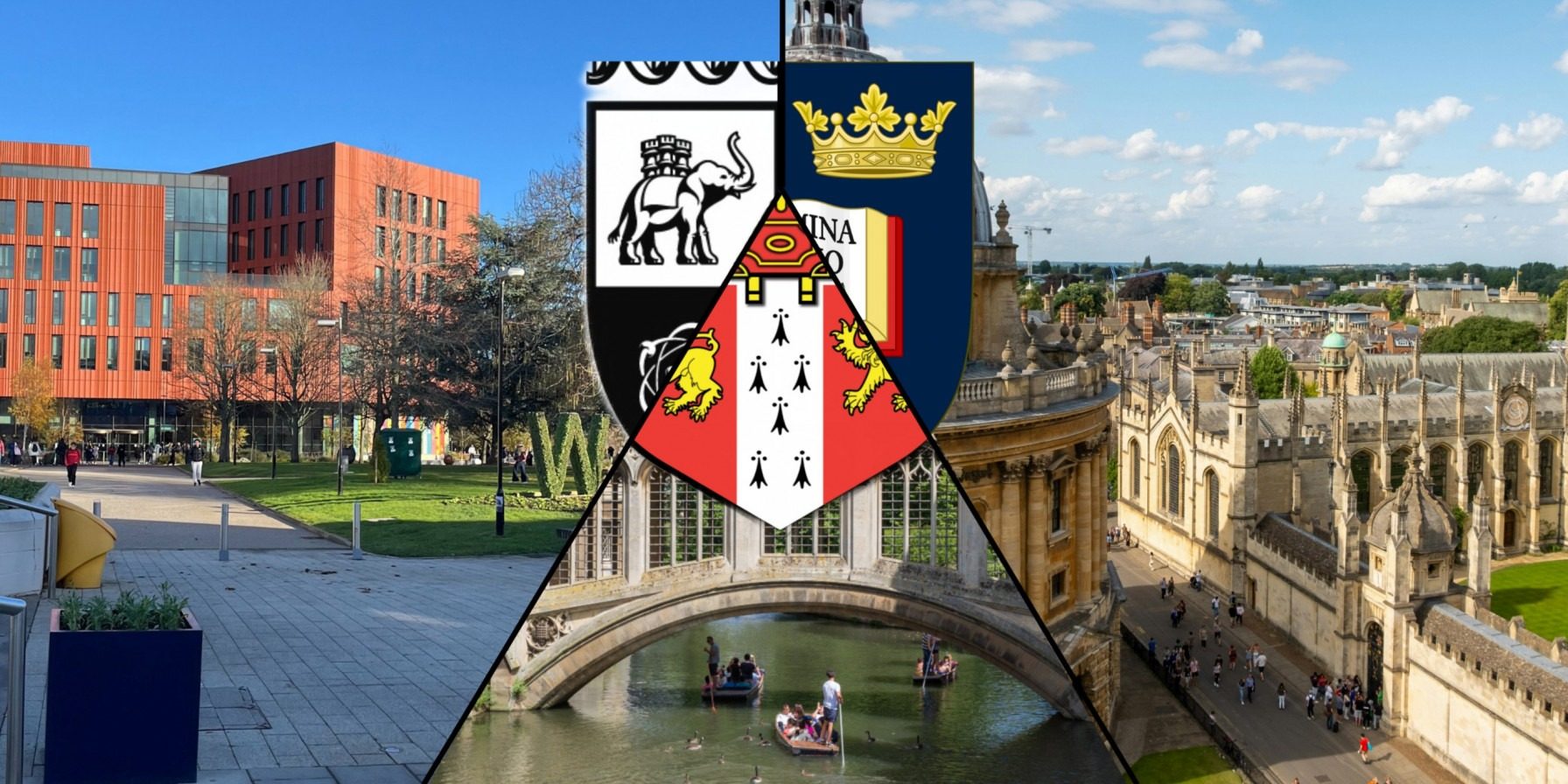
Will’s Word On Warwick: Winning Woxbridge
For those unaware, ‘Woxbridge’ is the grouping of the three finest universities in the UK: Warwick, Oxford, and Cambridge. While the makeup of this timeless triumvirate is rarely challenged, serious questions remain about which institution comes out on top when pitted against the others.
Now I know what you’re thinking. Surely, the best way to quantify each university’s national and cultural contribution is to look at the achievements of its graduates. To do this, I will analyse two classic areas of alumni analysis: the cultural and the legal.
Where better to start than the realm of sitcom writers? Oxford graduates are responsible for hit comedies like Blackadder and The Thick of It, while Cambridge alumni have created Peep Show and Fawlty Towers. Intriguingly, Warwick has contributed The Office and Gavin and Stacey, which, when written as a list, looks as if it might just have produced more classic sitcoms than the other two universities.
Oxford brought us former PM and architect of the Metropolitan Force, Sir Robert Peel, while Warwick produced Sting, who attended Warwick for a term before dropping out to found The Police, whose use of the definite article makes Peel’s efforts look a tad subpar
In terms of famous directors, Warwick has produced Paul W.S. Anderson, chief architect of the Resident Evil franchise, amid a staggering 15 major blockbusters. Among Cambridge’s ranks is celebrated filmmaker Sam Mendes, who has directed only 9 films, while Oxford has given us Tom Hooper, who has made a measly five. Most recently, a musical adaptation of Cats, called Cats, in 2019, featuring Jennifer Hudson, Dame Judy Dench, and Idris Elba, among others, playing various talking cats.
Now, moving on to our second and perhaps most obvious graduate metric: law and order. Interestingly, both Oxford and Warwick have graduates that played founding roles in the police. Oxford brought us former Prime Minister and architect of the Metropolitan Force, Sir Robert Peel, while Warwick produced Sting, who attended Warwick for a term before dropping out to found The Police, whose use of the definite article makes Peel’s efforts look a tad subpar. Notably, however, in terms of pillars of legality, Cambridge comes up short. The best they can offer is the Cambridge spy ring, a notorious band of national traitors who defected to the Soviet Union in 1951.

Image: Twitter/X / @uniofwarwick
Perhaps University Challenge will offer more answers. Despite being allowed up to five extra teams in the show, Oxford failed to even reach the finals in either 2021 or 2025. In contrast, it was these very years in which Warwick triumphed or reached the final, with the latter seeing us robbed by an early gong in a presumed moment of corruption led by Sir Ian McKellen and his shameless desire to get some exposure and ‘be on TV’ as their ‘famous’ alumnus.
One must also note the relatively crippling age of some of these universities. Cambridge is 817 years old, and Oxford is 930. If these were people, they’d almost certainly be dead
Oxford and Cambridge may have colleges, but do they have Skool Dayz and Warwick Business School? No, no, they don’t.
Warwick’s lack of history can be a boon. For instance, unlike Oxford, we have no statues celebrating colonialists such as Cecil Rhodes, assuming the Koan hasn’t committed any war crimes. Instead, we merely have an array of sculptures so visually baffling that they themselves may constitute crimes against humanity.

Image: The Bridge of Sighs, Oxford / Bob Collowan, DIMAP Bridge, University of Warwick / Facebook
Moreover, if we are competing on the grounds of war crime complicity, Warwick can do that too. With Warwick Manufacturing Group receiving over 90% of its funding from arms manufacturers! Additionally, if you want problematically named institutions, the Copper Rooms was called Rolf’s for a few years, after a certain Mr Harris and our campus cat still bears his name. All of a sudden, Rhodesia doesn’t seem quite so impressive.
One must also note the relatively crippling age of some of these universities. Cambridge is 817 years old, and Oxford is 930. If these were people, they’d almost certainly be dead, and their respective ages inevitably raise serious questions around potential cognitive decline. In sharp contrast, Warwick, at age 60, isn’t even nearing retirement, sharing its lifespan with similar figures of youth and vitality: Brad Pitt, Abbey Lee Miller, Michael Jordan, and Björk.
I could find no evidence of Cambridge’s Vice-Chancellor, Deborah Prentice, engaging in amateur running, seriously undermining their case. Since, you know what they say, if you can’t even run a marathon or Uber everywhere, can you really run a Woxbridge-level institution?
Perhaps we’ll find answers in looking towards university leadership. Oxford’s Vice-Chancellor, Irene Tracey, is purportedly an avid marathon runner, recently completing the Big Six world marathons – nice if you can find the time off: what a slacker!
Of course, we’re sure Stuart Croft would be doing the same; however, his unparalleled commitment to the university has ensured he would never allow himself to engage in such distractions. In fact, Croft is so efficient that he has totally cut out slow and old-fashioned leg-based travel entirely, wisely replacing it with hyper-efficient, university-expensed taxis.
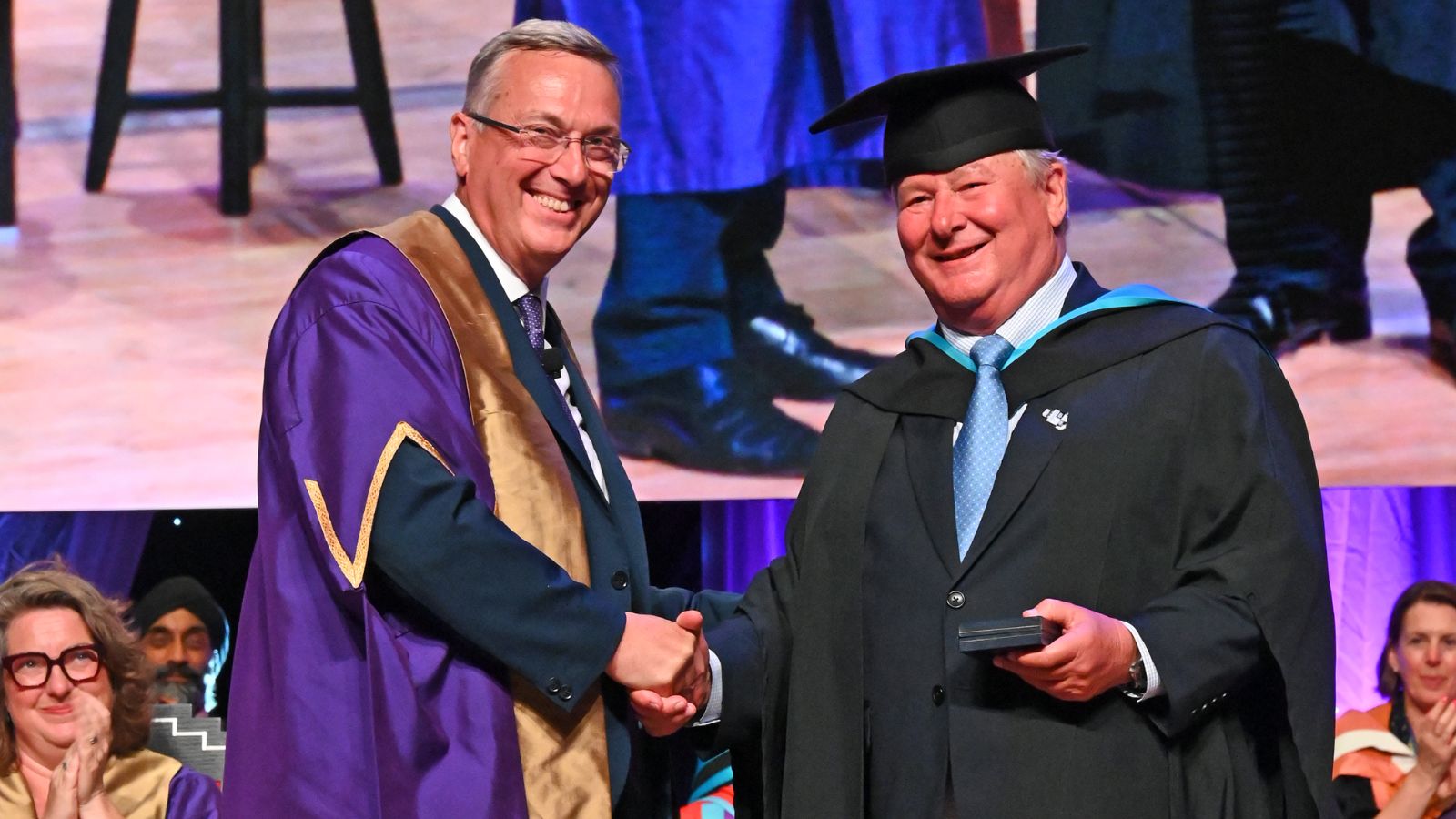
Image: Stuart Croft, University of Warwick
Notably, I could find no evidence of Cambridge’s Vice-Chancellor, Deborah Prentice, engaging in amateur running, seriously undermining their case. Since, you know what they say, if you can’t even run a marathon or Uber everywhere, can you really run a Woxbridge-level institution? It’s certainly food for thought.
While Warwick may not predate clocks, having looked across a variety of industry-standard metrics, it has a strange habit of emerging on top
Having polled Warwick students, I have recently discovered that roughly 100% of people who applied to Oxbridge ended up going to Warwick instead, a coincidence? Not likely.
The continued necessity of Warwick’s presence in this holy trinity is underscored by its bringing a much-needed level of representation to the trio. Without Warwick, the nation’s top university collective would be dominated by the southern England cities of Oxford and Cambridge. Luckily, Warwick, with its geographic proximity to Birmingham, ensures that northern issues remain represented in this prestigious group.
To avoid accusations of bias, I have also made sure to get some of my fellow Warwick students who applied to Oxford and Cambridge to read this and confirm it was fair.
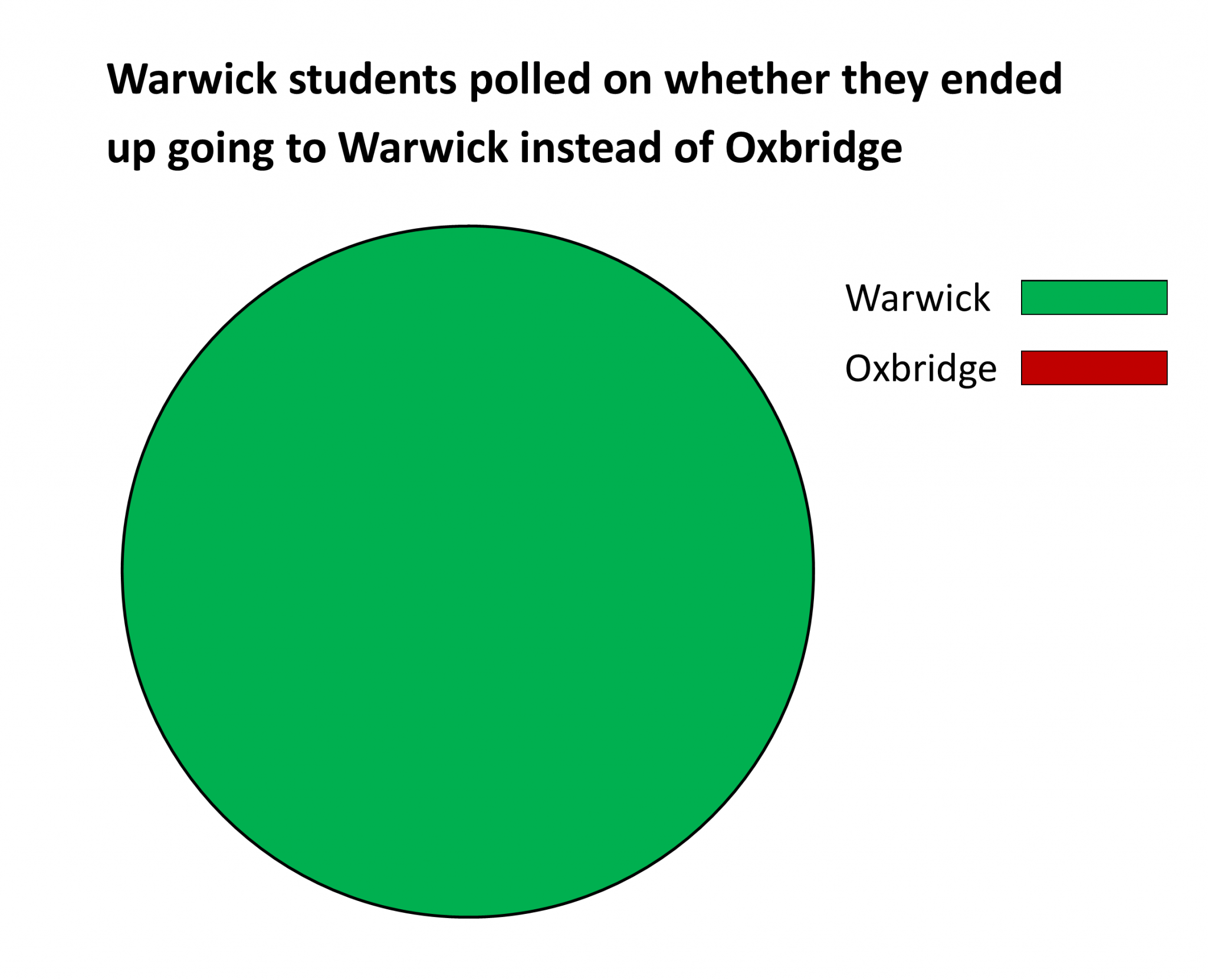
Image: Will Moores
While Warwick may not predate clocks, having looked across a variety of industry-standard metrics, it has a strange habit of emerging on top. However, it’s possible I may have got this wrong, so I propose we set up some sort of race to work things out. Not a running one or a motor one, so as to ensure Cambridge is not at a disadvantage, but perhaps an aquatic one, with ships, where teams from each university try to move a rowing boat as quickly as possible along a river. Frankly, I can think of no fairer metric for settling things: once and for all, every year for the rest of time.
Comments