The mystery of Remembrance Day
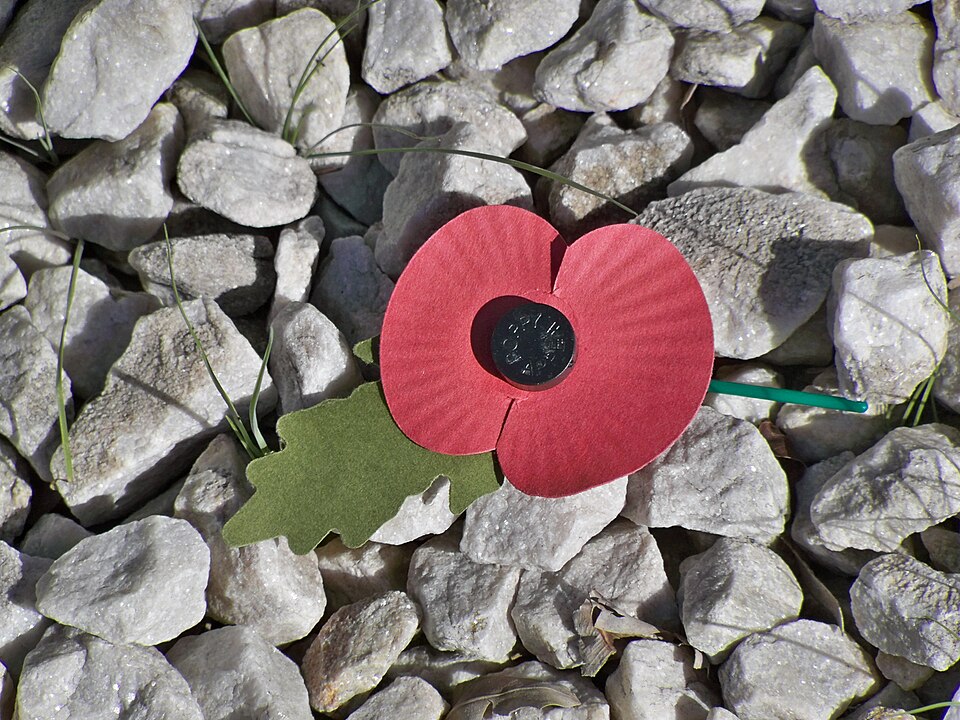
A mucky, sodden morning. Walking down the road, I see a huge truck with poppy wreaths on the grill, its wheels slouching towards me. It’s adorned on it, like some would put a novelty moustache on their car. As I walk down Bath Street in Leamington Spa or round the Warwick Arts Centre, I see in every other person’s lapel a little red flower in their pin. I’m seeing this in mid-October. It’s not even Halloween yet, but some are already starting their remembrance. My memories of Remembrance Day have always been in churches, namely Holy Trinity Glencraig in my home town of Bangor. It was small, stone, and Anglican – like many of the little churches built by the new unionist ruling classes after partition.
Remembrance Day, surrounded by union flags, has always been a sort of tragic comedy where solemn ceremony and prayer could be broken by a subtle comment or self-conscious mouthing of the British national anthem. To the typical nationalist mindset in Northern Ireland, feelings of insecurity and falseness arise. Why do I have to commemorate the British Army? How is it fair that the poppy represents all British wars and conflicts, where so many were murdered in massacres and assassinations by both the army and the security services? We, both in Ireland and the UK, are in a process now in making a choice about our future. It would benefit us to see, with open eyes, what our past is. We are who we are today in society because of history, yet we live in a culture where we forget what happened two weeks ago.
If you were born in England (perhaps even Scotland or Wales too), you might think that these questions are local-minded and not very relevant to the vast majority of the British public. That is false, tragically false. I’ve seen it for myself. The awkward conversations. The glaring contradictions. The pervasive mystery of remembering the dead from wars of the past. It’s not hard to see why in England, Remembrance Day feels ordinary and banal. But in Northern Ireland, such universal banality is impossible. In a place where armies grew like mushrooms, the overly serious ceremony of remembering British soldiers is parodied. From workmen doing their daily walk past war memorials to stand-ups in comedy clubs making ‘dark’ jokes, there is no moral quietness over remembering the dead in Northern Ireland.
Belfast is a city of contradictory memorials and graveyards. The past is a chessboard where, day by day and year by year, rooks and bishops cross over uneasily
Outrage has been thrown at ‘Palestine poppies’, which mix red with the white, green, and black of the old Hejaz standard. Even though British soldiers fought and died in the war of 1948, when the State of Israel was formed and most Palestinians were exiled, many in Britain feel a profound sacrilege that the poppy would be equated to it. Those who are first to wear the poppy and invoke the dead generations of British soldiers may not be aware that the Israel Defense Forces (IDF) have destroyed British war graves in the destruction of Gaza City. This falsity, one that Conservative leader Kemi Badenoch recently spouted, is insufficient to the public and to herself. To forget about Britain’s many imperial and post-imperial wars is like saying to someone from Northern Ireland to forget about the 400-year cycle of colonial and civil war that culminated in The Troubles. To even forget about the real tragedies of the wars is a crime in itself. Why, in a nation where many people had relatives who were killed or survived in the Holocaust, are there separate memorial days?
Remembrance Day, first commemorated in 1919 to honour members of the armed forces in the line of duty, has been eaten up by the ancestor worship that has spread through British culture. No one can fit a war or a genocide into their head. By their nature they spill open over past, present, and future. Battlefields are too vast for our peacetime minds to fully imagine. But when we try to remember and to conjure up what it was like – that makes all the difference. Who can deny the moral questions Arthur Miller threw up in his post-war tragedy All My Sons, or the poetry written in trenches and hospitals by Wilfred Owen or Siegfried Sasson. Even the ending of Blackadder, that so cynically depicted how much a racket the war was, brought an enduring tenderness to generations of viewers.
We need not bow down to the wars of the last century. This habit turns remembrance into nostalgia. Who, in their heart of hearts, wants to harken back to a time of conscription or of men being made into murderers? It feeds a meagreness in people, young men in particular, that an individual is not a true nationalist unless they have a gun in their hand and an enemy to fire at. History should be a door to walk through, not just a mirror to pride yourself in. We owe it to ourselves and our dead to try to figure it out. It is in that ascent, that memory may become a compass, with the chance of finding home for those who never came back. Remembrance is a mystery for each generation.
Comments