Faust in Piddington
Some stories come back when you need them most. They can offer a wonderful clarity; new ways to understand a muddled present. The myth of Faust comes to mind, observing the done-in-a-day independence movement of the village of Piddington, Oxfordshire. Goethe’s story of a man who renounces love in exchange for power, ending up manoeuvred and doomed by the very pleasures and security that he wanted above all else, cannot help but be reflected in little England’s attempt at getting its own back.
If you haven’t been keeping up with the news, what I’ve described may seem a somewhat quirky analogy. But anyone scrolling on TikTok or reels will have seen videos of ‘Principality of Piddington’ banners held up by the gleaming faces of the Parish Council. Many (including myself) had never heard of Piddington, yet it’s so old that it’s mentioned in the Doomsday book.
Despite being one of the most affluent communities in the home counties, it has no cafes, no pubs, and no upmarket retail shops. It’s a community which, at a closer look, feels familiar. The resident’s sensitivity and connection to each other can be found throughout the towns and villages of Mid Ulster, for example Ballyronan or Margharafelt. A place where the death of an old local would command a morning of funereal stillness. In hindsight, the strength of this community spirit was always bound to erupt at the issue of immigrants moving to a nearby army camp.
Like the well-respected Doctor Faustas, the villagers in Piddington have everything to lose, yet little to gain
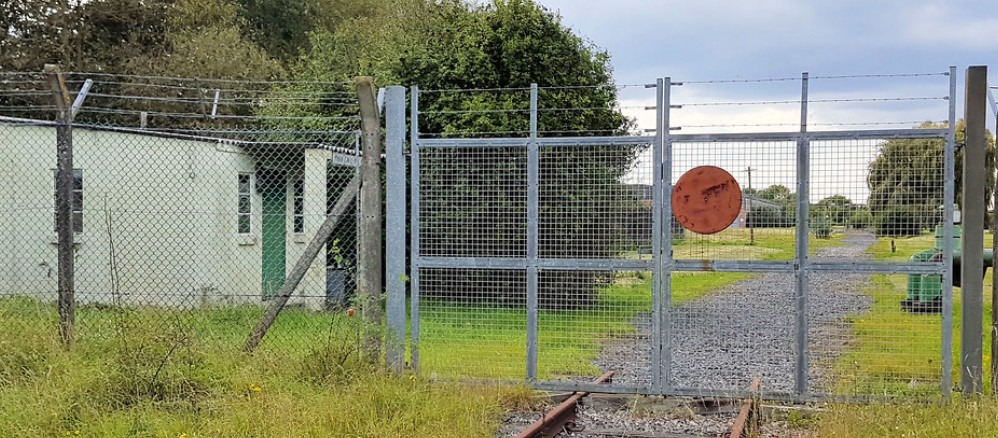
And, sure enough, in response to the proposed move nearby of 1,256 young men seeking asylum in the UK to the former Ministry of Defence base less than half a mile from their sleepy village, the parish council held a protest referendum on whether to declare independence from the UK – and 91% of residents who voted were in favour of the split. By declaring this separation (albeit unofficially), they stated that the government has no right to move immigrants there, even if accommodated in a guarded former military base.
Just like the well-respected Doctor Faustas, the villagers in Piddington have everything to lose, yet little to gain. Faustas signs away love not because he needs eternal knowledge, but because he feels that without it his life in the quest for knowledge has been a failure. It’s that base insecurity, fearing what’s not been yet experienced, that has driven the Piddington vote. This sense of anxiety also appears to reflect the mood of the wider country, as one discerning resident commented to The Irish Times: “What we are seeing in Piddington on a minute scale is a reflection of what is happening nationally in terms of the migration debate and further afield.”
Although it may just be disruption for disruption’s sake, Piddington’s symbolic leaving of the UK represents a significant rejection of Parliament’s sovereignty. In a recent Channel Four interview, the novelist Robert Harris made a perceptive argument as to why this kind of scepticism has developed, remarking that the Brexit referendum outsourced governance away from elected politicians, unfairly placing responsibility in the hands of ordinary working people, has “helped [to] bring about a kind of nervous breakdown in British politics.”
Therefore, when a community as affluent and tight-knit as Piddington descends into nervous breakdown over just the rumour of a threat, the historically assumed freedom and security of the UK is surely threatened. However, in falling into their most base fears and prejudices, a paradoxical servitude arises. As already demonstrated by the arrival of Danny Thomas and his black shirts in Portsmouth; if Piddington wanted to keep their safe community life, it’ll certainly be hard to maintain when those who live off hate flood into their town, both physically and in the wider cultural matrix.
Nationalist parties like Reform UK and Restore Britain present an ultimatum for civic society; crush or be crushed
In German author Thomas Mann’s novel adaptation of Goethe’s legendary play, Faust acted as a mythic and pointed allegory of the Germans who all too willingly gave up their morals and freedoms in exchange for the security and pleasures promised by the Nazis. In much the same way, Piddington’s Faustian bargain becomes all the more unnerving when the UK’s wider body politic is considered. In response to the ‘crush or be crushed’ ultimatum presented by nationalist parties like Reform UK and Restore Britain, village residents move to start self-defence classes against migrants who aren’t even there.
Tribalist movements, be they vast empires or nationalist parties, have always thrived on a nascent lack of self-confidence tied to a hysterical siege mentality. Yet, rather than offering a philosophy for people to rise above their fears and prejudices, tribalism tells you to throw yourself into that mental mudpit, when perhaps the need to overcome others, has in fact begun to distort the need to overcome ourselves.
Comments