Leviticus gives a body to conceptual horror
In a line-up of incredible releases, such as Camp Miasma, Obsession, Backrooms and now Leviticus, it has never been a better time to be a horror fan.
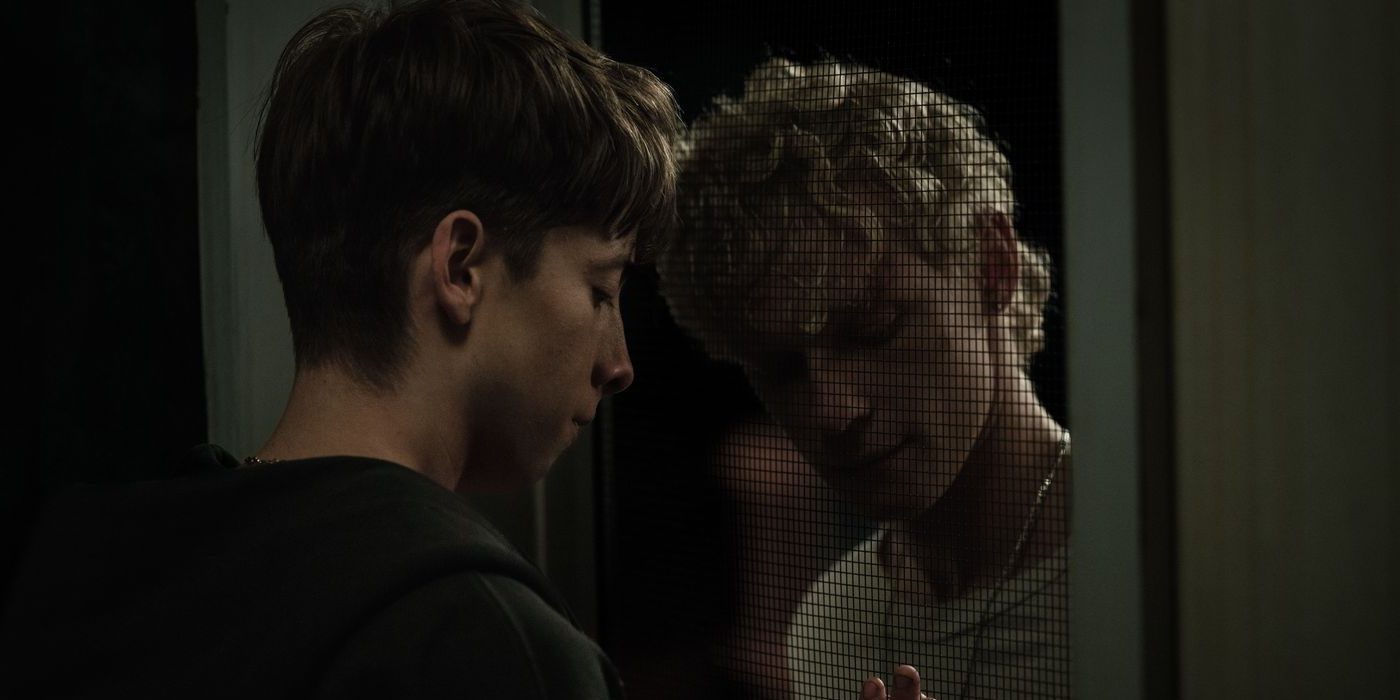
Adrian Chiarella’s feature-length debut is a horror film with a powerful premise: how do you survive a violent entity that takes the shape of the person you love the most?
Leviticus takes place in an isolated Australian town and follows Naim as, after the death of his father, his mother Arlene finds a community within the town’s fundamentalist church.
Naim and Ryan are played excellently by Joe Bird and Stacey Ryan, who deliver emotionally charged and incredibly convincing performances
The protagonists Naim and Ryan are played excellently by Joe Bird and Stacey Ryan, who deliver emotionally charged and incredibly convincing performances. The two teenagers are drawn together by their disinterest with the town, but when their relationship comes to light, they are both forced into a conversion practice that leaves them cursed.
What I found most interesting about this film is how it presents those who believe in conversion practices. Chiarella doesn’t portray the families and communities pushing it as intentionally malicious, but instead dangerously misguided by fear, which makes the film more hard-hitting and tragic.
However, I do wish this was unpacked more intensely in the film, which ultimately did feel a little underdeveloped in depth and themes given its brilliant premise – perhaps expected for its short runtime. The pacing of the first half is good but it’s the second half which feels more like a race to the conclusion.
There are a few almost-fantastic moments cut short which could have delved deeper into the effects of religious manipulation and homophobia beyond the two protagonists. The film tries to stress how this experience isn’t isolated to these two characters, but moves on too quickly for this to have a major impact. I particularly wanted more from the mother-son relationship, with Mia Wasikowska giving a phenomenal performance as Arlene.
The film wants the entity’s ambiguity to create fear, but the way it’s presented often makes it too easily recognisable
Furthermore, the film wants the entity’s ambiguity to create fear, but the way it’s presented often makes it too easily recognisable. This undermines the core premise of the film, showing the conflict between feelings of love and the fear produced by homophobia. I also feel it could have been more ambitious in places, as sometimes it felt too easy to predict what was going to happen next.
However, the thing that makes Leviticus particularly special is how Chiarella uses it to “reclaim” horror as a Queer genre. The film directly confronts the people who create the hostile world experienced by both Naim and Ryan, whilst giving a voice to those who relate to their experiences.
The Bible book of Leviticus, after which the film is titled, is most notably associated with its condemnation of homosexuality
As Joe Bird stated to Hits Radio: “Horror has always been queer”, thriving in feelings of isolation and difference that can be sadly familiar to a lot of Queer individuals. After all, the Bible book of Leviticus, after which the film is titled, is most notably associated with its condemnation of homosexuality, often referenced in anti-LGBTQ+ protests. In an interview to The Hollywood Reporter, Chiarella quotes this as his inspiration for the film: “A lot of this quite toxic language and rhetoric has returned, particularly in the political space, so I wanted to do something about that.”
Queer people often seem to be in a destabilised position, and Leviticus joins films such as I Saw The TV Glow – a harrowing story of internalised transphobia – in exploring this. Both films turn the coming-of-age experience into something scary and terrifying to match a world that demonises who you are, Chiarella not only “reclaiming” the genre but mixing it with others.
The monster isn’t some scary looking bogeyman that lurks in the dark, but the physical manifestation of guilt and homophobia
Hence, Leviticus’ ultimate message is clear and powerful, and it remains a moving and exciting film despite some flaws in execution. It gives a body to conceptual horror. The monster isn’t some scary looking bogeyman that lurks in the dark, but the physical manifestation of guilt and homophobia that preys on you when you’re all alone.
It’s certainly worth a watch, and maybe even a cheeky second if you’ve seen it already, if anything, just for the enjoyment of listening to the Australian accents.
★★★ ½
Comments