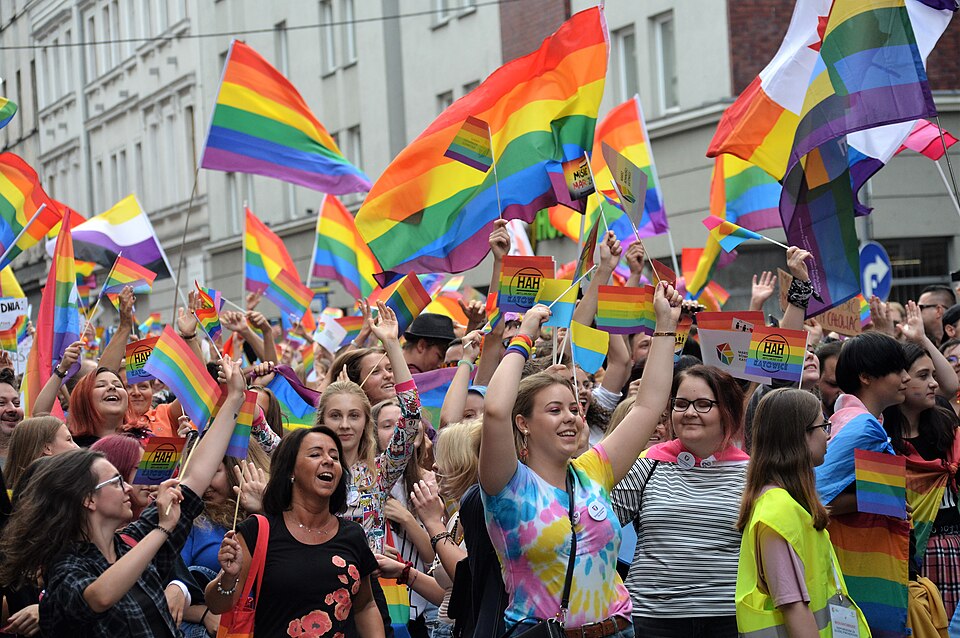
Can companies do more for LGBTQIA+ inclusion?
In the USA, the average member of the LGBTQIA+ community earns 90 cents on the dollar. The number is even lower for those who aren’t white or don’t identify as men. But can you honestly say that you’re surprised?
Regardless, a situation like this calls for companies to further their diversity and inclusion policies. However, thanks to the political climate caused by a certain administration, the pendulum has almost completely swung in the other direction, with companies instead rolling back on these sorts of policies.
Statistics like this one may very well call to your attention the surface-level policies, such as that of fair-wage legislation, being incorporated into companies. And while that is helpful in the short run, it might be beneficial to look at the deeper-rooted reasons for this discrimination in the average workplace. After all, the issue of the wage gap, as we’ve seen with feminist movements, cannot exist in isolation.
While the Equality Act of 2010 and other such policies promote pay equity and protect members of this community, one must question its implementation. After all, as we’ve seen with the MeToo movement, people from marginalised communities are often penalised for speaking up, perhaps even more so than the perpetrators.
Data collected by the charity Stonewall UK shows that about three in ten LGBTQIA+ employees wouldn’t report discrimination or harassment faced at work. It’s a saddening statistic that applies to the community formed by around 10% of Britons aged 16 to 25. Instead of pointing fingers and blaming the affected for not speaking up, policies should be drafted in a way that encourages freedom of speech and the protection of victims rather than the mere punishment of the harassers.
Members of the LGBTQIA+ community who are also people of colour earn less than white LGBTQIA+ workers
Otherwise, marginalisation simply leads to more marginalisation.
It’s also imperative that we do not forget that an issue like this is intersectional. Statistically, members of the LGBTQIA+ community who are also people of colour earn less than white LGBTQIA+ workers. Therefore, to fix the issue of the wage gap for LGBTQIA+ workers, policies also must focus on other nuances with respect to their identities. Data collection for policymaking must hence be disaggregated to accommodate these overlaps in identity.
The Equality Act once again comes under scrutiny, with its Section 14 that calls for discrimination to be covered on up to two combined grounds, but still hasn’t been brought into effect, so this intersectionality may well be non-existent in the average UK workplace.
Of course, this is also important in discerning the extent to which issues other than the wage gap hurt LGBTQIA+ workers. Not only does their identity determine their wages, but it also determines the trajectory of their careers, and which careers they choose in the first place.
It’s also important to ensure a safe workplace for LGBTQIA+ workers, because true equality cannot be achieved without safety. Policies shouldn’t just focus on the wage gap, but also on the environment that other workers create in the workplace. They should focus on mandatory sensitivity training and more serious consequences for harassment.
Once again, while the Equality Act mandates anti-discriminatory training in the workplace, it does not do so for LGBTQIA+ issues specifically. And naturally, the consequences of harassment cannot fully be tackled without addressing intersectionality.
Ultimately, while it is clear what is needed, there is no guarantee that we will be able to achieve it, at least in the foreseeable future. It’s important to note that there is an indubitable, global rollback on DEI policies. However, it’s still imperative that we, as a public, keep our hopes up and keep advocating for change and push back against the red tide.
Comments