What makes Pokémon so successful?
From humble beginnings on the GameBoy in 1996, Pokémon has grown and grown to become the largest media franchise in the world. It’s taken successful games and spiralled into a multimedia empire: anime, films, a trading card game, spin-off games, merchandise (oh, so much merchandise). Everyone’s heard of Pokémon, and everyone knows Pikachu. How did it reach these heights?
The games were, of course, an immediate success
The idea of ‘Pocket Monsters’ came from Satoshi Tajiri, inspired by bug-hunting in the Japanese nature he grew up in. By combining the creature-collection idea with gachapon machines, the new company Game Freak released the first Pokémon games, Red and Green, in Japan, exclusively for the GameBoy.
Blue followed not long after, with both Red and Blue getting releases abroad. These games created a whole host of staples for the franchise: 151 unique creatures, ranging from cute starters to real animals to intimidating ‘legendaries’.
The dual releases are a way to take advantage of the GameBoy’s link cable to encourage trading between players. Turn-based combat using a type system creates strategic gameplay, the evolution of partners from tiny little creatures to imposing monsters… The games were, of course, an immediate success.
It captured for so many people the experience that the games try to create: an adventure with a team of friends
They weren’t followed by new games. No, the Pokémon anime introduced the world to Ash Ketchum and elevated his partner Pikachu from just another creature (perhaps slightly cuter than most others) to a symbol recognised worldwide. It captured for so many people the experience that the games try to create: an adventure with a team of friends.
More games followed, each building upon the last through the succeeding ‘Generations’. New Pokémon were added, with the previous ones remaining available (up to a point with ‘Dexit’), stories became expanded, colour and more detailed artwork got introduced, until the series went fully 3D.
Now, it’s even made the transition from handheld to home consoles, with Generations 8 and 9 on the Nintendo Switch, joining the gaming-wide trend of going open-world as the franchise keeps getting bigger and flashier.
I’ve been working my own way through Pokémon this year to see what all the hype was about. Everyone who loves Pokémon indeed has their own stories with it. Nobody else is going to have the same connection that I do to Goldenrod the Infernape, who landed a critical hit on 1HP as my last Pokémon to win a key battle.
For some Pokémon, I love the designs upon seeing them (Alolan Ninetales). Others, I develop an attachment to – I considered Dragonite goofy until I took it to the endgame Elite 4.
Pokémon’s creature design isn’t perfect, but it has a high amount of hits, using real-life animals and folklore as inspiration. Each region is based on a different place, allowing creature designs to use a new host of baselines. Would Polteageist, the Black Tea Pokémon, work anywhere but Pokémon’s British-inspired region, Galar?
There are so many ways to experience Pokémon within the games, making the experience unique to you
There are so many ways to experience Pokémon within the games, making the experience unique to you. You develop a friendship with specific Pokémon and take them through the whole game, taking on the evil team and the various gyms to make your way across a brand new region. You hunt high and low to find every Pokémon, “catching them all” to complete the Pokédex. You spend hours resetting encounters to try and hit the tiny odds of finding a ‘shiny’ Pokémon with different colours.
My YouTube algorithm in recent weeks has been flooded by challenge runs such as the infamous ‘Nuzlocke’, and people facing one another in competitive battles, sometimes with thousands of pounds on the line.
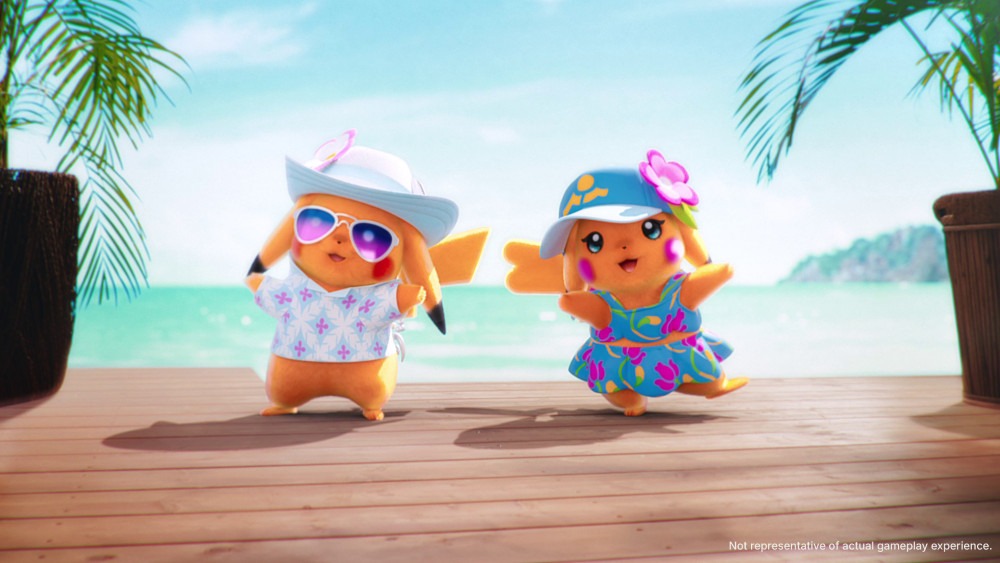
Even now, Pokémon keeps carrying on. Pokémon Champions is newly out at the time of writing, focusing on Video Game Championships, or VGC, the competitive battling side of the franchise. Pokopia, a foray into Animal Crossing-style base building and friend recruiting, has been receiving very positive reactions. And, of course, next year, Pokémon’s thirtieth anniversary will be celebrated by Generation 10 with the upcoming Pokémon Winds and Pokémon Waves. As it takes its next step forward, how could something as big as Pokémon fail?
Comments