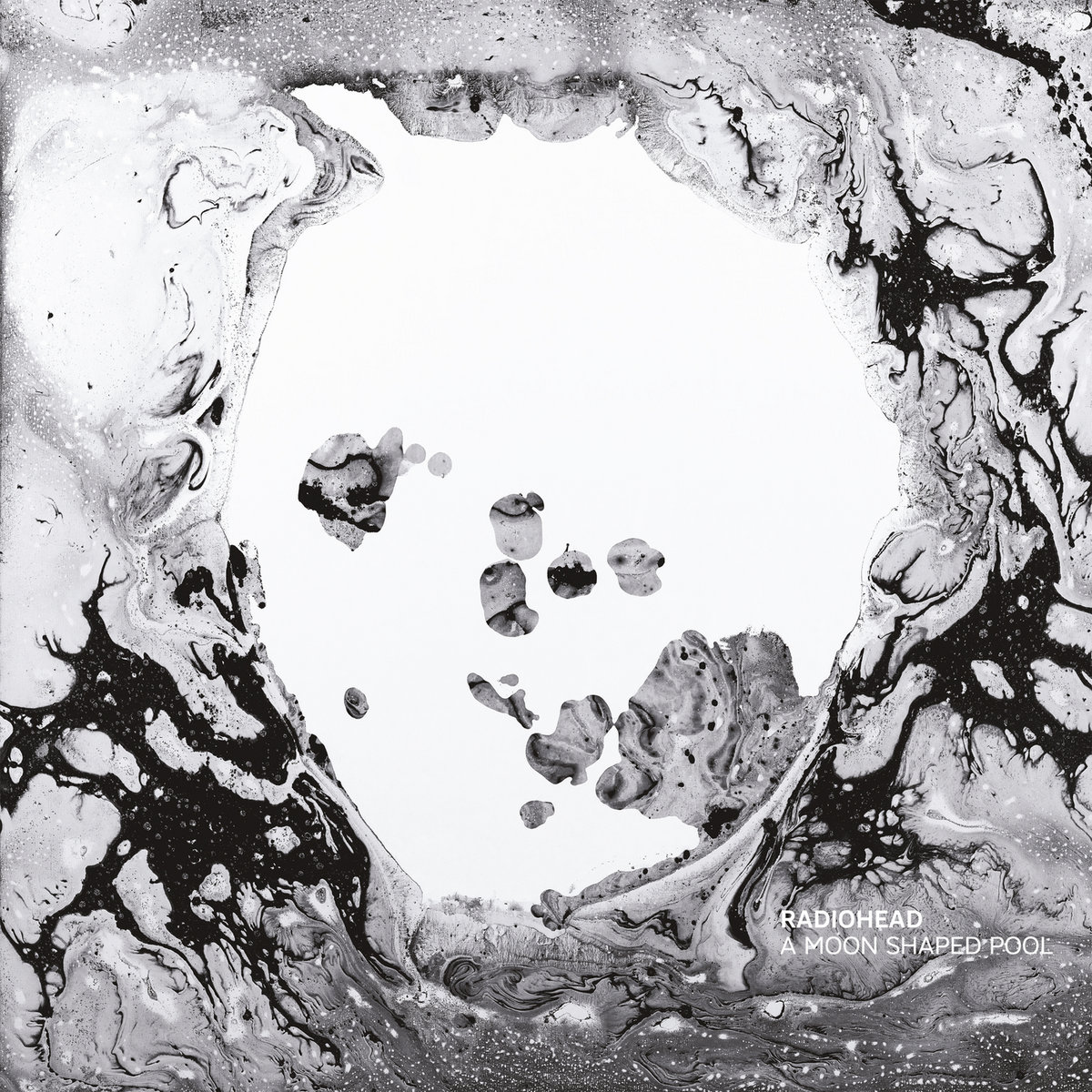
A pool worth diving into: Radiohead’s ‘A Moon Shaped Pool’ ten years on
Radiohead’s A Moon Shaped Pool has its tenth anniversary this year, marking a decade without a new album from the band. With their return to touring in 2025 sparking hope for new releases in the near future, now is the perfect time to look back on the legacy of Radiohead’s most recent release.
The album sits comfortably in the middle of Radiohead’s discography as far as streaming popularity goes. While this suggests that it is far from being a hidden gem, it slips into partial anonymity in sixth place, losing out on a position in the top five to powerhouse albums such as OK Computer, In Rainbows, and Kid A.
The album is undoubtedly experimental, particularly with regard to production, but its sound and lyrics remain grounded
Radiohead are known for their musical experimentation: no two albums sound the same, and the band often jumps genres from one record to the next. Understandably, this creates huge anticipation when a new album is announced, the audience wondering where the band will take their sound next.
A Moon Shaped Pool stands out in this regard, as – while it is a clear evolution from previous albums – it is not one of these huge experimental leaps. As Alexis Petridis from the Guardian put it: the band “seem as fascinated by sonic textures as they do by actual songwriting…but it’s not an album that feels lost in experimentation”. This certainly seems to summarise the album well: it’s undoubtedly experimental, particularly with regard to production, but its sound and lyrics remain grounded, focused and polished rather than avant-garde.
To me, the record acts as a union between sounds fans have seen Radiohead explore before. They’ve compiled their years of experience, knowing what they’re doing and how to do it well. This familiarity is perhaps why the album doesn’t rank higher in their discography, but, in fairness, there aren’t many places left for the band to go genre-wise. As the band matures, finding a grounding in previously visited styles that still feels fresh and new seems to be the perfect balance.
Likely influenced by Thom Yorke’s separation from his wife, the lyrics explore the flawed nature of dreamers who “never learn”
The impact of A Moon Shaped Pool’s experimentation exists in union and combination rather than novelty. Taking the electronic production used on the iconic Kid A and combining it with analogue instruments and gorgeous orchestral instrumentation, the album has a unique sonic profile that feels quintessentially Radiohead without feeling like something we’ve heard before. The opening track, ‘Burn the Witch’, sets the stage for this perfectly, combining sharp orchestral strings with an electronic, vocoder-esque bass, creating an electro-orchestral union which feels like exploring a place you’ve visited before, but cannot recognise. Thom Yorke’s iconic high, legato vocals soar over the instrumentation beneath, characterising this nostalgia and reminiscence.
After this powerful introduction comes the more mellowed, second track, ‘Daydreaming’, which serves to introduce a key player (pun intended) in this album’s production – the piano, both analogue and electric. Likely influenced by Thom Yorke’s separation from his wife, the lyrics explore the flawed nature of dreamers who “never learn” – the shift from “they” to the personal pronoun “we” implies that the narrator is more akin to these dreamers than he would like to admit. The music video is an allusion to Plato’s Allegory of The Cave, with the song exploring cyclical escapist behaviours as Thom Yorke’s character crawls into a cavern at the song’s conclusion to get away from the world, choosing safety and ignorance over knowledge and the world.
Its lyrics are gut-wrenching, exploring a heartbreaking tale of romantic desperation, the narrator willing to do absolutely anything for his love
The real highlight of the album, however, (in my opinion at least) is the heartbreaking ‘True Love Waits’. On the notorious Spotify playlist ‘radiohead in order from “happiest” to saddest’ by user ‘teaaaaaa’, the track takes up both the second and first saddest spots – the live in Oslo version coming out on top. I am inclined to agree that it is indeed one of their saddest songs, its deceptively simple sound giving it so much emotional density.
Originally written alongside The Bends, ‘True Love Waits’ was transformed into a stripped-back piano ballad for its appearance on A Moon Shaped Pool. Its lyrics are gut-wrenching, exploring a heartbreaking tale of romantic desperation, the narrator willing to do absolutely anything for his love. The vocals aren’t virtuosic or belting, but soft in a way that perfectly expresses the exhausted desperation of the narrator. Subverting from a traditional structure, the chorus consists of a single begging line repeated – “don’t leave”.
A Moon Shaped Pool may not be Radiohead’s most popular album, nor would I necessarily argue that it is their best, but it is an album that absolutely deserves praise. It encompasses so much of what people love about Radiohead and was a powerful statement before embarking on their longest ever hiatus. It is an album that is both accessible to new listeners and yet also incomparably satisfying to long-time fans. With Radiohead returning to touring and thus to our collective attentions, now is the time to revisit this excellent album.
Comments