The Warwick Prize for Women in Translation 2026
2026 marks the tenth year of the Warwick Prize for Women in Translation. I was fortunate to be invited to attend the event on 16 November. The Warwick Prize for Women in Translation was established in 2017 to address the gender imbalance in translated literature, and this year it is supported in 2026 by the School of Creative Arts, Performance and Visual Cultures at the University of Warwick. An element of the prize that I found particularly interesting is that the authors of these texts do not have to be currently living in order to qualify for the longlist, and there is no fee to submit a text, unlike other literary prizes.
This year, the prize received 164 submissions from 37 languages, the widest range of languages ever represented in the Warwick Prize for Women in Translation
Longlists of literary translation prizes historically show a disparity in female representation. The Warwick Prize web page describes: “If translated literature as a whole was underrepresented on the British book market, then women’s voices in translation were even more peripheral. The Independent Foreign Fiction Prize, for example, was awarded 21 times, but was won by a woman only twice.” The Warwick Prize for Women in Translation celebrates texts written originally by female authors, and translated into English by translators of any gender.
This year, the prize received 164 submissions from 37 languages, the widest range of languages ever represented in the prize. This year’s shortlist covers literature from Arabic, Hungarian, Norwegian, French, Japanese, and Russian, encompassing fiction, long and short, and poetry; rediscovered classics, and ultra-contemporary voices. The £1,000 prize is divided equally between the writer and translator or translators.
This year the prize is judged by Arifa Akbar, Véronique Tadjo, and Boyd Tonkin. Arifa Akbar said of the shortlist: “I believe we have some extraordinary books here, some of which I hope will go on to become modern classics of writing in translation. I am so pleased that female writers are at the forefront of such experimentation and originality.”
Image: Lauren Marples/The Boar
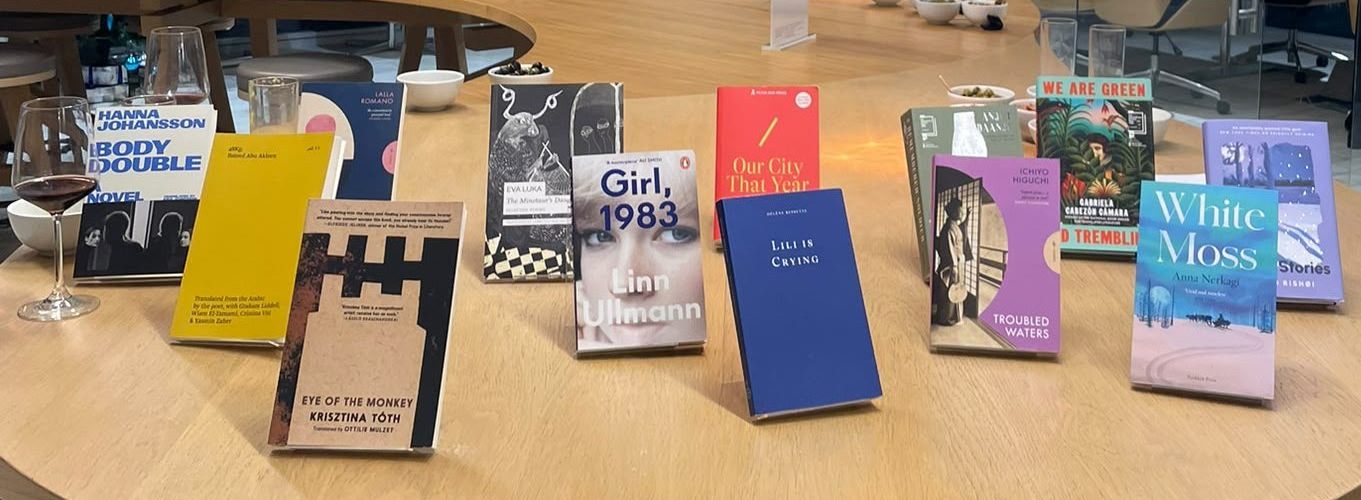
The 2026 shortlist is comprised of:
- Batool Abu Akleen, 48kg., translated from Arabic (Palestine) by Batool Abu Akleen, with Graham Liddell, Wiam El-Tamami, Cristina Viti, and Yasmin Zaher
- Krisztina Tóth, Eye of the Monkey, translated from Hungarian (Hungary) by Ottilie Mulzet
- Linn Ullmann, Girl, 1983, translated from Norwegian (Norway) by Martin Aitken
- Hélène Bessette, Lili Is Crying, translated from French (France) by Kate Briggs
- Ichiyō Higuchi, Troubled Waters, translated from Japanese (Japan) by Bryan Karetnyk
- Anna Nerkagi, White Moss, translated from Russian (Yamalo-Nenets Autonomous Okrug) by Irina Sadovina
One of the judging panel, Boyd Tonkin, emphasised that the “public celebration of literature has no fixed spots”, as this prize celebrates texts that span genre and geography.
Having these… texts presented to us, side by side, evoked the true sense of this award, the process of understanding and author and translator working so closely with each other, to share this lived experience
After these introductions, the first text was presented. Batool Abu Akleen read an extract in the original Arabic, from her poem ‘Life in Hell’, from her collection 48kg. Her translator Cristina Viti followed with a reading of the poem’s translation, in English. 48kg features 48 poems, all contextualised within Batool Abu Akleen’s lived experience in Gaza. Having these two texts presented to us, side by side, evoked the true sense of this award, the process of understanding and author and translator working so closely with each other, to share this lived experience with a wider audience.
Ottilie Mulzet, translator of Eye of the Monkey followed, with an extract from the novel, in English. Eye of the Monkey follows Giselle, in a dystopian near-future surveillance state, in a fractured state of mind as her life and family history unravels around her.
It is evident from listening to these translators discussing their work, that the craft of translation allows literature to be opened up and exchanged on a wider landscape
Linn Ullmann, author of Girl, 1983, though she couldn’t attend the event in person, shared her thoughts on the craft of translation. She explained that “translation is more often than not a collaborative process”, it is “neither fast, nor friendly”, and that “a good translation is a miracle”. The extract for Girl, 1983 was read in English by former winner of the 2020 Warwick Prize for Women in Translation, Charlotte Collins. The extract followed the process of a young girl being approached by a photographer, and the subsequent relationship that developed between them.
Kate Briggs, translator of Lili is Crying, explained the complexity of translation, from the “micro scale of a sentence to the macro scale of a language, and a culture, at a particular historical moment”. It is evident from listening to these translators discussing their work, that the craft of translation allows literature to be opened up and exchanged on a wider landscape. Briggs then shared an extract from Hélène Bessette’s novel in English, which depicts Lili, a woman in her 40s living in the south of France during World War Two, and explores the relationship she has with her domineering mother.
Bryan Karetnyk, translator of Ichiyō Higuchi’s short story collection, Troubled Waters, explained Higuchi’s historical relevance as the first professional female author in Japan. Karetnyk described Higuchi’s past, that living in Yoshiwara, Tokyo’s red-light district, led to her being “interested in those private moments of quiet despair” of the women who worked there. Karetnyk shared an extract from one of Higuchi’s short stories in English, detailing a prostitute coming to terms with her love for an unattainable man.
Writing is a method of sharing experience through language, and this shortlist presents a diverse variety of human experience across cultures and across the world
Irina Sadovina, translator of White Moss by Anna Nerkagi, detailed the story of the indigenous community behind the text, and the effect of modernity on their culture. She shared an extract from White Moss, where a mother comes to terms with the preparations for her son’s wedding day.
Writing is a method of sharing experience through language, and this shortlist presents a diverse variety of human experience across cultures and across the world. The Warwick Prize for Women in Translation was awarded to Batool Abu Akleen and Cristina Viti, for her poetry collection 48kg.
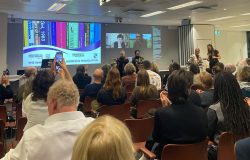
Image: Batool Abu Akleen and Cristina Viti accepting the award, Lauren Marples/The Boar
Comments