The ship of RDJ: Is typecasting changing its face?
Typecasting is a longstanding practice in cinematic history, where actors are fed through an endless recycling chute. Out spurts Dwayne “The Rock” Johnson, playing the same jungle-focused, ripped, smouldering-faced adventurer. From another tube, one can see Jason Statham starring in The Meg 2: The Trench (2023). As Joe Pesci once said, the process of typecasting means that “whatever was successful for them, whatever films make money for them, that’s what they want you to do.” Typecasting arguably limits ambition, stifles creativity and turns cinema from a revolutionary art form into a smoothie of re-mulched ingredients.
Robert Downey Jr. may have traded his iron armour for a green cloak, but it seems Marvel cannot breathe without the man underneath
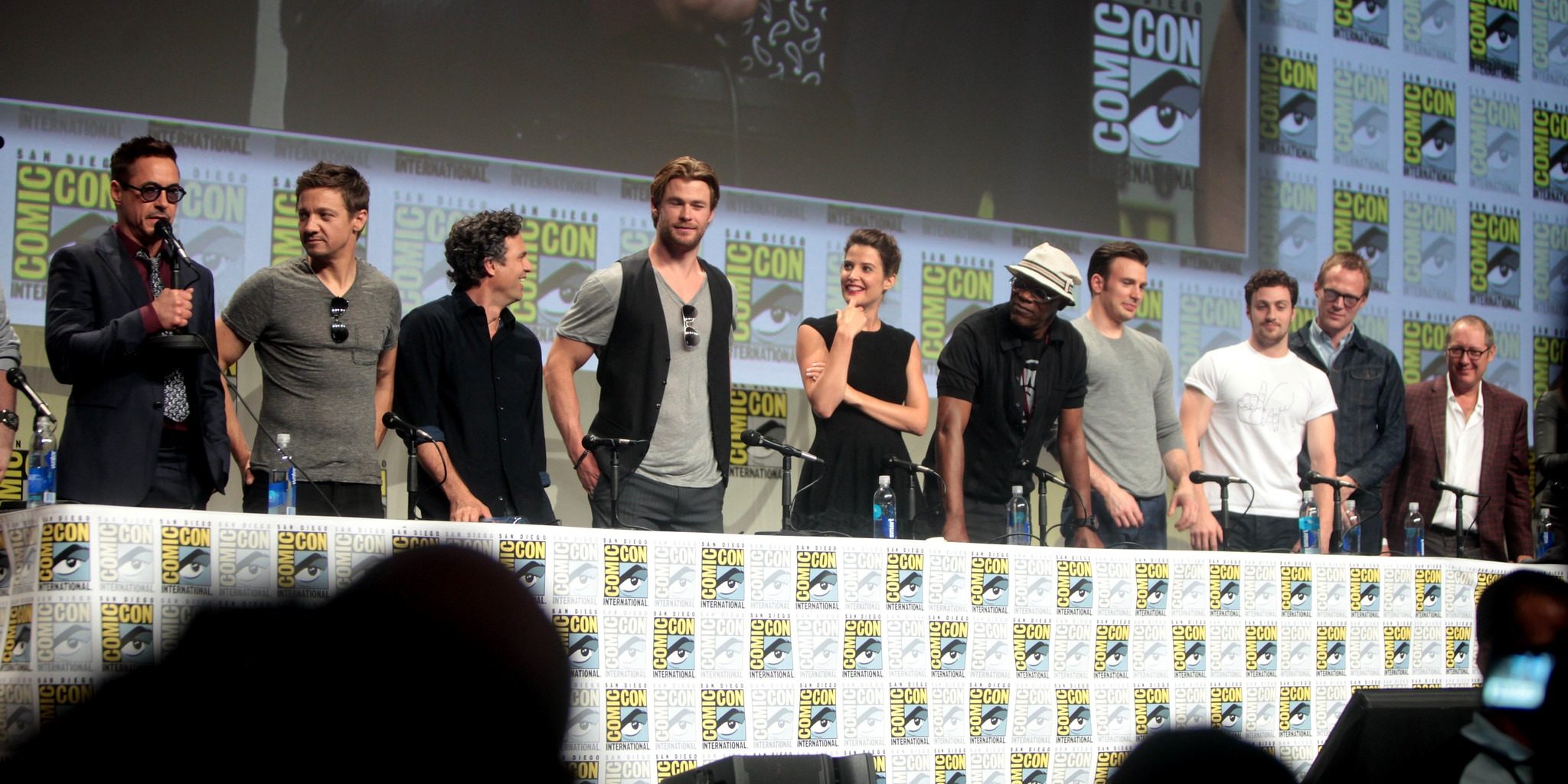
Remind yourself of July 2024. A hectic San Diego Comic-Con saw Marvel Studios reveal the identity of its next great villain. Among a sea of green, a familiar face ripped off his mask in front of the crowd: Robert Downey Jr., the original figurehead of the Marvel Cinematic Universe. It was announced that he would be playing Doctor Doom. RDJ declared to the roaring crowd: “New mask, same task.” Therefore, perhaps we live in a new age of typecast cinema, where studios no longer demand that actors repeat the same motions, but instead shove them into a different costume, with a label sewn into it reading: “Made by Marvel Studios.” Robert Downey Jr. may have traded his iron armour for a green cloak, but it seems Marvel cannot breathe without the man underneath.
What seemed like a belated April Fools’ prank could be a calculated ploy by Kevin Feige to lure audiences back into an arguably faltering universe. This could be defined as a post-Endgame liminal space, in which nostalgia, a lack of focus and a shortage of protagonists seem ever-present. I use the term typecasting carefully here, as one could argue that the decision to recast RDJ as an antagonist, rather than a protagonist, is bold and defies expectations. However, Downey’s departure from the studio after Avengers: Endgame allowed audiences to be reminded of his versatility, which had been obscured by the shadow of Stark Industries.
Even auteur filmmakers must negotiate with franchise stardom, leaving Downey the indispensable face of Marvel
Notably, he won the Academy Award for Best Supporting Actor in 2024 for his role as Lewis Strauss in Oppenheimer (2023), a morally complex antagonist to Cillian Murphy’s Oppenheimer. Downey was also reportedly considered by Christopher Nolan for the role of Poseidon in The Odyssey (2026) but was unable to take it because of filming clashes with Avengers: Doomsday (2026), however this casting report has not been confirmed by Nolan or Downey. Maybe even auteur filmmakers must negotiate around the demands of franchise stardom and perhaps Downey has not been typecast as Tony Stark, but rather as the indispensable face of Marvel itself.
Marvel’s greatest irony lies in its history. When Jon Favreau cast Downey in the first Iron Man (2008), studio executives were reportedly nervous about the idea of an actor whose past made him a significant financial risk. There is something deeply poetic about his return, given Jeff Bridges’ line in the first Iron Man: “Tony Stark was able to build this in a cave! With a box of scraps!” It appears Marvel itself is now facing the same paradox: despite having the tools at hand, it seems unable to assemble the same machine that powered it so successfully years ago. Perhaps Marvel can offer an answer. In WandaVision (2021), the Ship of Theseus is invoked to question whether a reconstructed ship remains the same ship. Applied to Downey’s return, one could suggest that the reassembled image of the actor is made up of the familiar parts of a star audiences have grown to appreciate.
So, what is the detail that links Downey’s two roles in the Marvel Cinematic Universe? They are both defined by their masks. Iron Man constructs a helmet, while Doom dons a mask to hide his scarred face. Perhaps the newly constructed Ship of RDJ has parts so recognisable that audiences no longer need to see the face to understand the star beneath. A less obvious example is Alejandro González Iñárritu’s Digger (2026), which allows Tom Cruise to distance himself from his familiar action-star image. Instead, Cruise physically transforms. He wears a prosthetic fat suit, adopts a Southern American accent and goes grey. Arguably, this challenges conventional understandings of typecasting, however, because of Cruise’s behemoth career, he can hide behind the transformation. After all, the spectacle depends on an audience knowing who is beneath it.
Perhaps typecasting today is a process of disappearance, not appearance. Jump cut to 2026, and Avengers: Doomsday (2026) is ever closer. Eager fans await Downey’s return; less-eager fans, less so. But will his return to the Marvel Cinematic Universe mark a genuine reconstruction, or merely another plank laid in a ship first assembled nearly twenty years ago?
Comments