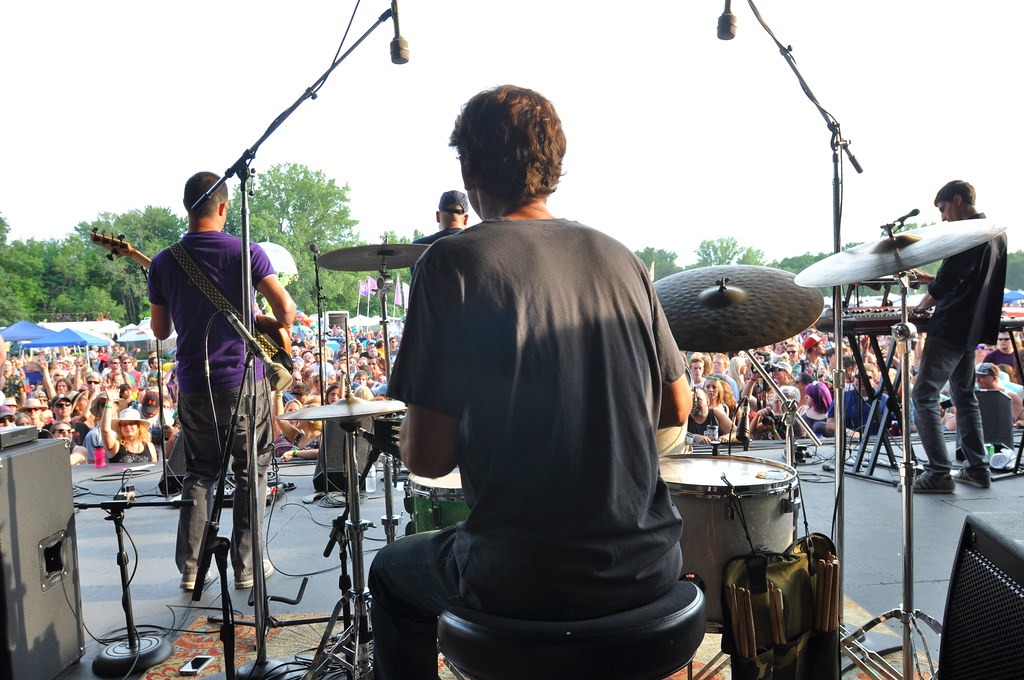
The challenges of touring as a small artist: Is it truly profitable?
With international tours of various artists, such as Taylor Swift’s Eras Tour, Oasis’ reunion tour, or Ariana Grande’s Eternal Sunshine tour, rising in popularity, so have tour prices. An average Taylor Swift ticket in the US costs ordinary people £2,080. With the average Brit earning £3,253 gross per month in 2026, for many people it is in no way sustainable or economical.
However, with this issue comes the rise of smaller band tours and gigs. With people paying as little as £10 to see an artist, whether it be indie or a tribute band, it surely seems all for the better? To see an upcoming band or artist in Birmingham costs an average of £10-£30, which seems an absolute steal for the fans, but how affordable is it for the providers of entertainment: the bands themselves? Are they sustainable in the long term for their careers, or is the music industry becoming even more inaccessible, not just for fans, but for creative talents, leaving everything in this capitalist system for only the rich to reap?
You know how to make a million dollars as a musician? Start with two million dollars
Six Flags Guy
Smaller artist of band Six Flags Guy states the brutal truth of being a smaller artist, “You know how to make a million dollars as a musician? Start with two million dollars.” It’s clear that at this moment, if you are not a ‘nepo baby’, like many smaller artists such as Maya Hawke, the industry is largely inaccessible. For 84% of independent artists in the UK , touring is simply inaccessible, according to a new survey published by UK-based online music distribution company Ditto Music.
Many musicians not only have to spend money on the venue, but also have to find accommodation, fund travel and merchandise, pay crew, supply food and equipment, leaving very little profit at the end of the tour, making many wonder, what is the point of all this? In 2026, according to Musician’s Union, musicians in groups performing in pubs and clubs for up to three hours pays £167.16 per musician and for up to four hours pays £222.88.
Total monthly consumer spending on music has decreased by more than 45%
Expenses that would have previously been covered by album purchases have diminished in the technological era, where pirating strips artists’ hard-earned work, whilst artists with millions of fans earn millions of pounds, spent by devoted, even crazed fans. The post-COVID era led to a substantial decrease in hard copy music consumption. Total monthly consumer spending on music has decreased by more than 45%. With £13.23 in distance fees per hour pro rata, and all the expenses that bands have, many bands need to resort to crowdfunding.
Crowdfunding is when a large number of people contribute a small amount to reach a goal. Many bands turn to this when touring, in order to be able to pay their expenses, which is a great alternative to not touring at all. For example, UK-based alt-rock grunge band Marisa and the Moths raised £23,412 with 221 supporters in 28 days whilst Twickenham’s High Tide Festival also used crowdfunding to be able to make it happen, raising £20,234.
Life experiences such as sharing your music and life messages with other people are worth more than the money
It is therefore increasingly clear that, despite a lot of sacrifices needing to be made by many small artists, touring is possible, and many still do tour, purely for the love of passion and creativity. The sheer practice of getting on stage and performing is worth it in itself. Life experiences such as sharing your music and life messages with other people are worth more than the money. In this capitalist world of ours, it is easy to prioritise money; it seems the entire world is centred around it. But in the end, it is art and music that survive thousands and thousands of years, whether it be epic poetry such as that of Homer or the oldest discovered melody, the ‘Hurrian Hymn‘. Written in the 13th century BCE, its survival on stone tablets from Syria shows how everlasting music truly is. Small artists in their own century can become revolutionary hits.
Whilst it is evident that for small artists the capitalist system doesn’t favour them, humanity does. Culture and art have always survived and are essential to both human entertainment and the human soul. Small artists deserve a chance to share their music across all kinds of communities; hence, people need to support smaller artists, perhaps over the mainstream artists. Not to say that mainstream artists should not be valued, but rather value smaller artists just as much as artists that are constantly touring, in order to open your minds to new ideas and sounds.
Comments