On Point(e): Stepping into iconic dance sequences in film
When thinking of musicals, dance is integral. Yet, dance as used in film extends beyond the traditional musical genre and finds its place in classic sequences that have long been staples in film discussions or through unexpected choreography that takes audiences by surprise. Here, I highlight some of the best dance moments that cinema has to offer.
West Side Story (2021)
The 1961 adaptation of West Side Story is widely regarded as one of the most iconic musicals of all time, and Steven Spielberg’s 2021 version is a worthy follow-up, honouring the legacy of the original while establishing its own identity. Casting performers with strong musical theatre roots strengthens the authenticity of the film’s dance, with choreographer Justin Peck at the helm to reinterpret the choreography of the 1961 film and stage musical for a distinct and modernised experience. Sequences such as ‘Dance at the Gym’, ‘America’, and ‘Gee, Officer Krupke’ showcase the precision of Peck’s choreography, further elevated by Spielberg’s vision, making it a wonder of dance cinema and an unforgettable experience for viewers.
Chicago (2002)
I would be remiss not to include Chicago in this discussion. Rob Marshall’s adaptation of the Broadway musical translates well on to the screen. The showstopping ‘Cell Block Tango’ sequence features stylised sets and sharp choreography, which makes it a spectacle for viewers. A common thread of theatricality runs through the film’s musical numbers and the film itself. Elaborate costumes, dramatic stage lighting, and sets amplify this theatricality, making it a worthy adaptation of the Broadway musical.
Mary Poppins (1964)
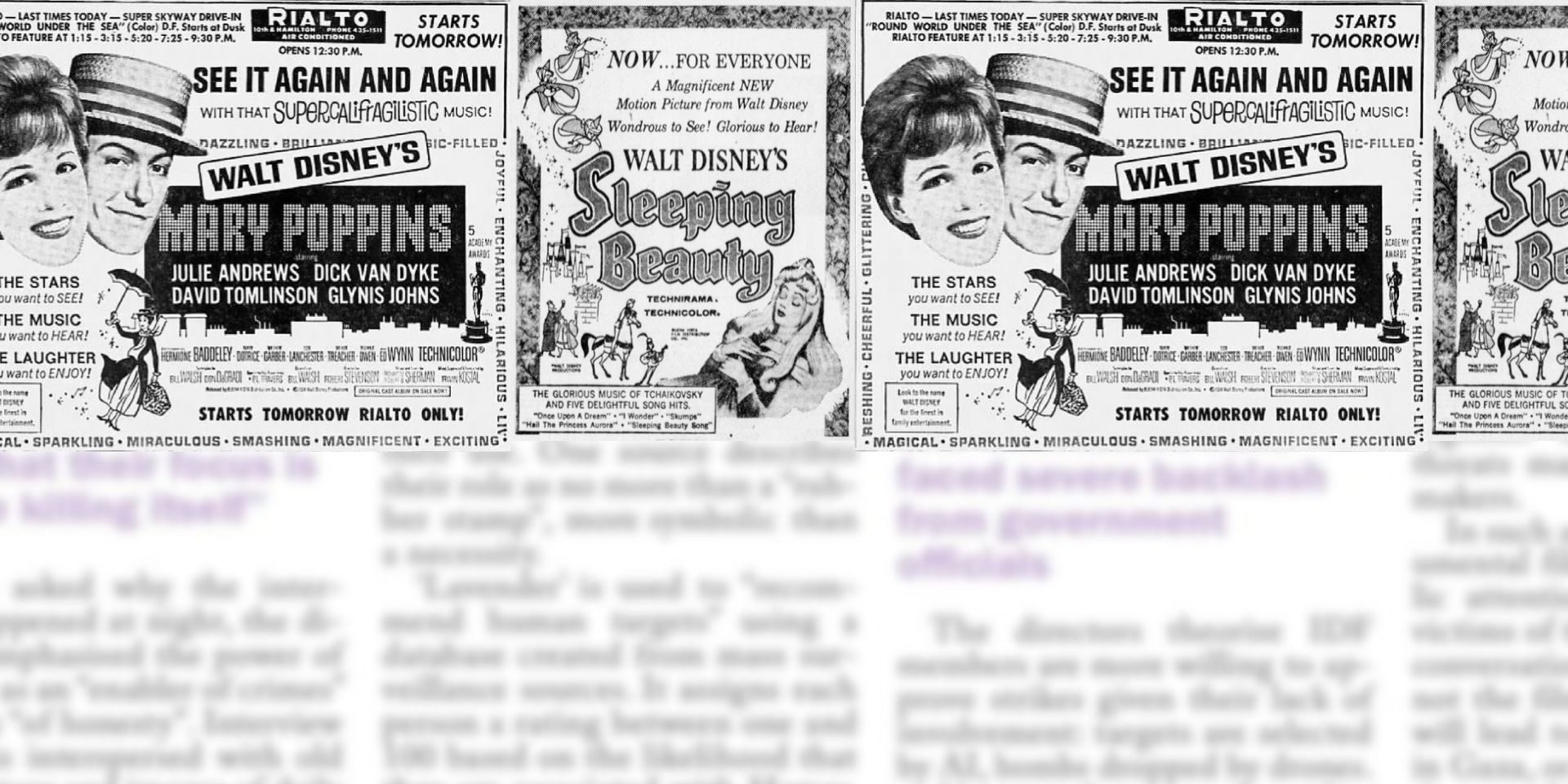
Mary Poppins remains a childhood staple across generations, with Julie Andrews and Dick Van Dyke dancing against the backdrop of fantastical London. One aspect that makes the film particularly remarkable is its blend of live-action performers with Disney’s classic two-dimensional animation. The sequence featuring ‘Supercalifragilisticexpialidocious’ is a particularly memorable example, as the performers interact with animated backgrounds and characters in a world limited only by imagination.
Sleeping Beauty (1959)
At first glance, Disney’s Sleeping Beauty may seem an unconventional inclusion in this discussion. Yet, when you examine the film’s animation process, the illustrators used live-action references to animate Aurora’s graceful movements. Coupled with the sweeping forest landscape and the film’s vibrant colours, this creates an enduring, dreamlike sequence beloved for generations. This movie is a testament to the artistry of traditional animation, showing how careful hand-drawn animation can evoke emotion and wondrous atmosphere for audiences.
Om Shanti Om (2007)
Often, when discussing dance and music in film, Bollywood films get overlooked by audiences whose understanding of this genre is shaped primarily by Western cinema. Om Shanti Om, written and directed by Farah Khan, is a celebration of everything spectacular about Hindi cinema, packed with easter eggs and homages to Bollywood’s past and present at the time of the film’s release. From musical numbers such as ‘Dhoom Taana’, which blends elaborate choreography with lavish costumes and shifting set designs often seen in Bollywood films, to ‘Deewangi Deewangi’, a miraculous ensemble number which brings together a collection of Bollywood stars, the film embodies the grandeur which Bollywood celebrates.
Comments