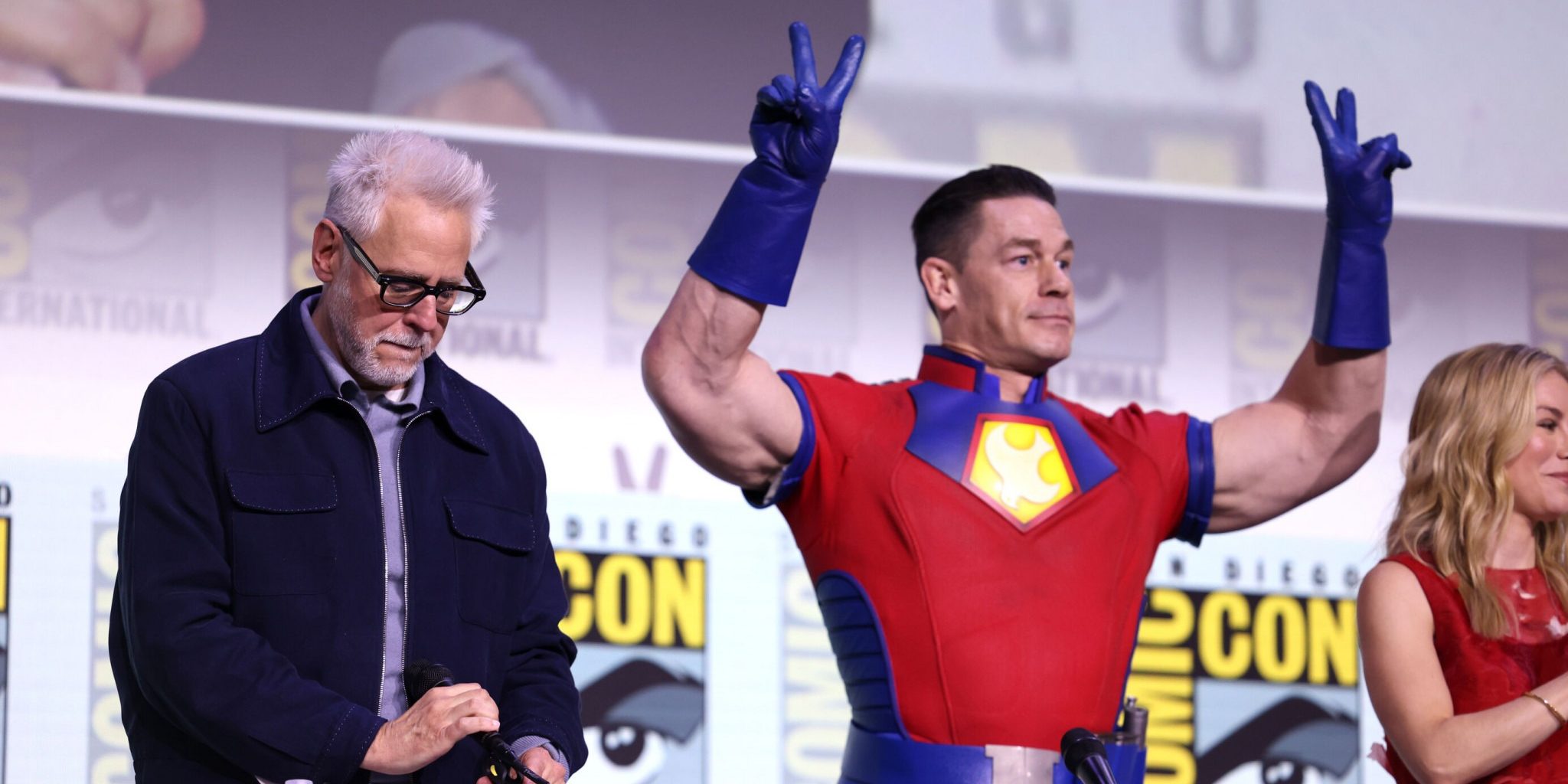
James Gunn axed: Is the DC Cinematic Universe over again?
The Gunn has jammed. On 9 November 2026, it was announced that James Gunn and Peter Safran would leave their leadership roles as co-CEOs of DC Studios, following Skydance Media’s takeover of Warner Bros. Discovery. The shock decision has rocked the comic-book world. It has left many fans, including myself, worried that the DCU will suffer the same fate as the old DCEU, with studio executives meddling in directors’ visions, rushing projects and releasing sub-par – and sometimes outright bad – adaptations of beloved comic-book characters.
James Gunn is an eclectic director. His work is vibrant and buoyant, and offers a medium through which he can share his Spotify playlist with the masses. The Suicide Squad (2021) is a perfect example of what it means to be a James Gunn film. It follows a group of misfits, not quite heroes and not quite villains (the precarious middle that Gunn adores), tasked with unearthing government secrets. It is a film riddled with glowing intensity and heart, with scenes that will crack you up and make you wildly emotional. Released in 2021, it was a fresh and much-needed splash of colour for DC on the big screen and James Gunn had it in him to lead the DCU.
It was simply written in the stars, and boy did he deliver. Gunn and Corenswet’s Superman (2025) took the comic-book world by storm, marking a complete U-turn from Zack Snyder’s brooding and desaturated depiction of the last son of Krypton. The film made $618 million worldwide – around 2.7 times its reported $225 million production budget. For a good couple of weeks, social media comment sections did not feel like cesspools of hatred and animosity, instead, the symbol of hope and punk-rock attitude that Gunn manufactured seemed to permeate online culture.
Skydance sees things differently, with 2026’s declining box-office performance potentially contributing to Gunn and Safran’s departure
Skydance Media, however, has reached a different conclusion. The company has not publicly explained in detail why it chose to replace Gunn and Safran. Reports have linked the leadership change to DC’s weaker box-office performance in 2026, despite Superman being the best-performing comic-book film of 2025. The precise reasoning behind the decision remains unclear. We can perhaps deduce that the new leadership has a different vision for what Superman should be, although many would dispute that.
As depressing and disheartening as Skydance Media’s decision is, James Gunn was not perfect. His vision for the DCU sometimes felt scattergun, leaving DC fans asking “Why?” when rumours about proposed projects entered the discourse.
Undoubtedly, James Gunn and Peter Safran came under scrutiny during their four-year tenure as co-CEOs of DC Studios. A major point of tension was the often-confusing vision the pair had for the future of the DCU. Gunn’s 2023 Chapter One announcement included many projects that have since stalled or whose status remains unclear, such as the Amanda Waller series, the Booster Gold show and his planned Batman film, The Brave and the Bold. Countless DC fans could not see how these projects would fit alongside Superman (2025) and Lanterns (2026). However, the projects that were greenlit and produced have, for the most part, been very well received, and the future of the DCU seemed to be in good hands.
As much as Gunn succeeded with Superman and TV shows such as Peacemaker (2022–2025) and Creature Commandos (2024), his second DCU film, Supergirl (2026), gravely disappointed many of those who had anticipated it. Supergirl fell extremely short of what came before it. Director Craig Gillespie failed to capture the essence of the source material, which features magnificent illustrations, intense colours and a real showing of might from Kara Zor-El. Instead, what we were given was barren, beige and gutless. It was a sad setback for the DCU, although not one that I thought was detrimental enough to warrant a reshuffling of the hierarchy.
One major pull for many DC fans was the philosophy behind Gunn and Safran’s plans. They were committed to giving greater creative autonomy, which felt like a unique selling point of the DCU
One major pull for many DC fans, and comic-book movie fans in general, was the philosophy behind Gunn and Safran’s plans. They were committed to giving the directors and writers of the various projects greater creative autonomy. This felt like a unique selling point of the DCU, which Gunn and Safran spearheaded, and surely something the studio executives ought to protect and defend. Only through this approach could something like Clayface (2026) and Superman (2025) coexist in the same cinematic universe. This was a radical shift from the MCU model, in which many of the films were cut from the same cloth. That approach is, in fairness, more stable by definition, but far less exciting. Yet it appears that, following Skydance’s acquisition of Warner Bros. Discovery, the new leadership may be less willing to risk another Supergirl debacle or embrace a more adult-oriented, R-rated film such as Clayface (2026).
Ultimately, this shock restructuring begs the question: will the DCU suffer the same fate as its predecessor, and what does the future hold in a Gunn-less DCU? My one final hope is that, under incoming DC Studios president and chief creative officer Jeremy Latcham, Gunn will remain creatively involved and be allowed a degree of freedom. May Gunn and Safran’s creative philosophy still be threaded through this new era. Let’s hope it is not the beginning of the end. Only time will tell for the DCU of tomorrow.
Comments