Is cinema back from the dead?
Since the Covid-19 pandemic, it seems as though going to the cinema has slowly become a thing of the past and audiences prefer to stay in the comfort of their own homes. With streaming platforms bringing in hundreds of films, both new and old, straight to our living rooms, there’s a point to thinking why would anyone want to fork out on a cinema ticket? But 2026 may have shifted this mindset. This year has seen a remarkable run of releases, from major blockbusters such as Spider-Man: Brand New Day to low-budget indie films like Obsession and Backrooms, and their appeal is bringing people back to the big screen.
There is something so uniquely captivating about enhanced visuals, immersive surround sound, and shared reactions which cannot be replicated at home
As a film student here at the University of Warwick, I myself cannot stress the importance of collaborate viewing and the experience of watching a film in a cinema room. There is something so uniquely captivating about enhanced visuals, immersive surround sound, and shared reactions which cannot be replicated at home. And, just because I am accustomed to these cinematic elements does not mean that the general audience cannot generate the same enthusiasm for such experiences.
Take the new Spider-Man film for example, which received a staggering $360.10 million on opening weekend at the North American box office and had audiences flocking to cinemas, some even dressed in costume, to witness the return of Tom Holland as Peter Parker after nearly five years of anticipation. The spectacle surrounding this release demonstrates that, for certain films, ‘cinema’ can be just as much a cultural event as a movie viewing.
When someone tells you that The Odyssey deserves to be witnessed in 70mm IMAX, you listen
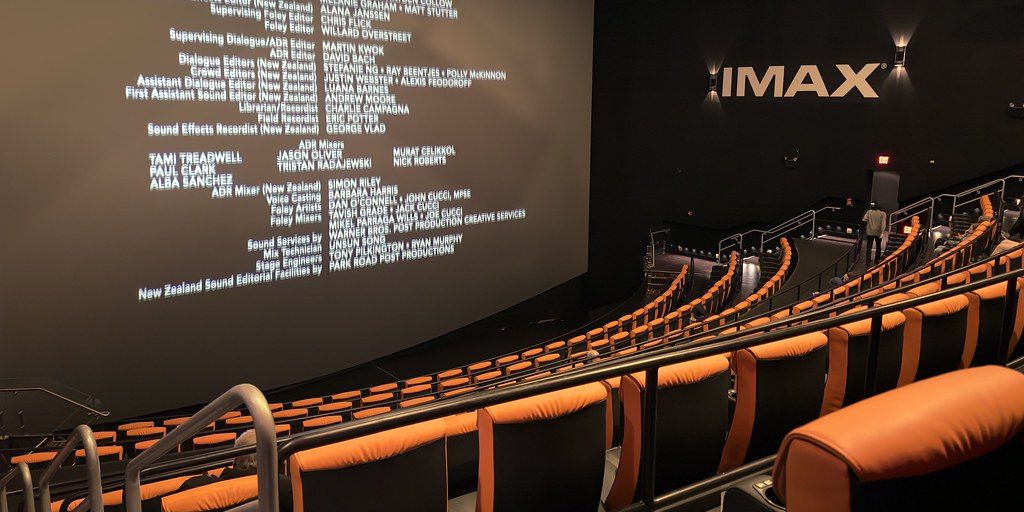
One of the most anticipated films of the year, according to IMDB, was Christopher Nolan’s The Odyssey. As a cinephile, this film simply had to be experienced in the cinema. Nolan’s adaptation is the first feature film to be entirely shot with IMAX 15-perf/65mm film cameras. Not only is this an exciting development in cinematic technology, but it has encouraged discussion about how one is supposed to experience the film. Now, the format of the film matters just as much as the film itself. So, when someone tells you that The Odyssey deserves to be witnessed in 70mm IMAX, you listen. For a film of this scale, it should be watched on the biggest screen possible, not out of preference but out of necessity.
However, in all honesty, both films may have something even more enticing than their subject matter. After all, who wouldn’t want to see Hollywood’s power couple Tom Holland and Zendaya on the big screen? Their star power alone is enough to generate excitement, but with the pair starring in not one, but two major blockbusters in 2026, as well as their own individual projects across the year, their presence really has created a buzz surrounding this year’s cinematic releases. I’m not necessarily saying that Tom and Zendaya have singlehandedly saved cinema, but I think we can all agree that their talent deserves more than a television screen and a comfortable sofa.
Audiences are willing to visit the big screen for a refreshing and dramatic experience
Nevertheless, the recent surge of cinema cannot be entirely attributed to familiar film franchises, with the release of Project Hail Mary demonstrating how films outside of established cinematic universes can generate excitement and attraction. Meanwhile, the success of a low budget, independent film like Obsession, absent from the backing of franchises or A-list actors, suggests that audiences are willing to visit the big screen for a refreshing and dramatic experience. Horror, in particular, emphasises the appeal of viewing films as a collective; I want to hear strangers scream or watch them physically jump out of their seats. Perhaps our issue is not that audiences have lost interest in cinema, but rather that we, as a society, have become more selective about which films deserve the price of a ticket.
Where will you be on December 18? If it’s not in a cinema seat, you’ll be missing out on one the greatest cinematic phenomena since Barbenheimer. With Dune: Part Three set to hit cinemas on the same day as Marvel’s Avengers: Doomsday, audiences online have already entitled it the appropriate name ‘Dunesday’.
Yet, Doomsday appears to be taking the media by storm with Marvel’s marketing and the return of multiple, unexpected familiar faces. It has already been described by film reviewers as the “one most likely to dominate conversation regardless of quality”. This highlights the fact that audiences don’t require a critically acclaimed film, they want to see their favourites return to screen in an epic blockbuster to end the year. Their promotional strategies have sparked character theories and fuelled online speculation, creating an insight into how the film will be spoken about in most media outlets. With the risk of spoilers looming, audiences may be compelled to visit cinemas as soon as possible, knowing that their casual after-work scroll through social media could ruin the experience entirely.
It is hardly surprising audiences are becoming more selective about their cinema trips
Despite the success of these releases, it would be naïve to suggest that cinema has entirely recovered in a post-pandemic society. With rising ticket prices and streaming services offering endless entertainment for a single monthly subscription, it is hardly surprising audiences are becoming more selective about their cinema trips.
Ultimately, I don’t believe cinema is dying; people just need a reason to leave the sofa. So, why not experience the next major blockbuster on the big screen, in your pyjamas? After all, cinema is worth leaving the house for, so why not do it in style?
Comments