From France to the UK: My experience as an Erasmus+ student at the University of Warwick
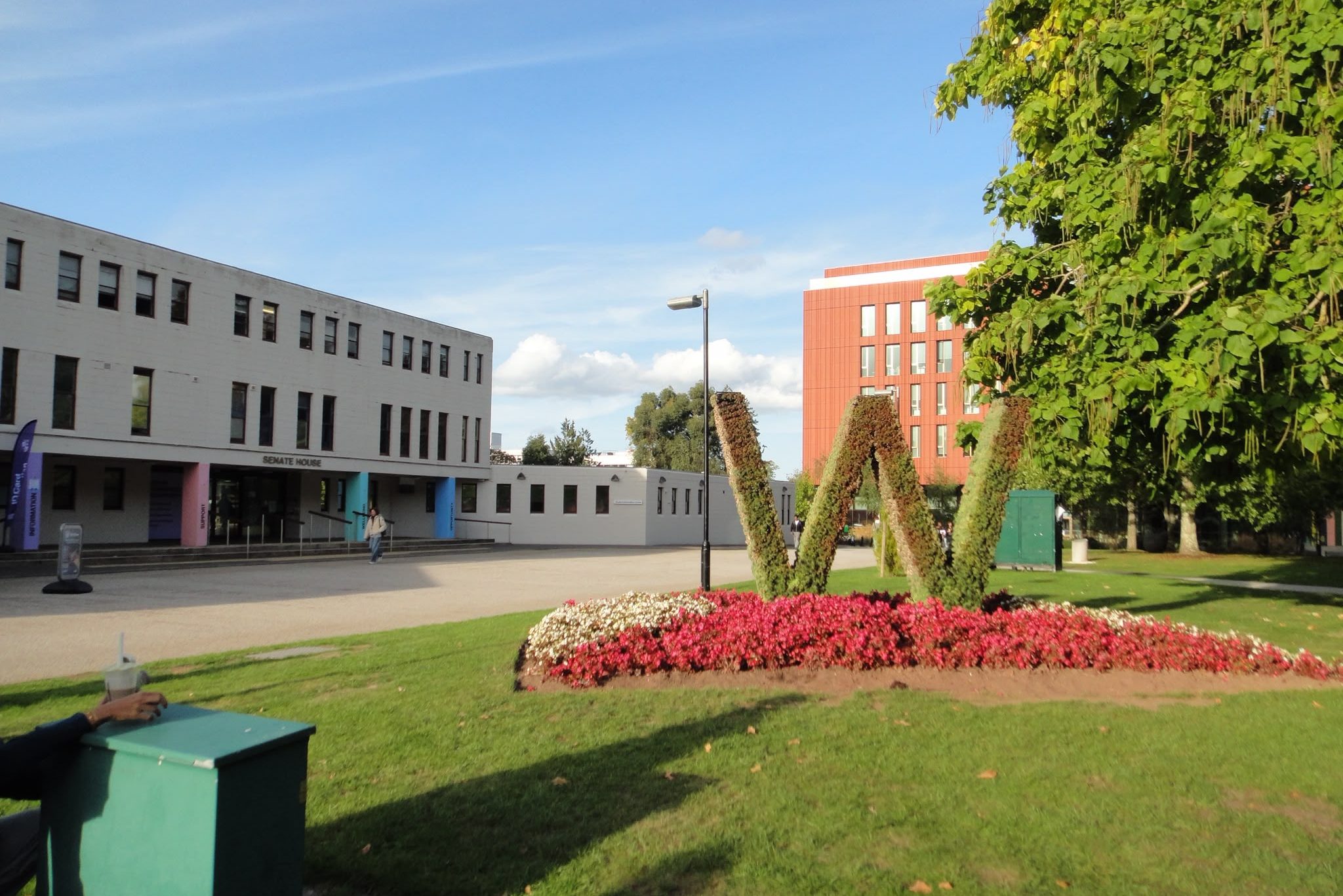
I am a French exchange student visiting the University of Warwick for the Autumn term. I am in the last year of my degree, and I was able to come to the University thanks to the Erasmus+ programme. My home university is the Université Paris–Est Créteil (UPEC).
I am a French woman of North African origin (Tunisian and Algerian), and a Muslim who wears the Hijab. I come from a suburb of Paris, and I am 21 years old.
Before arriving in the UK, there were many pre–arrival preparations to complete: I had to compare the options for accommodation, and choose the best one for me; prepare my visa application; get an eSIM; pack my belongings; get vaccinated against Meningitis; and buy the essential items I was going to need upon arrival.
I really appreciated that we had a ‘Welcome Week,’ as I could become familiar with the university environment before classes started
Once settled in, I turned my attention to university life. I really appreciated the ‘Welcome Week’ as it helped me get familiar with the university environment before classes started. There were lots of events that created a very welcoming atmosphere and gave us people to guide us during our first days, which was really reassuring. It helps you feel supported, and that is exactly what students need at university.
There are quite a few striking points of comparison between French and British universities, starting with the modules. There are two main differences: the number of modules and the ability to choose them. This term, my classmates in France are taking 14 modules, but I had to choose a maximum of four modules for my exchange term in the UK. Furthermore, at my home university, modules are pre-selected, whereas here I can choose my modules (as long as they are relevant to my degree and approved by my UPEC academic coordinator).
Overall, what I’ve found is that there is a real sense of student life here
As might be evident from the compulsory 14 modules, French timetables leave students very little free time for societies and sports activities. As a result, I was surprised to see the large variety of student clubs available at the University of Warwick during the SU’s Societies’ Fair. There were even societies with hilarious names I would never have imagined to exist, such as Bad Film Society and Cheese and Chocolate Society. Overall, I’ve found that there is a real sense of student life here.
Next, I was surprised to learn that every student has a personal tutor, as well as regular meetings with them. This is a thoughtful measure which aids students throughout their studies. In contrast, my home university does not offer a system like this.
As a French citizen, I only pay around 175 Euros per year in tuition fees
However, it’s important to remember that UPEC is a public institution and pretty much free. As a French citizen, I only pay around 175 Euros per year in tuition fees. This may explain some of the differences I’ve discussed in terms of societies, personal tutors, and other aspects of university life.
Let me briefly introduce you to the current political and social situations in France. Since the last presidential election, we can feel a strong right–wing atmosphere, as well as an increase in racism and Islamophobia.
For instance, in 2023, a law was introduced to ban the Abaya (a long, loose-fitting Arabic dress often worn by Muslim women) in primary and secondary schools. If someone is perceived to be Muslim, they may be forbidden from entering school while wearing it.
Coming to the UK has made me feel human again after a very long time
I decided to wear the Hijab four years ago and, since then, I have often felt invisible, hated, and rejected. Coming to the UK has made me feel human again after a very long time. Here, I don’t feel that people avoid or ignore me. They talk to me and smile, and I feel welcome everywhere. This experience feels strange after being mistreated for so long.
I would like to thank the University of Warwick for maintaining this exchange programme and its partnership with UPEC, even though this has become more challenging since Brexit. I am also grateful for the way in which the University welcomes visiting students.
Most of all, I would like to express my gratitude to the Erasmus+ programme and my home university for giving students the chance to have such valuable experiences and for doing their best to provide amazing opportunities like this one.
Comments