Expression Through Hair
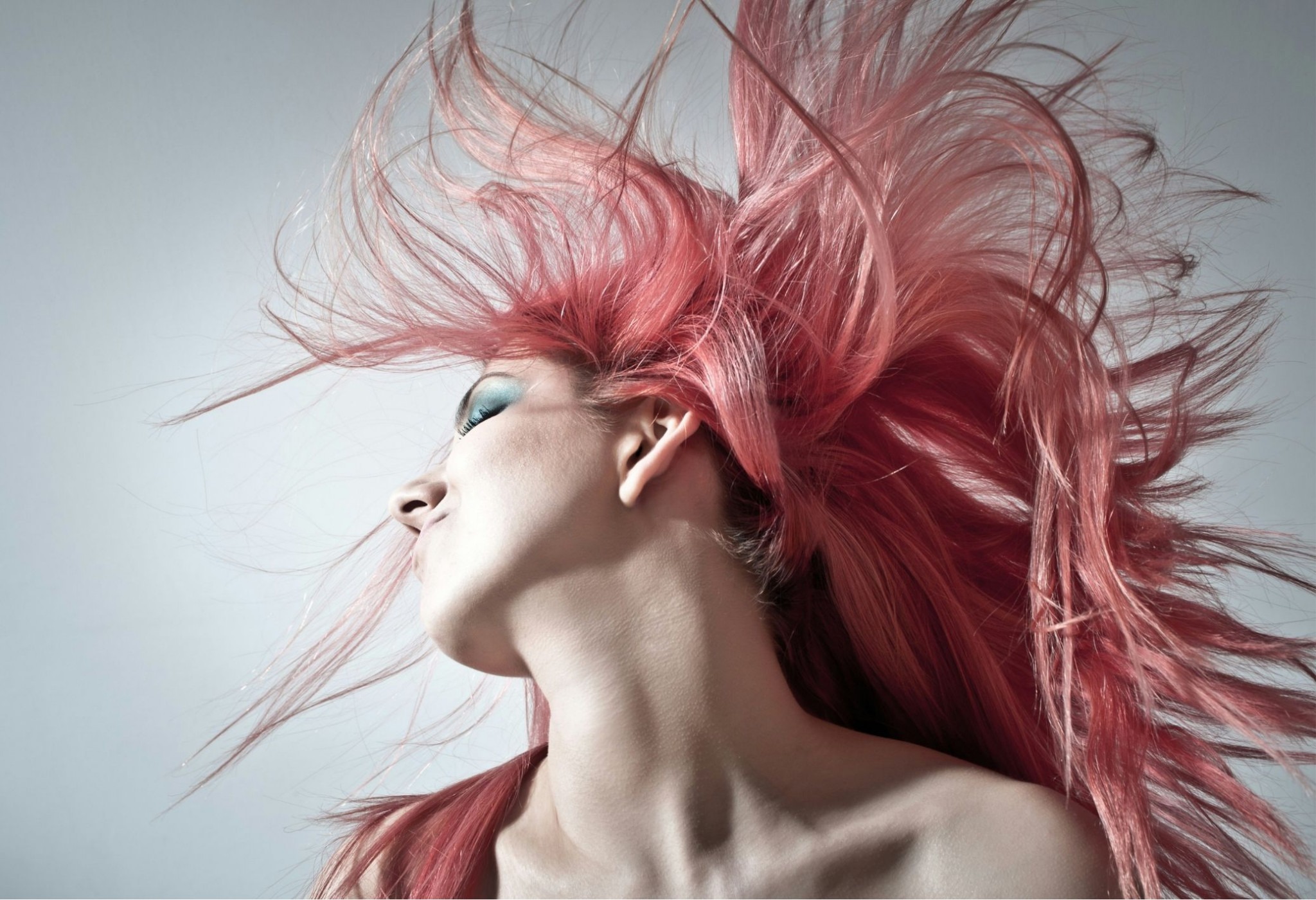
Why has a predominant mixture of proteins, chemical bonds, and genetics been able to occupy such an enormous portion of our self-identity? Our hair, like any other anatomical attribute, has its purpose. One that has virtually nothing to do with our sense of creativity or expression. And yet, every day we are bombarded with an influx of content on social media that attempts to help us construct visual identities through our hair. For a cancer patient undergoing treatment, even having ‘no hair’ is like having a billboard on your head that defines you as a person with cancer. So even a lack of hair represents an identity, a meaning; for that patient, it represents the trade-off between having hair and getting to live.
On the other hand, hair can represent culture. The vogue of slick-backs that has recently run rampant in the West, a poster child for the “clean girl aesthetic”, has been an integral part of various cultures, and in fact a staple, long before its rebrand. For generations, women of colour have been oiling and slicking their hair back without chalking it up to be a part of a trend. And while there is virtually no issue in this, it just goes to prove that hair can mean different things to different cultures, without ever being confined to one particular meaning.
Hair has never been just hair
For many though, hair has rarely been a one-dimensional issue. Growing up with the weight of perception, hair has always extended beyond a beauty choice. Certain styles are considered more “polished” or “appropriate” compared to others which are perceived to be “bold” or “unprofessional”. Curly hair has almost always borne the brunt of this weight. For some reason, naturally curly hair, is portrayed as “wild”, whilst straight hair is given the honour of being “neat and classy”. This has caused generational self-consciousness and insecurity, especially in professional settings.
Throughout the generations, we have been conditioned to believe that our hair is something that needs to be fixed, giving us a sense of crisis in our visual identity. In fact, hair has also been used to assign stereotypes like “the dumb blonde”. So, can we still claim that hair holds no degree of impression?
Hair represents culture, expression and identity. Its character cannot possibly be considered homogenous. So, whether it’s fashion or convenience, identity or self-expression, hair has never been just hair.
Comments