Elevator Pitch: Funkallisto
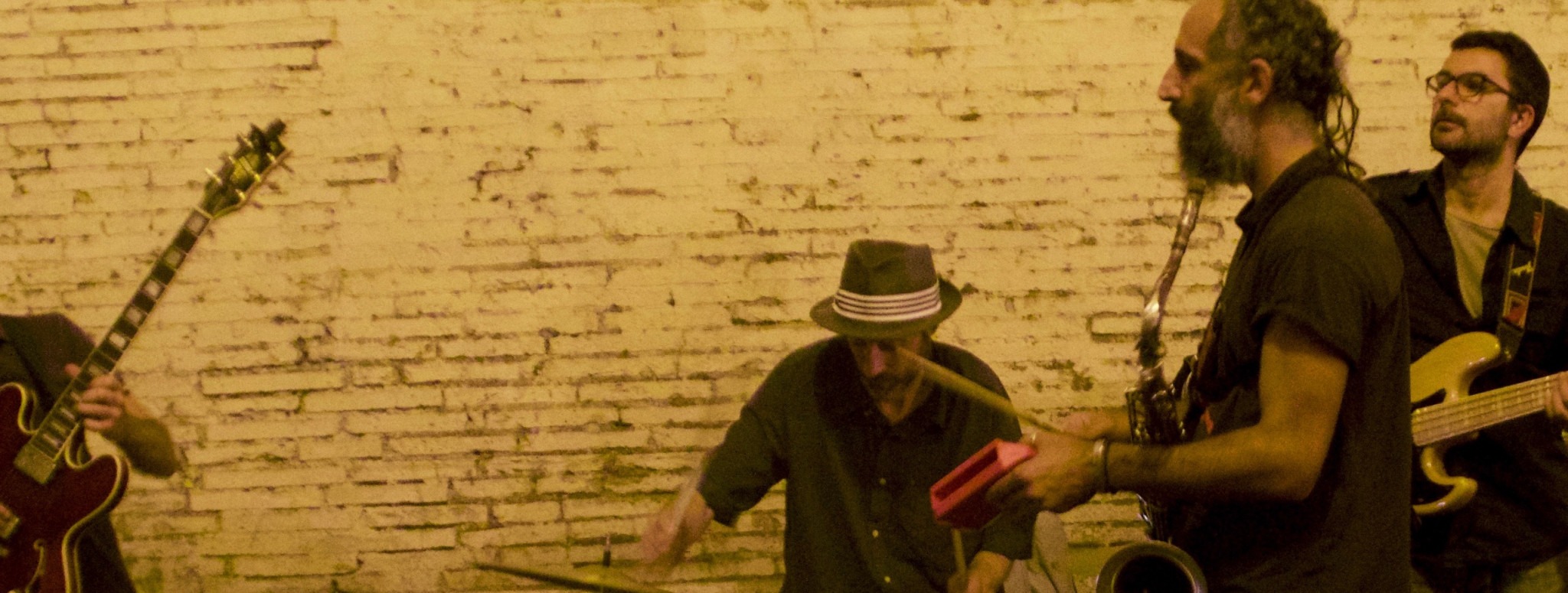
In mid-September, my friends and I were in Rome, strolling to a popular busking spot we’d discovered on social media. Crossing the Tiber River, we approached a band on a bridge whose music was swinging, loud, and echoing along the river. They played with a grungy bassline and a light saxophone melody to create an effervescent sound I’d never heard before.
We continued along the bridge towards the busking spot where – much to our dismay – it was simply a man with a microphone and a speaker, blasting Italian pop group Ricchi e Poveri’s ‘Sarà Perché Ti Amo’ and chatting with the crowd.
Don’t get me wrong, for some, this could fashion a blissful night out in Rome, perhaps accompanied by a cheeky Aperol Spritz or a scoop of authentic Roman gelato. However, we longed to hear the playful tune of the funk band once more.
It was as if the instruments were in conversation with one another – the musicians shared, stole and relinquished control of the music, crafting an unpredictable, meandering nature to their piece, uncertain of the next move
Thus, we ventured back along the bridge and found them amongst the crowd, Funkallisto. Observing them for 30 seconds was sufficient: we were hooked. The harmonious blend of instruments (drums, saxophone, trumpet, bass, guitar, and more) was spellbinding. It was as if the instruments were in conversation with one another – the musicians shared, stole and relinquished control of the music, crafting an unpredictable, meandering nature to their piece, uncertain of the next move. They didn’t use lyrics, only raw musical instruments which were exchanged between musicians. It was intriguing to see how the instruments behaved under the control of different musicians, uttering new textures and sounds with every stroke.
Their music was subversive: undefinable, unpredictable, and soulful. They deviated from the modern trends of synthetic beats and autotune to alternatively favour real humans creating real music. Reminiscent of the 1920s Jazz Age, with influences from black American artists of the 1960s, including Kool & The Gang, Marvin Gaye, and James Brown, Funkallisto employ elements of “jazz-funk, afrobeat, rock, Latin and soul”. The result is “an explosive kaleidoscope of relentless, bass-heavy grooves, and soulful, melodic interplay”, according to the band’s Spotify page.
If you’re partial to Bruno Mars, RAYE, or even Harry Styles, Funkallisto could be right up your (cobbled Italian) street. Submerge yourself into a unique experience, looking back on a late-night wander across a Roman bridge in the late summertime.
If you’re seeking something truly reflective of their style, their live album would be the first port of call
To start, I would suggest dabbling in Funkallisto’s 2020 album, Soul Street Brothers, a collection of funk covers and sounds. I am particularly partial to ‘Love Bug’, a tune that pulls me back to those Italian evenings in September. The band also have a live album, Live a Ponte Sisto, recorded on the very bridge where I first discovered them. If you’re seeking something truly reflective of their style, their live album would be the first port of call.
This band is truly special, releasing music independently through their own label, Express Yourself, and performing live, free gigs to charm cities with their sound. This is what they are all about: raw, soulful music, alluding to a life richer and heartier than the monotony of the everyday.
Thus, why not revive your appetite for life and give Funkallisto a whirl. You’ll be loving funk and jazz as much as Ryan Gosling in La La Land.
Comments