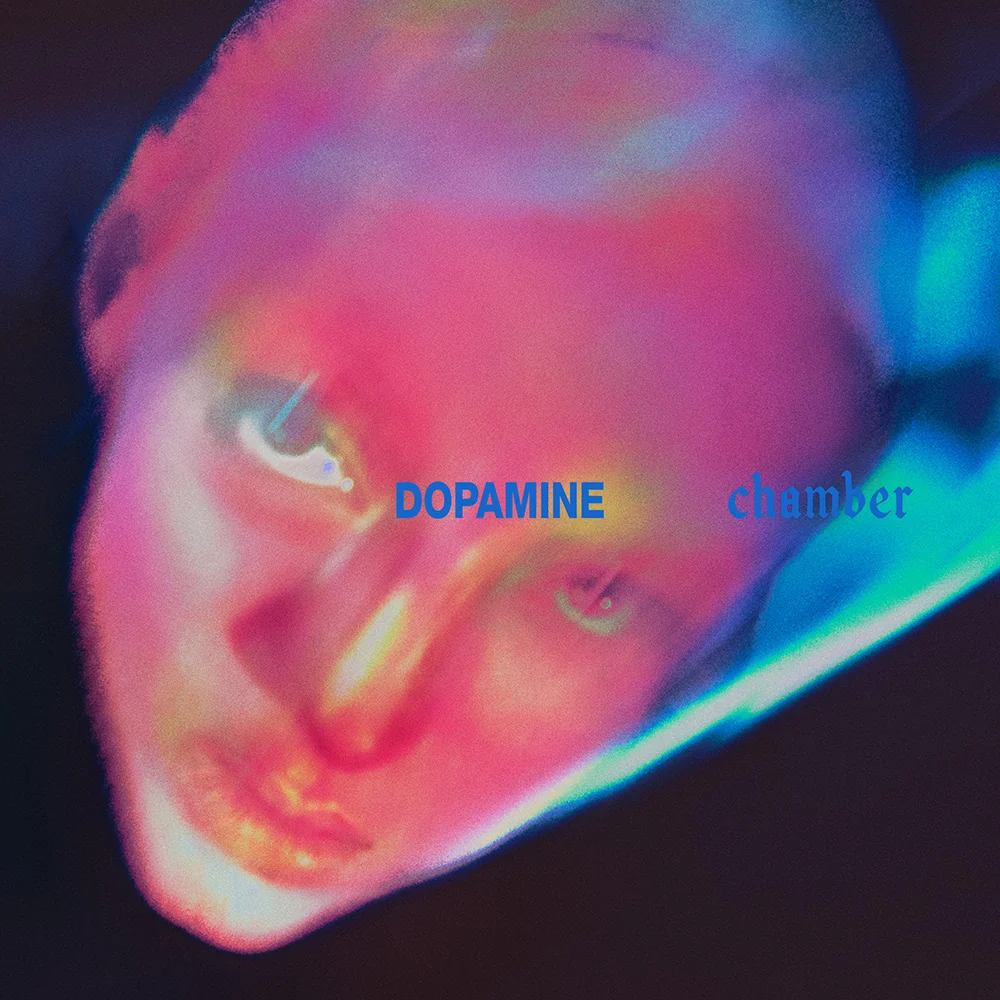
Lose yourself in a ‘Dopamine Chamber’
On Friday 16 October, Irish band Fontaines D.C. released their fifth studio album, Dopamine Chamber. The album serves as a metaphor for the conflict between awareness and desire in relationships, with both people and our own societal and technological dystopia. It is both a deeply personal heartbreak album and a concept record, which explores the collapse of context as a result of social media and the digital world, where technology is always available to distract us from our pain – a quick dopamine fix. Through lead singer Grian Chatten’s voice, you hear a mix of cynicism and hope, not as separate entities but instead as two feelings that depend on one another: if we stop seeing the worst, we cannot begin to see the best.
Synthesisers, samples, and triggered sounds are central to the album, the production feeling clinical, precise and sterile
Much like its conflicting themes, the music on the album is a mix of genres – hyper-pop, experimental electronic, dark-wave, and gothic rock to name a few. Earlier Fontaines D.C. records have been largely led by guitar, but Dopamine Chamber challenges this reputation. Synthesisers, samples, and triggered sounds are central to the album, the production feeling clinical, precise, and sterile: ‘Six Shot Morning’ sets the tone for the album, its eerie, electronic lurk immediately foregrounding the world the record aims to build. The listener is transported to a dystopian realm in which there seems to be no escape, everything around them only revealing man’s flaws.
It is only through Chatten’s vocals that a sense of humanity is brought to the fictional (at least for now) direction of the album, creating a tension between the organic and the synthetic. In lead single ‘Marianne’, Chatten’s whisper – “Understand this is your life / You can go on dreaming / You can go under the knife” – is paired with a visceral, pulsing bass, seducing the listener deeper into the album. Every “you” feels intimate, raw, and almost threatening, this closeness inescapable; the distance between the listener and the narrator feels uncomfortably minuscule.
‘Demolition’ explores the addictive nature of romance, lustful, needy tones lacing every lyric: “Do I live in your bones?”. There is a tremendous sense of loss and mourning for a past relationship, the song drawing on a desire for connection to be engraved, scarring, and permanent. Lyrically sincere, Fontaines D.C. do not try to beautify anything about love; instead, in few honest words, they spell out the intensity of human emotion.
It would be remiss not to mention ‘Where is Gone?’, a track on which Spanish pop artist Rosalía features, despite it being unlike any of her own work. Through the melodic duet, the listener can hear the trouble that arises from suppressing feelings, shared vocals giving rise to a certain uneasiness and foreboding: “There’s no way of going back to how I feel.” There is a sense of mourning – the pair are lost in their own minds over each other; this grief feels temporarily inescapable.
The uncertainty in the songs creates a particular feeling that makes the music difficult to exhaust; every time you listen to it, you hear something new
Also deserving of recognition is ‘Japan’, an ambiguous song that really comes to life through the music video, starring Stranger Things actor Charlie Heaton. A woman trapped in an unhappy, mundane relationship fantasises about a younger mystery man, their secret meetings reinvigorating a sense of youth and adventure in her unfulfilling existence. However, it is unclear whether he is merely a figure of her imagination or a tangible escape. The former thought arises as Heaton appears to be almost too good to be true, literally bearing the same scars as her, her ideal companion in a way that is just a little too idyllic.
Part of the reason the album is so compelling is that it is deep, nuanced, and without a clear through line; there is no one overarching message. The band wrote an album, a culmination of both experience and fiction, released it, and now we must take from it that which provides us with a semblance of perspective in our own lives. The uncertainty in the songs creates a particular feeling that makes the music difficult to exhaust; every time you listen to it, you hear something new. With ‘Japan’, for example, you can spend time trying to work out exactly what happened between the two characters, or you can simply lose yourself in the haunting refrain.
Before the record was released, guitarist Conor Curley said he wanted to avoid sounds that immediately recalled historic bands – Dopamine Chamber moves far away from the upbeat pop of commercial success ‘Favourite’ from Romance. However, there is still a clear trajectory for true fans of good music, their songs continuing to build on themes of love, loss, and existential crisis.
If I had to single out three tracks from the album that best capture the record, I would have to pick ‘Marianne’, ‘Demolition’, and ‘Japan’. Together they show three different types of emotional intensity: temptation, destruction, and melancholy. Each song has a distinctive sound, with ‘Marianne’ being synth-driven, ‘Demolition’ being guitar-heavy, and ‘Japan’ possessing a softer edge. Together, they show the stylistic and thematic fluidity of the band.
I would recommend Dopamine Chamber to anyone who wants an escape from life. You don’t need to have recently gone through a breakup to appreciate that every song on the album is an opportunity to lose yourself in deliberate obscurity.
Recommended Listening: ‘Marianne’, ‘Demolition’, ‘Japan’.
★★★★
Listen to Dopamine Chamber here:
Comments