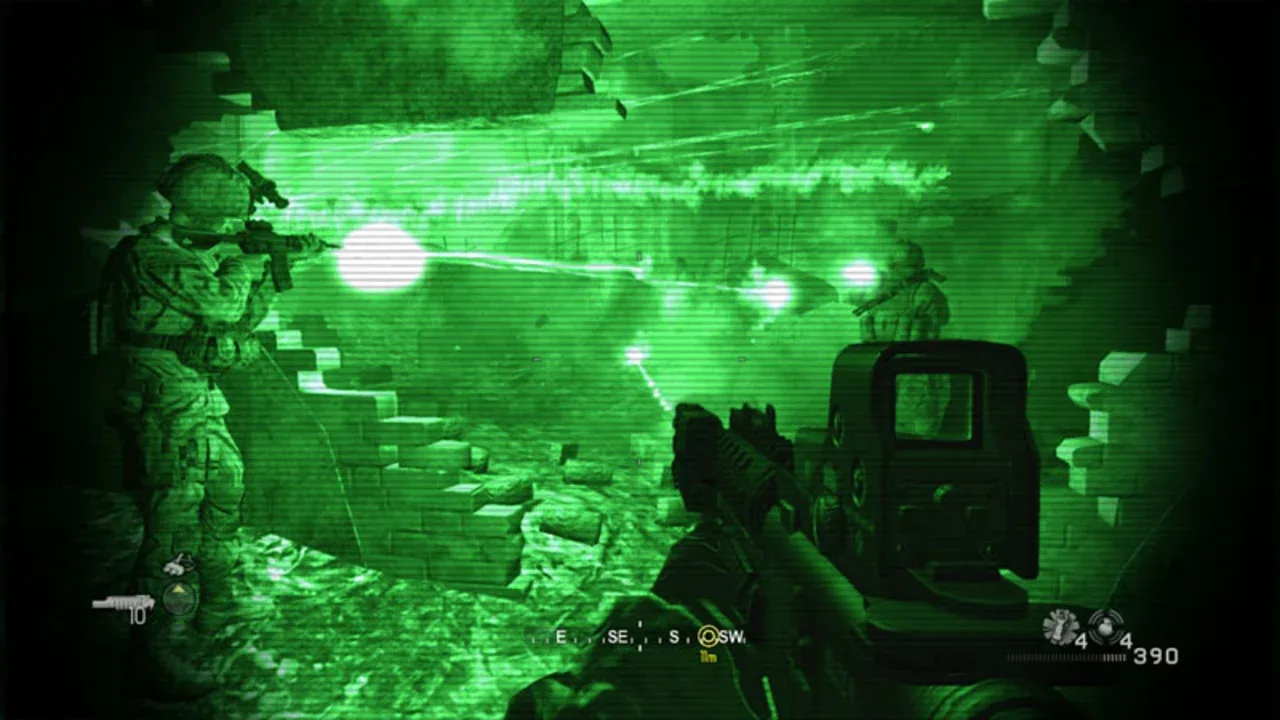
Did Modern Warefare 4 save Call of Duty?
For nearly two decades, Call of Duty has been the biggest name in military shooters, and its
Modern Warfare sub-series has always been the main catalyst. From the original 2007
classic to the 2019 reboot, which sold 41 million copies, Modern Warfare is where the
franchise reinvents itself. When Infinity Ward released Modern Warfare 4 on 23 October
2026, it carried that legacy, and a year later, when I asked whether Black Ops 7 would cause
the franchise’s downfall, it gave the answer: Modern Warfare 4 has saved Call of Duty.
The most noticeable thing about the campaign is how it’s written. It runs two parallel
storylines: Captain Price’s ongoing revenge quest on Makarov, and a joint squad of South
Korean conscripts and American Marines fighting the North. Dual narratives often feel like
filler content, but here each one gives weight to the other, and as they coalesce, the ending
feels earned rather than artificially designed to tie the two threads together.
The characters carry it. Corporal Joseph Dunn is the standout: a well-written, human
presence rather than a stock action hero, whose dialogue and reactions feel like those of a
soldier trying to do the job assigned to him whilst also blending in some everyday humour. It
is easy to become invested, given how he makes the campaign feel so alive.
The conscripts add something just as important. They are young, often unprepared and
plainly not career soldiers, which gives the squad a vulnerability the franchise’s usual elite
operators lack. Fighting alongside them makes the stakes personal, and the atmosphere
enhances it even further. The campaign feels lived-in, with quiet and humorous moments
that make the violence hit harder when it comes. Critics have noticed, with many calling it
the franchise’s best campaign in years.
A fantastic campaign doesn’t save a franchise on its own, but the multiplayer mode is of a
similar league. The main addition to multiplayer is Kill Block, a mode whose maps are
created from interchangeable sections and change between rounds, giving over 500
possible layouts. No two rounds play out the same, so players can’t rely on memorised
routes and therefore have to read each map as the round is played. It launched alongside
the classic 2v2 Gunfight and a new 10v10 variant, and it is the most innovative thing the
series has tried in years.
Critics have noticed, with many calling it the franchise’s best campaign in years.
New mechanics keep the gameplay fresh without overdoing it. The Zip Gun is a good
example: a disposable automatic pistol that takes the lethal slot instead of a grenade and
rapidly unloads all of its bullets when you need it most. It’s a small addition, but it rewards
quick-thinking and creates the clutch moment that players remember.
Another enhancement that the franchise quietly changed is the movement. It is responsive,
fluid, and momentum-driven, so every fight feels grounded and fair rather than allowing
players to sprint faster than in-game vehicles. It is the most polished movement the series
has ever used, and it makes gunfights faster, fairer and more skill-based.
The maps make the multiplayer even feel more replayable. The release of 12 core 6v6 maps
is entirely new – without overusing legacy maps nonstop – and each location has its own
identity, from tight close-quarters spaces to wide-open engagements. They are not just
distinctive to look at; they are well designed to play, with sightlines, flanking routes, and
cover that reward smart positioning.
Modern Warfare 4 proves that when a developer prioritises character writing, atmosphere
and thoughtful design, Call of Duty is still capable of greatness. So did Modern Warfare 4
save Call of Duty?
The answer is a firm yes.
Comments