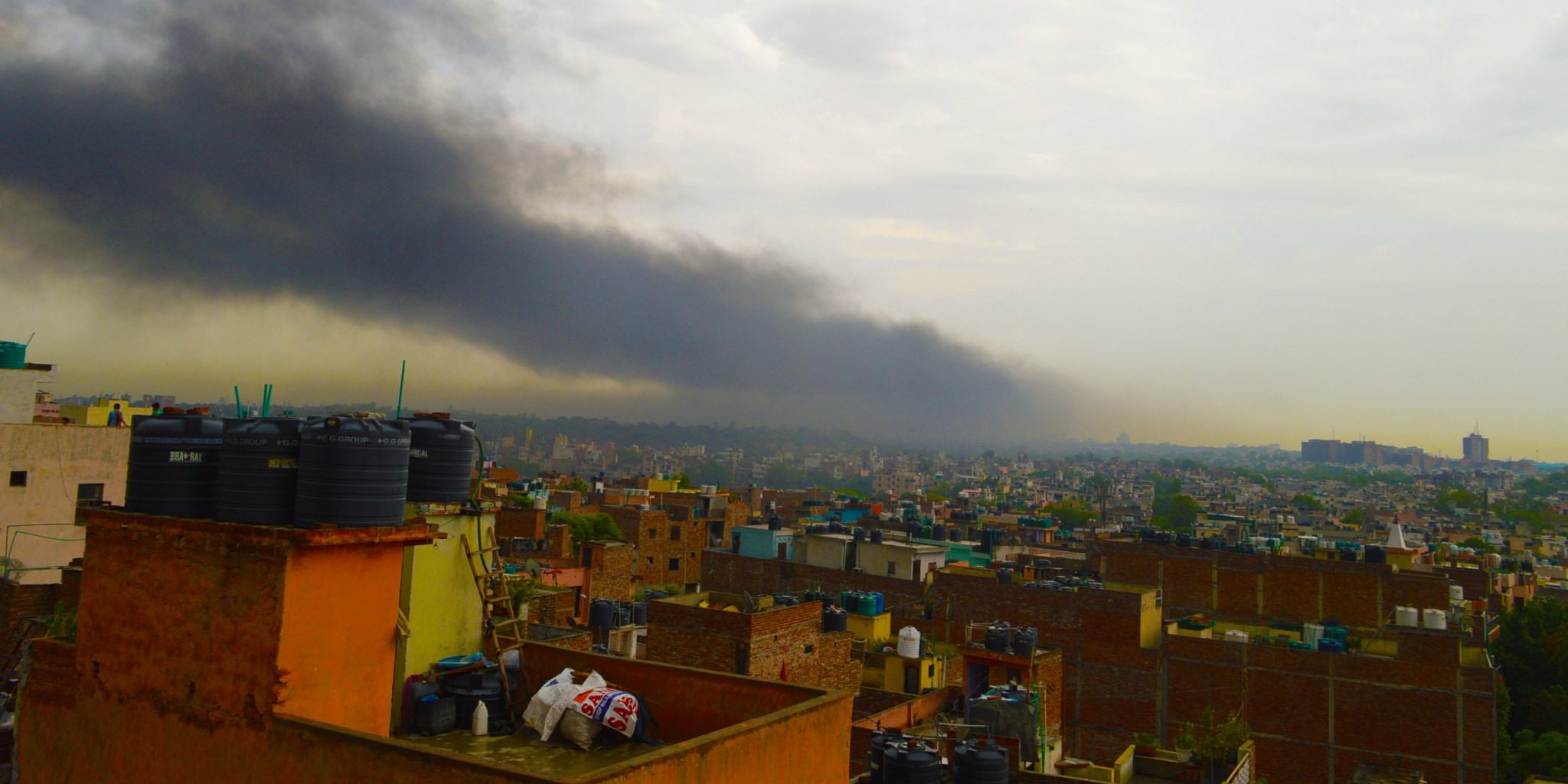
New Delhi’s air pollution levels reach new high
Toxic air pollution levels have reached 30 times the World Health Organization’s safe daily limit in New Delhi, atmospheric data has shown. The city’s air quality index (AQI) readings reached the worst level in 10 months by the first week of November, with parts of the city recording readings of known pollutant PM2.5 as high as 461, according to Swiss monitoring firm IQAir.
The World Health Organisation (WHO) guideline states that a PM2.5 reading should not exceed 57. A reading of above 300 is classified as “hazardous” and leaves the public at risk of “strong irritations and adverse health effects that could trigger other illnesses.” PM2.5 particles are the most dangerous of any pollutants that are measured in an AQI assessment, because they are small enough to penetrate the lung barrier and enter the blood system, causing respiratory problems and even cancer.
Delhi and its surrounding areas grapple with an influx in pollutants every winter; research from Indian respiratory scientists name the root cause as smog resulting from urban activities. Vehicle exhaust fumes, large-scale construction activity and the burning of biomass are all exacerbated by geographical factors – during winter, slow winds and cooler temperatures trap pollutants closer to ground level, which forms a thick smog.
India’s Supreme Court has permitted the use of certified ‘green’ firecrackers, which are chemically formulated to produce less emissions than their traditional counterparts
Indian authorities have responded to the danger by enforcing Stage II of the Graded Response Action Plan (GRAP), a specialised action plan that invokes emergency measures to reduce pollution levels. Measures that have been implemented this November include raising parking charges, clearing dust and debris off roads and restricting firework use ahead of Diwali celebrations.
In 2025, Diwali celebrations were marred by the extensive use of firecrackers which, while restricted under a court directive, contributed to a worsening of air quality likened to a waking up to a ‘toxic haze‘. India’s Supreme Court has permitted the use of certified ‘green’ firecrackers, which are chemically formulated to produce less emissions than their traditional counterparts. However, promoting the distribution and use of more eco-friendly firecrackers versus traditional ones has proved a significant challenge.
The results of the implemented measures will become apparent in the coming weeks as New Delhi braces for another winter of toxic smog.
Comments