Clearing the air on Avatar Aang: An imperfect animated spectacle
Avatar Aang: The Last Airbender took its time to take off – and even before it did, it faced a barrage of worrying storms. In April 2026, Paramount confirmed that the film would premiere only on its dedicated streaming platform, barring it from receiving a theatre release. Many fans, myself included, disagreed with this choice. But none more than the leaker on X who, in an attempt to make a point against the megacorporation, shared the entire film online, over 5 months before its release date.
This action sparked controversy, and whilst even the original Nickelodeon crew urged viewers not to watch the film before it was officially distributed, the damage had already been done. Reeling from this nightmare, Paramount pushed the release date forward to July and also decided to distribute the film in select cinemas after it began receiving positive early reviews. Even without this context shaking up Avatar Aang’s reception, this film had some big, nostalgia-laced shoes to fill – and I can confidently say that for as much as it soared, it unfortunately stumbled, too.
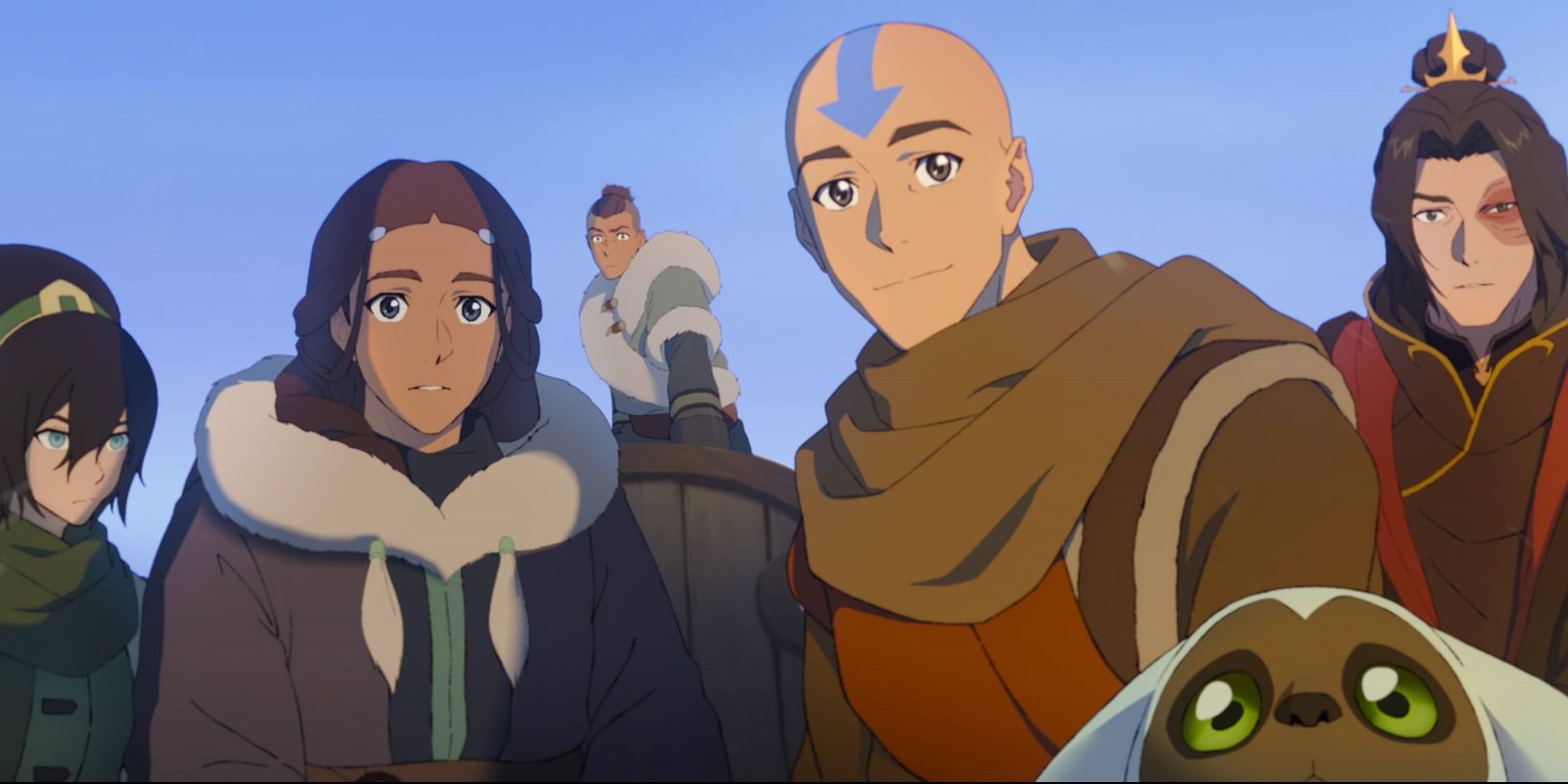
Avatar Aang is set thirteen years after the original 2005 Avatar: The Last Airbender series, with Aang (Eric Nam), Katara (Jessica Matten), Sokka (Román Zaragoza), Toph (Dionne Quan) and Zuko (Steven Yuen) continuing on their mission to spread peace across all nations, each in their own way. Aang’s life is, however, still marked by loss, as he grapples with the weight of being the last of the people.
Aang is forced to face a painful question: how far is he willing to go to change the world forever?
The young Avatar resorts to travelling the world and, during his journeys, makes an impossible discovery: an Air Nomad, long forgotten and frozen in time. The newly awakened, mysterious Tagah (Dave Bautista) offers Aang knowledge of a powerful artefact that could rewrite an ancient wrong. But harmony is fragile, and through the group’s quest to a distant spiritual haven, Aang is forced to face a painful question: how far is he willing to go to change the world forever?
At its core, Avatar Aang is an enjoyable film vexed by contrasting elements that limit its ability to emotionally resonate with audiences. The production is visually stunning, but narratively tame. It gives us the chance to see our beloved ‘Gaang’ back in action through a newly detailed, vibrant animation style, yet doesn’t utilise its characters to the full extent of their abilities.
What could have been genuinely interesting villains are reduced to tropes fluttering in the breeze of a story that is largely nothing special
Aang’s arc stands out as genuinely compelling and complex. Katara gets plenty of moments to shine throughout the film’s action set pieces. I was also surprised to see how Tagah’s presence, wisdom, and past dominate the production’s narrative, challenging the protagonists in the exact kind of way this franchise needs. However, these aspects are cheapened by the film’s painfully predictable structure – and what could have been genuinely interesting villains are reduced to tropes fluttering in the breeze of a story that is largely nothing special.
As a fan of this franchise, my main issue with Avatar Aang is one of temporality and retroactivity continuity. Anyone who’s seen The Legend of Korra, which finished airing over 12 years ago and acts as the chronological sequel to this film, knows exactly what fate is in store for these characters. With this in mind, Avatar Aang would have, perhaps, benefited from focusing less on spectacular, world-ending stakes and more on dissecting smaller, yet important conflicts in its world and characters. Coupled with the film’s abundance of plot holes, absence of important main characters (we miss you, Suki!), and retcons of established cultural markers (such as the introduction of a new writing script before anachronistically returning to Chinese script in The Legend of Korra), these narrative issues become hard to ignore.
With Avatar: Seven Havens and season 3 of Netflix’s Last Airbender live-action adaptation on the horizon, there is still much to look forward to in the future of this franchise. Ultimately, I think most viewers will find Avatar Aang to be predominantly bland and inoffensive, yet, at times, powerful. Indeed, this film didn’t stick the landing and was flawed in many important ways. But it did, at times, remind me of the many reasons why people continue to be deeply touched by the Avatar world and its emotionally complex, politically charged stories. Because of this, I see Avatar Aang as, in spirit, the epilogue to its protagonist’s tale and a sweeping evolution of this franchise’s visuals and multifaceted universe.
Comments