Alexandra Ignatova returns as AIN skaters find success across the board at the Cup of China
The ISU’s Grand Prix series, a set of six competitions in which world-class skaters compete for an invitation to the Grand Prix Final in December, continued this weekend. This week’s Grand Prix was the Cup of China, held in Shenzen, and gave figure skating fans plenty to talk about.
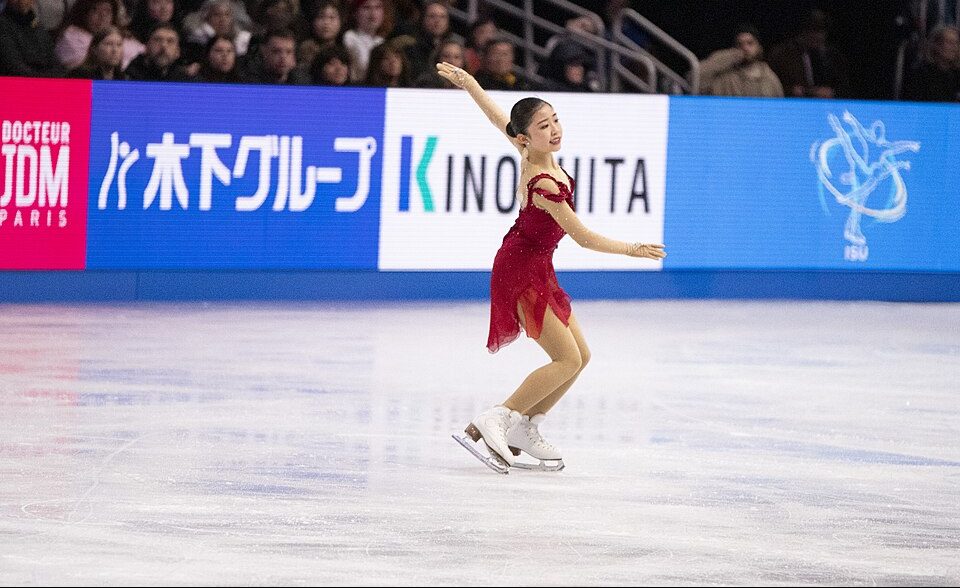
The women’s event was undoubtably the most anticipated, and the most discussed. Even before anyone took to the ice, the name on everyone’s lips was ‘Alexandra Ignatova’. Formerly known as Sasha Trusova, she is most famous for being the 2022 Olympic silver medalist, part of Russia’s ‘Team Tutberidze’. After the Olympics, she retired, married and became a mother, making her comeback to the sport one for the history books. Her return comes as part of the wider comeback of Russian skaters to international competition as neutral athletes, abbreviated to AIN. Her popularity with the audience was clear throughout the event, with both of her skates and her silver medal position being greeted with wild cheers.
Despite the off-ice discussions, the skating displayed during the event itself was phenomenal
There was, however, some controversy with this audience – Japan’s Mone Chiba, who won the women’s event overall, was booed to the point of tears on the podium. Several commentators and former skaters have since reacted to this, calling for fans to show more respect to skaters.
Despite the off-ice discussions, the skating displayed during the event itself was phenomenal.
The short program was handily won by Mone Chiba, skating to a James Bond medley; a departure from her usual style, but one that worked for her, showing off her beautiful skating skills and great improvements on her jumps.
Georgia’s Anastasiia Gubanova achieved second place with her tango-style program, showcasing her expressive skating and gorgeous artistry.
AIN skater Alexandra Ignatova came in third. Like Chiba, her style has changed since her last competitive season, with a lighter program highlighting her stunning jumps, which have always been her strength.
In the free skate, Ignatova improved on her score, coming in first to take the overall silver medal. Her program was a return to the dramatic style she is known for, and she skated clean, including a fabulous quad lutz to open.
Mone Chiba came in second in the free to win overall, with beautiful choreography matching her crisp skating skills.
South Korea’s Haein Lee came from sixth in the short to third in the free with her The Great Gatsby program, taking the bronze medal overall. Her jumps, including a triple axel, were clean and strong, and the program gave her a chance to show her gorgeous spin positions.
Japan’s Kao Miura, fresh off a silver medal in the Grand Prix de France, dominated the [men’s] event
The men’s event too was very exciting. Japan’s Kao Miura, fresh off a silver medal in the Grand Prix de France, dominated the event. As usual, his jumps and artistry were his strongest elements. His short program opened with a textbook-perfect quad salchow triple toeloop combination, and his free skate also had several clean quad jumps. His step sequence and choreography were entertaining and engaging to watch, making the most of his great musicality.
Japan’s Shun Sato came in second in the short with his characteristic artistry, but unfortunately landed just off the podium with a fourth place finish after the free.
Second overall was taken by AIN skater Vadislav Dikidzhi, whose quad jumps and unique choreography propelled him to the podium after the free.
The last podium spot in both the short and free, as well as overall, was achieved by AIN skater Evgeni Semenenko. Both his short and free programs were very dramatic and entertaining to watch, with incredible quad jumps throughout.
The success of AIN skaters continued in the pairs event. AIN pair Anastasia Mishina and Aleksandr Galliamov dominated the event, coming first in both the short and free, winning the gold medal overall. Their short program showed off their technical brilliance, with beautiful synchronicity throughout, and an incredibly high triple twist and throw triple flip. In the free, the focus was on their musicality and pretty lift positions.
In second was Georgia’s Anastasiia Metelkina and Luka Berulava. In the short, their beautiful opening side-by-side triple salchows set the tone for the program, with a gorgeous throw triple flip and stunning lift positions, despite an unfortunate stumble on the triple twist. The free was similar – all of their elements were sharp and clean, but a scary dismount on one of their lifts took them out of contention for the gold.
Third overall was taken by Japan’s Yuna Nagaoka and Sumitada Moriguchi, whose beautiful side-by-side jumps and lifts clinched them the last podium spot.
Team GB’s Lilah Fear and Lewis Gibson, coming from gold in Canada, won in China to make it back-to back victories
Ice dance was, yet again, dominated by one team. Team GB’s Lilah Fear and Lewis Gibson, coming from gold in Canada, won in China to make it back-to back victories. As ever, both their rhythm and free dances were very entertaining to watch, with their performance and facial expressions elevating their already incredible skating.
Second in the rhythm, free, and overall was Georgia’s Diana Davis and Gleb Smolkin. Their beautiful synchronicity and musicality were on full display here, along with stunning lifts and gorgeous movement from them both.
Third in the free and overall was Spain’s Olivia Smart and Tim Dieck. As usual, they showed off creative lifts, spin positions, and very entertaining choreography, but small mistakes – a stumble on a lift in their rhythm dance, and a loss of synchronicity on their twizzles – cost them, despite very enjoyable programs.
Comments