The Boar at London Film Festival: Sofia Coppola on Marie Antoinette
Last week, Making Marie Antoinette (2026) – a film by Eleanor Coppola which captures her daughter Sofia Coppola’s directorial work on Marie Antoinette (2006) – was screened at the 70th BFI London Film Festival. The documentary is an intimate act of remembrance to Eleanor Coppola, who died in 2024, and also captures the iconic behind-the-scenes of Marie Antoinette.
Although Sofia herself felt that she would “never like to share such a personal thing because I’m in it and it’s embarrassing to see myself as a younger director – I’m not as comfortable being assertive with my words”, it was one of her mother’s dying wishes to see the 80 hours of footage become a documentary.
Sofia and her mother first began talking about turning the footage into a film during the COVID-19 pandemic, but it didn’t manifest in Eleanor’s lifetime
As an artist, screenwriter and director in her own right, Eleanor regularly worked on behind-the-scenes projects which examined the creation of films by those in her family. Sofia and her mother first began talking about turning the footage into a film during the COVID-19 pandemic, but it didn’t manifest in Eleanor’s lifetime.
The documentary fulfils Eleanor’s wishes. It is a heartfelt and truthful examination of the pressures on the young Sofia Coppola as she took on such a large project. She appears an unconventional director, soft-spoken and quietly subversive. The excerpts of Eleanor’s journal read by Diane Lane emphasise the love and concern she felt for her daughter.
About Sofia, she writes that “her cells were responding with recognition and excitement” to the start of filming. We see Sofia through the eyes of an attentive mother. She seems small in contrast to the grand Palace of Versailles, her cast, and the crew of hundreds of people. This understated perception of her juxtaposes the weight her name now holds in the film industry.
Growing up, I didn’t see movies where the teenage girls were normal… I just didn’t see a lot of characters that I related to and treated young people with respect
– Sofia Coppola
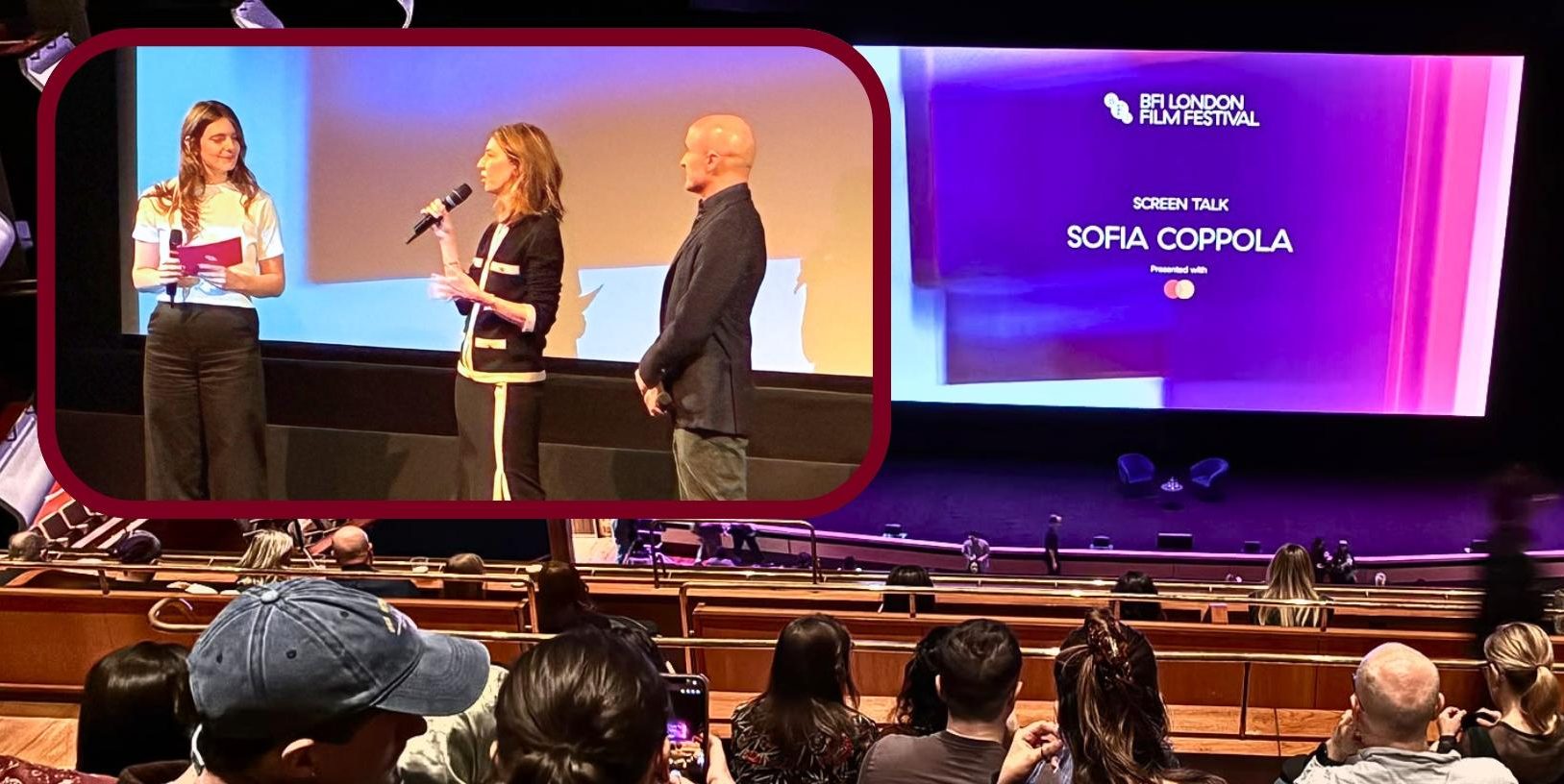
The following day, I attended a Q&A with Sofia Coppola, in which she discussed her cinematic trajectory. The Virgin Suicides (1999) launched her career, depicting relatable young protagonists through her directorial vision. “Growing up, I didn’t see movies where the teenage girls were normal… I just didn’t see a lot of characters that I related to and treated young people with respect,” she explained. “The teen movies were always cheap and had bad photography!”
Then Lost in Translation (2003) depicted the isolating experience of immersion into Japanese culture compared with America. After the success of her first two films, Coppola had the opportunity to do whatever she wanted. Hence Marie Antoinette became her first “big-scale, big-budget movie”. Despite initially receiving mixed reviews, its legacy lives on as a countercultural phenomenon.
As a future creative female myself, I find it inspiring to see the behind-the-scenes of such a genre-defining film. Both the documentary and the Q&A served as an intimate look into Coppola’s unconventional film process. I am excited to see more of her films in the future as she steps back into “movie magic”.
Sofia teased her future work, stating she is going back to “writing, creating, imagining the world and imagining the challenge.”
Comments