Should and could London get a permanent NFL team?
A last-second field goal sent the Houston Texans past the Jacksonville Jaguars, 34-31, on October 18, closing out this year’s London games in thrilling fashion. When the National Football League (NFL) comes to town, questions resurface as to whether the NFL should create the space for a franchise based directly out of London. League Commissioner Roger Goodell believes that there is “no doubt” that “there will be NFL teams outside the US”, and that without the success of the London games, it would’ve been hard to grow the game internationally.
The NFL has held regular season games since 2007, and has cultivated a large fanbase in the UK. As of 2022, almost one in 10 Brits have registered as being somewhat interested in the NFL. This season, the schedule contains a record nine international games, and there have been no signs of reducing this amount in the future.
Both of the other London games struggled to sell tickets and were forced to reduce their prices
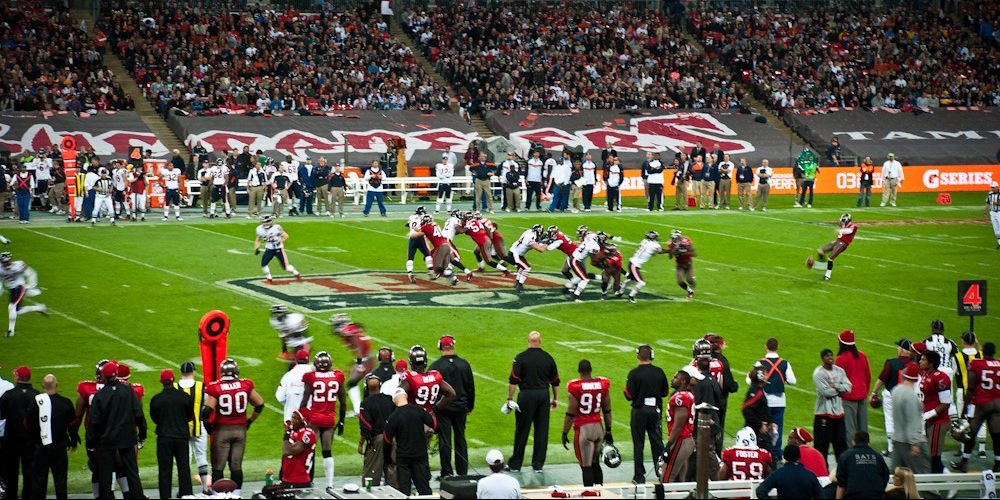
Goodell’s aspirations for international expansion may have to be dampened, however, as evidence of declining interest in the UK has been clear. Viewers last Sunday will have noticed the many empty seats at Wembley Stadium for the last London game of the year, with some fans questioning whether London games have “lost their appeal”. Although the blockbuster matchup between the Philadelphia Eagles and the Jacksonville Jaguars was able to sell out Tottenham Hotspur Stadium, both of the other London games struggled to sell tickets and were forced to reduce their prices. Sky-high ticket prices are the norm for US games, but they have not translated well among Brits. Additionally, the stands were littered with jerseys from every single team, highlighting the loyalty that English fans have towards already existing franchises. Will loyalties change for a team closer to home?
Numerous logistical problems also arise when thinking of a new team based in London. It is around 3500 miles between London and New York, 727 miles longer than the distance between Seattle and Miami (the furthest US teams apart). More travel days will have to be taken, meaning less practice, thus making it harder to schedule games for Thursdays and Mondays if the team plays on the traditional Sunday the week before. Additionally, US broadcasters will be unlikely to pay for a package of consistent games starting at 9:30am EST, a poor time for US viewers. Yet there is also little value in putting a London team on primetime when those windows begin at 1am in the UK. It can’t be ignored that those playing for an international team are simply at a competitive disadvantage.
It raises the question as to whether Europe wants a team or just the American spectacle
Expansion is the alternative: a European division of four brand new teams rather than squeezing London into the AFC or NFC East. However, only 33 English born players have ever reached the NFL, and spreading American talent across 36 teams risks diluting the quality of the product, assuming players would want to move abroad at all.
The failure of NFL Europe acts as the cautionary tale behind all this talk. The developmental league, which featured the London Monarchs, collapsed in 2007 after not being able to find an audience and suffering heavy losses. The NFL’s answer has been to bring the real deal over every year, but it raises the question as to whether Europe wants a team or just the American spectacle.
Should London get a team? Perhaps one day. Could it? Not until the league decides that the risk is worth it.
Comments