Relegation not punishment enough for Manchester City’s ‘Shampagne Supernova’
Football is a game that means a great deal to a great many people.
For millions in this country, football is the thing that gets them out of bed in the morning. It forms the bedrock of friendships and, when life seems tough, provides an escape: something to obsess over and live and breathe. At countless clubs across the country, those two hours on a Saturday afternoon are the highlight of the week, and a good result can leave an afterglow lasting several days. As hard as this is to fathom for many, Bill Shankly was right when he said: “Some people believe football is a matter of life and death. I am very disappointed with that attitude. I can assure you it is much, much more important.”
It is only in that context one can understand why Manchester City’s 115 charges have caused such uproar.
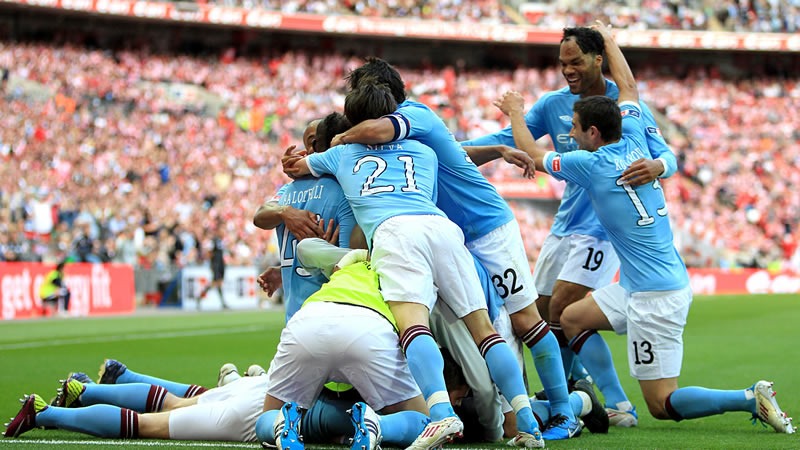
Since their takeover by Emirati royal and Vice President Sheikh Mansour in 2008, Manchester City have enjoyed one of the most successful periods of any club in sporting history. In 2011, a star-studded squad costing £300m won City’s first trophy in 35 years. 12 months later came the iconic Premier League title, sealed with the final kick of the season.
This is the single most severe instance of off-field cheating ever in the history of sport
From there, City’s success has only continued. By the time Pep Guardiola arrived in 2016, City had already won another league title and two domestic cups. He ushered in an unprecedented era of dominance, winning six Premier League titles in seven seasons and the Champions League in 2023. Guardiola’s parting gift to City fans, the FA Cup win at Wembley, brought City’s major-trophy haul since the takeover to 21 in 17 years. There is no comparable feat ever accomplished in English football.
That is why the independent commission’s decision to find Manchester City guilty of almost all charges levelled against them is so significant.
There are many better and more detailed breakdowns of the precise details of City’s charges, but the general thrust is clear: City committed widespread, institutionalised financial fraud on an unprecedented scale to not merely bend or break the rules, but obliterate them. Some of the highlights include:
● The deliberate inflation of sponsorship value, recording deals being worth a total of £949m when in fact City’s ownership paid £830m (87%) of the deals themselves, rather than the companies involved.
● Former manager Roberto Mancini allegedly received part of his wages through a £1.75m contract for four days’ work at another club owned by Sheikh Mansour.
● Paying players and agents in secret payments not recorded in the club’s accounts.
● Deliberately and significantly breaching domestic and continental financial fair play rules, and attempting to hide it.
● Concerted efforts to delay and ultimately stop the Premier League’s investigation.
City were found guilty of all but one of the 115 charges, a non-cooperation charge being the sole exception.
City’s trophies have been tainted by the means through which their winning sides were assembled
It is, frankly, a staggering amount and it is hard to understate the scale and significance of City’s cheating. It amounts to an average of a nine-figure sum each season, or five and a half times what Bournemouth, a fellow Premier League club who qualified for Europe last season, brought in. This is the single most severe instance of off-field cheating ever in the history of sport.
The defence offered by former City players such as Rodri, Sergio Agüero, and Joe Hart is that the trophies were won on the pitch. There is no suggestion that Guardiola or his players personally committed the alleged breaches. But that misses the point: during the period under investigation, City spent £1.2bn on new players, with more than 3/4 of that spending, according to the figures cited here, covered by the financial wrongdoing.
Simply put, City’s trophies have been tainted by the means through which their winning sides were assembled. Whilst the players on the pitch may have won them ‘fair and square’, the group of players who won them should never have been able to be assembled. Even the side they have today has been built on a financial and footballing platform of deceit.
The consequences are astronomical. Whilst Manchester City players have every right to feel aggrieved that their achievements have been tainted, the real victims are the clubs that suffered as a result. Each of City’s 21 trophies came at the expense of other clubs, and Liverpool, Arsenal, and Manchester United have strong grounds to question the outcomes of title races during this period. Their other honours are more complicated, but the answer to who should have won them is certainly ‘someone else’.
City have also taken European qualification, and the money that goes with it, away from other teams, as well as Premier League survival from clubs that finished 18th. Dozens of clubs can claim City have done them wrong: the highlights include Luton Town and Wigan Athletic, both of whom finished 18th, were relegated and never returned to the Premier League, as well as Leicester City, who were relegated three times in four seasons. Leicester’s first relegation came just two years after City beat them to Champions League qualification for the second consecutive season.
Given City’s wealthy ownership, even a fine running into billions might not be sufficient
The question one feels obligated to ask, then, is what would be a fitting punishment for these crimes? Football finance expert Kieran Maguire believes the most likely outcome is a 60-100 point deduction, which would almost certainly result in City’s relegation to the Championship. That is an unprecedented punishment in English football, perhaps only comparable to Juventus’ 2006 relegation for match fixing in Italy.
But would this be enough? Sure, it would be a humiliation for City, but they would likely mount an immediate promotion challenge and return to competing for Champions League spots soon after. Within a few years, it could be like nothing had ever happened. Is that seriously punishment enough for City’s ill-gotten gains over the last 17 years?
Recent Premier League and EFL cases involving Everton, Derby, Swindon, and Southampton establish four purposes of sanctions: punishment, vindicating compliant clubs, deterring future offenders, and restoring public confidence in the competition. One season in the Championship would also struggle to meet any of these criteria. Given City’s wealthy ownership, even a fine running into billions might not be sufficient.
So, if relegation is not enough, what should happen next?
Well first of all, City should get another day in court. And then another one. And then quite possibly another one.
Frustrating as City’s delaying tactics may be, the integrity and fairness of the disciplinary process relies on City having ample opportunity to appeal both the verdict and the severity of the sanctions. It also helps ensure that the events of 2020, when City reversed a Champions League ban from UEFA on a technicality after UEFA rushed through their process, cannot be repeated. The independent commission must ensure its findings can robustly withstand any appeal.
Assuming that most or all of these charges are upheld, as is the widespread expectation, City should have the book thrown at them.
One relegation is simply not enough, and the commission should consider City’s expulsion from the Premier League
First of all, City should be stripped of every single trophy and accolade won since the cheating began, starting with the 2011 FA Cup and concluding with the same competition 15 years later. This must include trophies won after the period under investigation. Even if City have complied with the rules since 2018, their success has been built on a decade of egregious cheating, without which it is simply not possible they could have accomplished these feats.
It is true that this would barely be a punishment for City: the fans and players got to live those moments and lift those trophies. Nor is it especially exciting to win a trophy in a courtroom ten years after the fact, having still suffered the heartbreak of losing it on the day. It is, however, a quick and easy thing the commission can do to remove City’s cheating from the record books.
In terms of forward-facing sanctions, fraud of this scale demands the harshest punishment available. How much City breached FFP by is not yet known, but applying the 2023 formula of three points, with an additional point for every £6.5m of breach, could command a deduction well into the hundreds.
One relegation is simply not enough, and the commission should consider City’s expulsion from the Premier League. As the Premier League and EFL are separate organisations, the EFL would not be obliged to accept City, potentially leaving them in non-league football.
If that seems over-the-top, it shouldn’t. These offences have sullied our national game and tainted the competition. The punishment should not be vindictive or disproportionate – indeed, the punishment suggested by some top clubs that City should face continuous deductions for the next several years is totally unreasonable as well as displaying a shocking lack of empathy for clubs who would still get relegated at City’s expense so the big clubs could win a few more trophies. Instead, it must punish City, act as a deterrent, and restore faith in the competition. Anything less risks seeing City competing for the Premier League title again by the end of the decade, undermining all three objectives.
They must punish City as harshly as possible and leave them caught beneath a landslide of their own making
Finally, given the billions in financial damages to other clubs, a fine of gargantuan proportions ought to be levied and used to compensate clubs, give the EFL their overdue funding deal, and provide much needed support for women’s and grassroots football. It’s not like they can’t afford it. But crucially, this should be an afterthought: the most important thing is that the headline punishment is a crushing, unprecedented sporting sanction.
Football is a game that means a great deal to a great many people. Over the last 17 years, Manchester City have been involved in a deliberate scheme to commit fraud and deception on an unprecedented scale. Cheating was not just in the culture of the football club, it was the culture of the football club.
City are cheats of the highest order and must be dealt with accordingly. If the football authorities are to have any chance of restoring confidence and integrity in our national sport, they must punish City as harshly as possible and leave them caught beneath a landslide of their own making.
Comments