Nuclear fusion: Progress or pointless?
Nuclear power is confusing. Unless you’re doing a physics degree then all you probably know about nuclear is what you’ve seen on TikTok (or maybe that’s just me). And, heck, I’m willing to admit that I find nuclear energy confusing even though I’m the one writing an article about it.
Nuclear power has immense risks if regulations aren’t followed (I think nuclear energy is synonymous with the word Chernobyl in most minds). But the idea of a bountiful supply of energy using minimal space (unlike renewables) and producing less harmful waste products (unlike fossil fuels) seems too good to be true – right?
Fusion produces only low-level radioactive waste – more than fission does – but this low-level waste does not pose any serious danger
Sehila González de Vicente, IAEA
Now, we know that it isn’t, (because if it was, we wouldn’t have an energy crisis) but instead of talking about nuclear fission I’d like to focus on its less well understood counterpart: nuclear fusion.
Fusion is where the nuclei of two very small atoms (specifically hydrogen) combine, forming a single, slightly heavier one (in this case, Helium), resulting in massive amounts of energy. Energy can be captured because the remaining nuclear mass is smaller than that of the original nuclei. The upside, IAEA physicist Sehila González de Vicente says, is “fusion is a selflimiting process: if you cannot control the reaction, the machine switches itself off”. If you need to add fuel to the process for it to take place, you cannot have a meltdown.
Amongst the other advantages, you have less long-term radioactive waste than fission. “Fusion produces only low-level radioactive waste – more than fission does – but this low-level waste does not pose any serious danger”, explains González de Vicente. Since most items contaminated in a fusion power plant only have low levels of ionizing radiation (radiation that can damage DNA), waste can be removed using basic safety precautions. Also, the fuel sources are essentially limitless, since the two hydrogen isotopes required can be extracted from water and lithium.
The one asterisk with nuclear fusion is even with ongoing research, we still haven’t reached a positive net energy gain (apart from under lab conditions).What is positive net energy gain, you might ask. Well, it boils down to: does this process give us more energy than we’ve used to generate it?
As you can imagine, we need fusion to … actually produce energy. Otherwise, this song and dance amounts to nothing. So, why can’t we reach this mythical positive net energy gain? It’s not for a lack of trying. The ongoing joke amongst physicists is that nuclear fusion will always be twenty years away (since 1955).
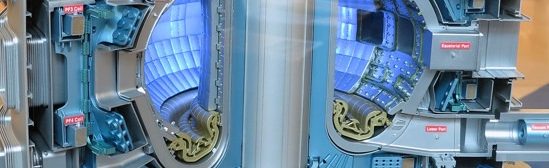
But here’s a fun fact: the only places in the universe where fusion just ‘kinda happens’ is the centre of a star. Where it’s over 100 million degrees Celsius and the air is superheated to plasma. Warming an area to crazy temperatures is a tiny part of the problem, because plasma doesn’t want to stay still, so you have to suspend the whole mess in a giant cage using electromagnets. And those electromagnets need to be cooled cryogenically, using liquid helium which will sit at about 4.5 Kelvin (−269 °C or −452 °F). With all that said, you can see how the cost adds up (just like ordering a MacBook and upping the storage and RAM a bit). Not to mention needing to change the currently negative public perception, creating regulations, and the cost of building infrastructure.
Overall fusion (like its more famous sibling fission) sounds perfect, but in practice is far more complex, expensive, and currently has not scientific evidence suggesting it could work at a large scale
Overall, fusion (like its more famous sibling, fission) sounds perfect, but in practice is far more complex, expensive, and currently has no scientific evidence suggesting it could work at a large scale (okay, maybe that last part makes fusion not like the other girls). But, I’d bet that we’ll have nuclear fusion power plants in twenty years. What could take so long?
Comments