Lorde’s ‘Melodrama’: Ten years later, the party hasn’t ended
Melodrama is an album of contradictions. Lorde is simultaneously the life of the party and the girl nobody invited. Her peers both fear and forget her. Released in 2017, when Lorde (Ella Yelich-O’Connor) was just 20 years old, it is ostensibly an album about the dissolution of young love, and yet to label it a breakup record is to underestimate its scale. Melodrama’s subject is not heartbreak so much as the peculiar emotional physics of being young – she meticulously transforms bedrooms, cars, drinks, late nights with lovers from mere rituals of youth into mythical symbols that mirror their emotional intensity. At this age, a minor event can become the centre of the universe.
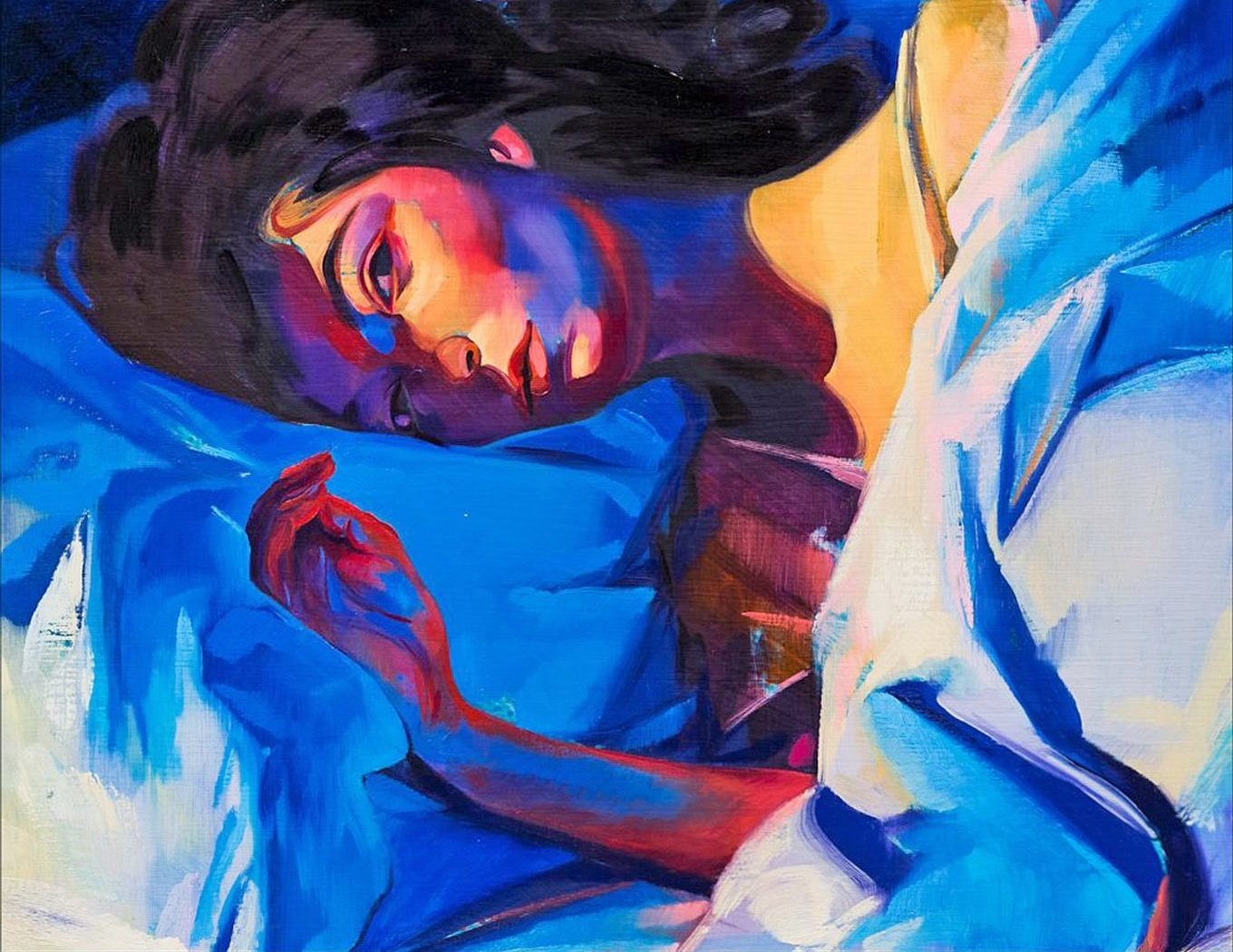
Lorde herself described the record as following just one single night, a neon, feverish house party in all its radiance: the anticipation, the intoxication, the isolation, and then, of course, the comedown. The concept is almost absurdly simple, but it gives the record an incomparable architecture. Songs that might otherwise function as detached episodes become rooms in the same house, clues for both us and our intoxicated, self-loathing narrator to piece together. Every word of every verse is helping to fish something concrete out of a sea of inebriated recollection. The album’s artwork, painted by Sam McKinniss, sees Lorde’s face emerge from a dark, liquid field of colour, her features luminous and slightly distorted, neither photograph nor straightforward portrait. There seems no better image to capture this element of the record: familiar enough to recognise, unreal enough to shape into memory however one pleases.
The ugly parts disappear, and all that remains is a montage of the beautiful
‘Supercut’ is perhaps the purest expression of this sentiment. The relationship is over, and Lorde’s mind sets itself less to grieving, but instead to editing. The ugly parts disappear, and all that remains is a montage of the beautiful. The song’s euphoric production becomes an act of distortion by the end, as her mantra, “in my head, I do everything right”, fades into the distance, a teenager’s only assertion of authority eventually blurred by time and perspective. Melodrama is Lorde’s sophomore album, and although it’s certainly more sonically thunderous than her debut, Pure Heroine, its expansion is just as psychological as it is volumetric. Antonoff layers piano, synthesiser, strings, drum machines and processed vocals to create tracks that vibrate between vastness and claustrophobia within seconds. Just like in ‘Green Light’, a miracle of an opening number, the emotional instability reveals itself through restless percussion, sudden eruptions of synth and Lorde’s voice pushing against the edges of the arrangement: instead of collapsing in on itself, it runs towards the light.
Other times though, Melodrama bites with frightening tenacity and specificity: “Break the news you’re walking out / To be a good man for someone else” she hisses on ‘Writer in the Dark’. What elevates her above her peers is that it’s never quite clear where her spite is directed. Instead of reducing herself to snarky comments about an ex too cowardly to love her, she turns the conversation inwards. Perhaps it is not just the strength of her feelings that are giving her difficulty, but her sheer capacity for feeling anything at all. “I’m a little too much for everyone”, she recounts on ‘Liability’. The song is unflinchingly vulnerable, but Lorde’s self-awareness prevents it from becoming too much. This album’s most enduring achievement is its internal weather system, something increasingly rare in pop. Lorde is never entirely fooled by her own melodrama, nor does she want the listener to be. She is simultaneously the teenager experiencing the emotion and the writer standing outside it, taking notes.
Much like teenagehood, the highs do not pack such a punch without the debilitating emptiness of the lows
This is partly why Melodrama still feels so startling as a pop album. It is an album in the increasingly unfashionable sense of the word: a body of work whose songs depend upon their neighbours. Streaming has made the individual track increasingly self-sufficient, but Melodrama rewards the listener for surrendering to its very deliberate sequencing. Much like teenagehood, the highs do not pack such a punch without the debilitating emptiness of the lows. The disorientation caused by the ever-shifting pace and setting of the tracklist is purposeful, rather than an all-too-common consequence of potential TikTok hits being shoved amongst vague filler.
Nearly a decade later, that is what makes the album feel less like a relic of 2017 than a record that has somehow escaped it. Its synths belong to the late 2010s; its emotional vocabulary belongs to anyone who has ever been young enough to mistake intensity for permanence. “Fluorescent – has there ever been a better descriptor for first love?”, wrote Stacey Anderson for Pitchfork, the timelessness of Lorde’s message instantly resonant. Its technology is contemporary, but its emotional landscape is ancient. Never particularly interested in chasing hits or trends, Lorde remains one of the most exciting songwriters of her generation, and even as she has gone on to chase new avenues of sound and lyricism, this record remains as her most incisive, infallible achievement. The lights may have turned on, and the party of 2017 may have ended, but even as everyone returns home, Melodrama remains.
Recommended Listening: ‘Supercut’, ‘Writer in the Dark’
★★★★★
Listen to Melodrama here:
Comments