Hope, loss, and betrayal: Are young people handling eco-anxiety effectively?
Did you flinch when the UK government alert went off in August? Blaring alarm or not, the wildfire warning was a red-hot reminder of the real and worrying consequences of climate change.
When faced with such reminders, like the unnerving possibility of a September heatwave, the pressure weighs heavier on younger generations to cool down our future world. How prominent is this ‘eco-anxiety’ amongst younger people? What are the different forms that such anxiety can take? And are young activists doing enough to combat them?
According to the American Psychological Association (APA), eco-anxiety is “a chronic fear of environmental doom”, and has been building for generations. Researchers acknowledge that the label encompasses a great range of emotional, cultural, and social factors in the wider response to the climate crisis, such as wealth or housing quality.
As the years pass and the heat worsens, it’s no wonder that dread for the planet’s future is topical amongst young people. For example, the 2025 climate change and mental health report recorded that young people and children were at particularly high risk of mental health issues caused by climate-related anxiety.
Anxiety is a natural response to the urgency of the matter
There are children reporting feelings of depression upon hearing the state of the world in the news, or hope from practising sustainability action like recycling, constructing both an anxious and proactive generation. A survey in 2021 across 10 countries linked climate anxiety to perceived inadequate government response, as well as a feeling of betrayal in people aged 16–25 years. People as young as pre-teens therefore acknowledge that the problem rests on their generation, following histories of neglect from the people in power.
Of course, anxiety is a natural response to the urgency of the matter. The Climate Clock alone foresees less than three years left for the world to limit global warming to 1.5°C before we lose the carbon budget still allowing us to do so. Seeing the seconds tick down in real-time is a constant reminder that climate change is real and ongoing, and that its consequences can become irreversible if ignored.
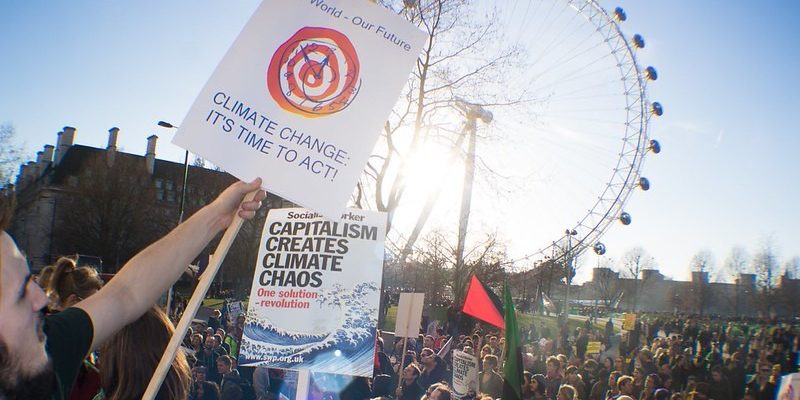
However, eco-anxiety can also be used as fuel for change. Indeed, much anxiety manifests as anger towards people with decision-making power. This is particularly true of young people in zones at high risk of climate-related disasters, such as the Philippines. Anger, according to Norwegian research, presents a link to climate activism that is seven times stronger than hope.
Such anger is not without justification. Around the world, young people use eco-anxiety to urge climate policymaking and government decisions. One such example is the Pacific Islands Students Fighting Climate Change, a movement which started with 27 law students in the Pacific who fought for the Climate Advisory Opinion from the International Court of Justice after six years of campaigning and inaction. The Advisory Opinion was successfully obtained in 2025, bringing polluters to justice under international law. This shows that, with enough persistence and drive, anxiety can become a productive form of anger. Above all, it proves that young people can produce the change that older generations failed to achieve.
In other cases, a disconnect exists between politicians and public opinion. Voices go unheard, and both support and criticism go unacknowledged. Ignorance and miscommunication slow progress, increase anxiety, and reduce faith in government initiatives to make fast and meaningful changes.
Spurred on by government inaction and passing time, the climate crisis has inspired online communities of young people. In today’s age of social media and short-form content, many use platforms like Instagram or TikTok to share climate-based knowledge, advertise campaigns to a global audience, and enforce a stronger sense of climate justice amidst younger viewers. This strikes a balance with the impending sense of doom that circulates in the news and in other social media spaces.
Eco-anxiety can be inefficient rather than empowering
However, outside of criticising individuals and acting on feelings of betrayal towards those with power, eco-anxiety can be inefficient rather than empowering. 21st century mental health and climate change research finds that being faced with the reality of large-scale climate change can cause hopelessness and immobilisation in even the most passionate individuals. Eco-anxiety is a real emotional state with real consequences, and how young people respond to it demonstrates the complexity of human emotion and how this is challenged and stretched when faced with a crisis bigger than one person.
As research continues to stress, and as the fight for climate justice shows, it is still not too late to make meaningful change, even if not all damage can be completely reversed. Anxiety, from the best possible light, can be seen as a necessary motivator to act rather than a reason to abandon hope.
Even when the sun returns behind the clouds in the cooler seasons, it is important to recognise the young people around the world who remain vigilant and active, even when government action is slow or media coverage appears bleak. Though eco-anxiety takes its mental toll, it stimulates action, research, and the hope that the grass will indeed be greener on the other side.
Comments