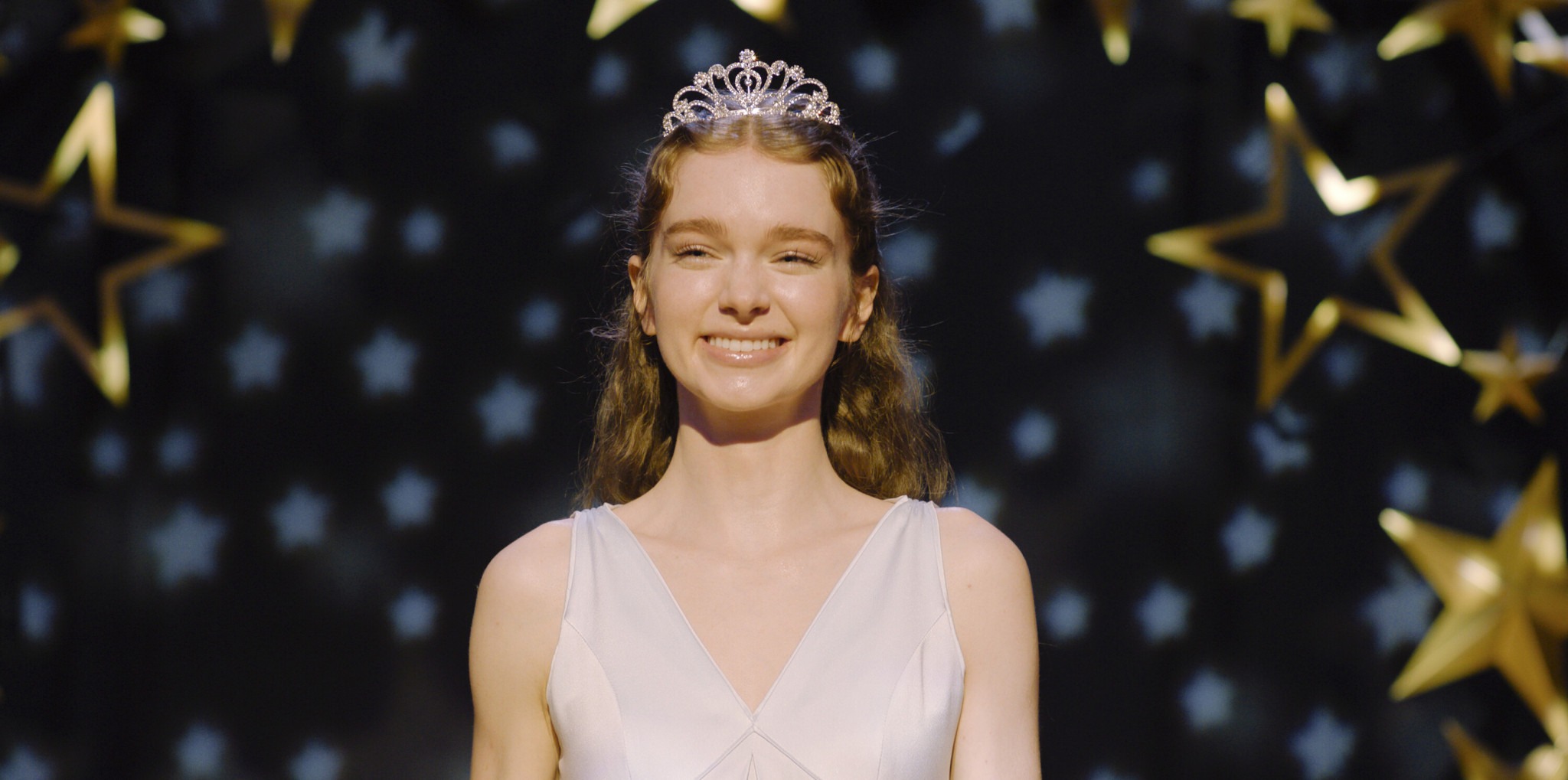
Everyone’s eyes on Carrie: The ‘Reinvention’ we’ve been waiting for?
Five decades after the novel’s publication, the classic story of Carrie has once again been adapted for our screens, this time on Amazon Prime as a TV series. Carrie follows the ‘weird’ Carrie White, whose experiences of bullying alongside her development of telekinesis abilities culminate in mass destruction at prom night. It’s become a staple in pop culture. Over the years Stephen King’s literary debut has faced a multitude of remakes: four films and a theatrical adaptation. With the new television adaptation developed by horror filmmaker Mike Flanagan, who previously created well-received works such as The Haunting of Hill House and Doctor Sleep, this project has been long-awaited by fans of the original story. However, responses to the TV show have been mixed; general reviews praise the show’s modernisation, yet many hold issues with how Flanagan handled the climactic finale.
While watching, I found myself enjoying this new approach to Carrie. It’s entertaining, well-acted, and displays impactful sequences that make us feel connected to all the characters (yes, even Chris Hargensen). Flanagan’s focus on forming fully-realised characters that can be understood, shines in scenes like the juxtaposing editing of Carrie and Chris’ journeys back from a high-school party in episode three. Through a long, drawn-out sequence composed of close-ups on their facial expressions, we see Carrie’s life elevate while Chris’s crumbles: a visual and emblematic turning-point that provides us with the reasoning behind Chris’ horrible prank at the end of the series.
This seems to be a pre-ordained advantage in telling the story of Carrie in TV format. Whilst the film adaptations manage to include the main spine of the Carrie novel, having a longer run-time provides breathing room to include smaller plot points and details. Flanagan does so, for example with the inclusion of Estelle (Carrie’s neighbour) and interviews that reflect the novel’s epistolary form. It also grants Flanagan his own creative liberties: expansion of secondary characters’ personal lives, Carrie’s lack of socialisation due to her being kept isolated in the house, and obviously the cyberbullying storyline due to the social media account ‘Carrie Red.’
Teens need to be able to relate to the portrayal of adolescence and school life
By far the most interesting aspect of this new adaptation is its modernisation, with the aim of appealing to a new younger audience. Updating Carrie to fit in a 21st century setting is necessary – arguably the show’s most important demographic are teens, as the story centres on their experiences. Teens need to be able to relate to the portrayal of adolescence and school life. From the moment Carrie steps through a security screening when entering school, Flanagan solidifies his version of Carrie as a direct reflection of the present day. The inclusion of social media, specifically, worsens Carrie’s alienation and catapults the consequences of bullying to a much higher scale than the original material. Chris’ viral ‘Carrie Red’ meme account is a cyberbullying platform not just targeting Carrie but harassing other students and teachers at the school as well. Assisted by Carrie’s mother, turned-influencer Margaret White, and her anti-bullying campaign, the fallout spirals into a chaotic and violent riot, with the school unable to control its students. Flanagan’s commentary on student safety also extends to the subject of school shootings – Carrie experiences a school shooter drill on her first day, and her panicked, frenzied reaction is belittled by her classmates and minimised by the principal. By exhibiting these modern issues within Carrie, Flanagan presents the harrowing realities of modern schooling. When compared with the 1976 film and the original novel, it becomes clear how student bullying has expanded past localised limitations: Carrie stands covered in pig’s blood at Prom, and instead of being subjected to the whole school laughing at her, she faces countless phone screens and therefore the entire world’s population.
And then comes Carrie’s destruction – or should I say Emaline’s? A general criticism seems to be the prom scene – with some viewing the destruction as disappointing and not as ‘bloody’ as other adaptations. Though viewers’ central issue lies with Carrie herself. Carrie’s violent tyranny is no longer the horrific result of a girl reaching a breaking-point from torment, but rather her ‘friend’ Emaline (an astral-projector) taking the reins from Carrie to carry out the destruction herself. The underlying storyline of supernaturally gifted women scouting Carrie, weakens the adaptation instead of adding to it. In an interview with The Nerdist, Flanagan asserts his direction of the show as a tragedy, instead of a horror. Carrie’s lack of agency and genuine display of anger at what happens to her throughout the show transforms her from a victim of horror to a victim of tragedy. In an effort to maintain her sympathetic, kind-hearted portrayal from prior episodes, the show dilutes her arc and diverts from the horror genre of the book.
Can we criticise the show for its different take? Flanagan has stated the show is not a remake and rather a ‘reinvention’. This is made strikingly apparent with the diversion from the original ending of Carrie’s death. Often remakes can feel pointless and unnecessary, especially in Carrie’s case. Flanagan, however, answers the question that had no doubt been circling round people’s heads when the project was announced: ‘why remake Carrie again?’ by taking new directions for its characters and placing them within an increasingly modern world. Therefore, I would encourage viewers to approach the series not as a remake, but as an alternative vision of how Carrie’s story might unfold today.
★★★★
Comments