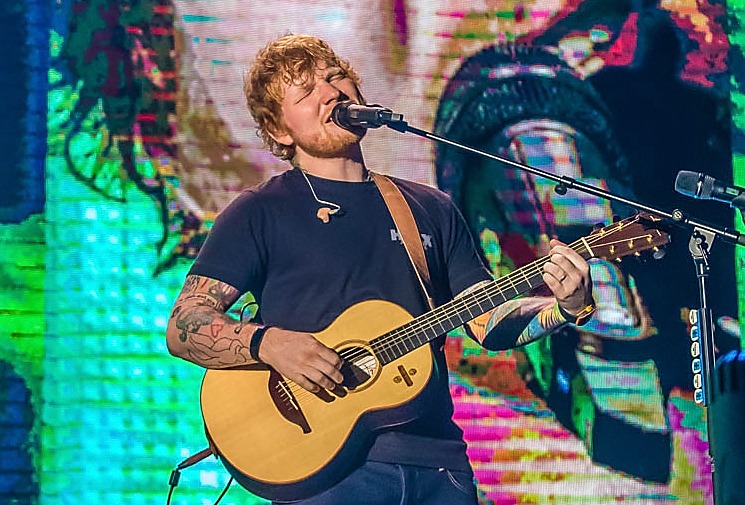
Divided: Ed Sheeran engulfed in controversy during US leg of LOOP tour
American rapper Macklemore was dropped from the US leg of Ed Sheeran’s Loop Tour on 14 September 2026 in a widespread controversy over the support act’s “Free Palestine” remarks. Macklemore and Sheeran are long-standing friends, and it was announced in August 2026 that he would be joining the English singer-songwriter as an opener on his tour for his eighth studio album, Play, released in September 2025. On 4 September, Macklemore’s first night as a support act, the rapper made pro-Palestinian comments on stage in New Jersey’s MetLife Stadium. Before performing his 2024 protest song ‘Hind’s Hall’, Macklemore explained that his motivations for joining the tour were so he “could stand up in stadiums like this and say two words that are very, very dear to [his] heart: Free Palestine”.
In response to this, the Israeli American Council petitioned for his removal from the tour, saying he had “ambushed fans with propaganda” and tried to “advance a one-sided political agenda”. Robert Kraft, owner of the New England Patriots, banned Macklemore from performing in his stadiums, including the Gillette Stadium in Massachusetts. Kraft, in a statement, agreed with Macklemore that “too many lives have been lost” but “ignoring the actions of Hamas is not honest and only advances more divisiveness and hate”. It was announced that Macklemore had been removed from Sheeran’s tour on 14 September, with venues threatening to cancel the concerts if he remained supporting. In a statement released on 15 September, Sheeran said the decision to drop Macklemore was “made by the tour’s promoter, not him” and that while he has views on the conflict, “he chooses not to air them publicly”
Sheeran performed his show at Lincoln Financial Field, Philadelphia, entirely on his own
In solidarity with Macklemore, Sheeran’s other support acts stepped back from the tour, including American singer-songwriter and brother of Billie Eilish, FINNEAS; Irish singer-songwriter Aaron Rowe; Danish band Lukas Graham; and even Irish folk band Beoga, Sheeran’s own long-time backing band. This meant that Sheeran performed his show at Lincoln Financial Field, Philadelphia, entirely on his own. Making a speech addressing the controversy during his show, Sheeran spoke about how for most of his career he has tried to “not be a political commentator of any kind” and that he wants his music “to be about unity, not division; about humanity, not politics”.
This apolitical stance is what sparked prominent backlash online, causing Sheeran to lose half a million followers on social media and provoking significant damage to his reputation. Despite his claims that “while [he] doesn’t use [his] own platform for politics, that ‘doesn’t mean [he doesn’t] care’ or ‘support causes in [his] own, personal way’”, the public criticised the singer-songwriter for not doing more. Sheeran has 79.7 million monthly listeners on Spotify, giving him an incredibly large global platform: what comes with this platform is the expectation that he will use his voice to stand up and not “allow billionaires to use their positions of power” to control freedom of speech, as Aaron Rowe stated in a post on Instagram announcing his departure from the tour. Ultimately, Sheeran should have taken a firmer stance on the issue, and while he was in a difficult position where “his typical apolitical stance was being challenged in a way it never had been before”, his reluctance to take a side was perceived as out-of-touch and disappointing by his fans across the world who desire him to use his voice and privilege now, more than ever.
To deny music’s role in politics is to deny the importance of culture and the arts in impacting our decisions, thought processes, and aspirations
Music and politics have never been able to stay wholly separate; the concepts are deeply intertwined, music – throughout history – having been used as a political weapon – a way to express identity and protest inequality. Modern RnB music from artists such as The Weeknd and SZA have roots in blues, a genre developed during the American Civil War in the southern states, reflecting the divisions over slavery in the late 19th century. This makes even modern-day RnB tracks inherently political through their historical background. Pop music reflects the ‘popular’ ideas and views in society, making it undeniably political, aiming to express the views of the many, speaking out against widespread injustices and contemporary discomfort.
Claiming songs are apolitical is, in itself, a political stance. Political expression in music is unavoidable: an album’s marketing, lyricism, and structure comprise a deliberate choice which reflects the current political climate, even if the artist denies such claims. To deny music’s role in politics is to deny the importance of culture and the arts in impacting our decisions, thought processes, and aspirations. Music is – and always has been – a key tool in influencing the political climate, whether we like it or not.
Comments