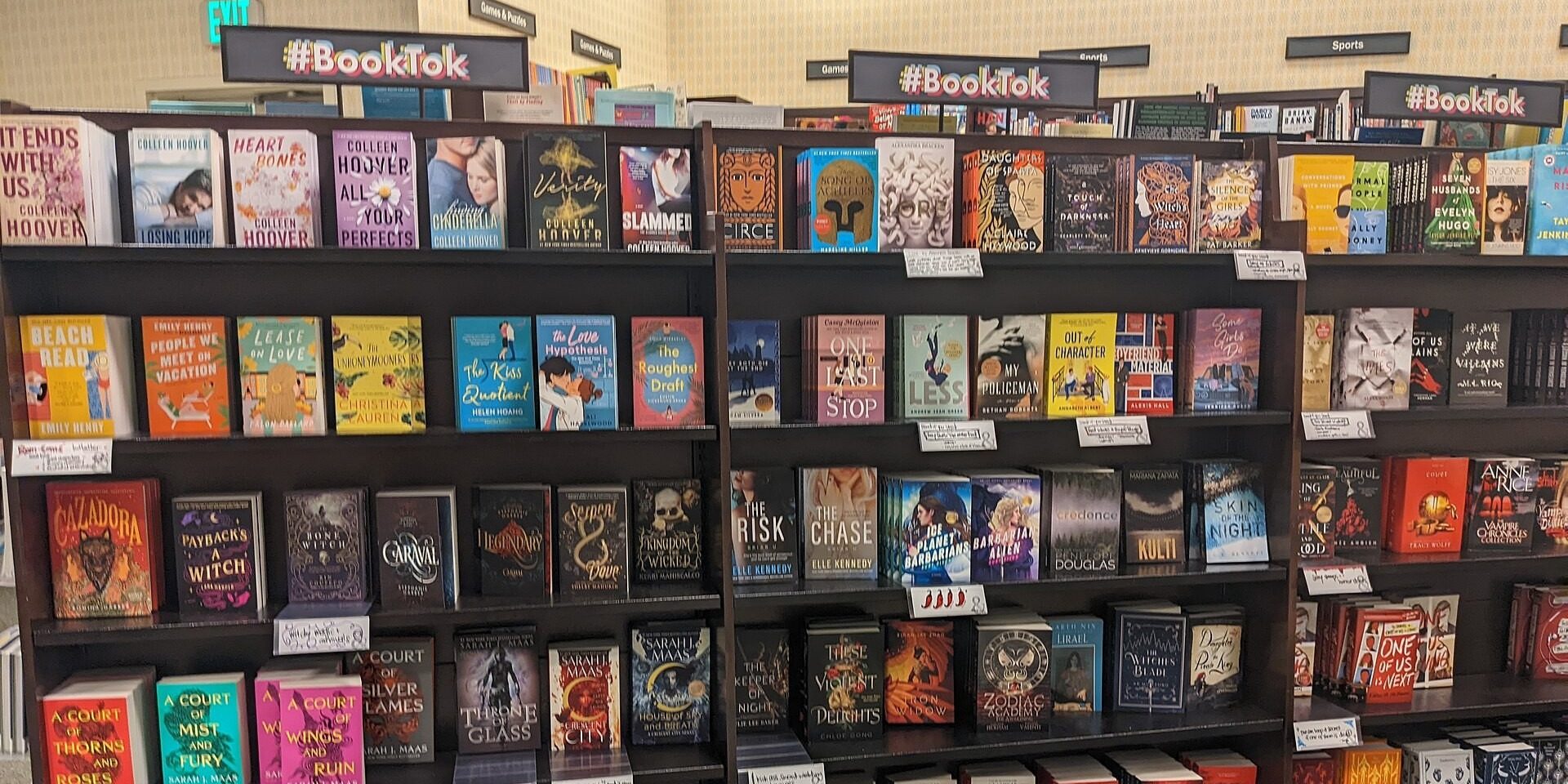
BookTok: The ever-controversial realm within TikTok
BookTok is most likely a space online that you have come across before and, at first glance, what is not to love? There are thousands of book reviews, recommendations, conversations, and it leaves readers feeling that there is a community for them in social media. This is until you begin to uncover the controversies surrounding this space on the internet. Is it bad? Is it good? Who knows. But it is something that is interesting to discuss.
It is not new knowledge that one’s attention span has depleted due to apps such as TikTok, and BookTok has gained from that factor
Its community began to grow between 2020 and 2021; there were short videos which mainly revolved around fantasy books, such as Shadow and Bone by Leigh Bardugo, due to the anticipation around its Netflix series adaptation. However, the book community did not begin with TikTok, but through YouTube and Goodreads – vital spaces for discourse in the book realm. We can therefore establish that this community has been an ever-growing being, but what makes it such a standout topic of conversation now? TikTok is easy for people to watch, especially within our generation; it is not new knowledge that one’s attention span has depleted due to apps such as TikTok. BookTok has therefore gained from that factor and, as a result, its community has boomed in recent years. Not just through book lovers, but others who come across these videos and listen to its complexities and discourse. This is what makes BookTok such an important matter of conversation.
Drawing on the matter of making an aesthetic out of reading and writing, such as the performative male discourse, Substack; the world is but an ever-changing trend. Anyone can access BookTok, therefore anyone can take on its form. Reading becoming a social media trend brought mass attention to BookTok, revealing to non-readers the types of books that float around within the community, and what caught the most attention was the romance within these books. An example of this is shown in an article from The Guardian, and therefore a summary of a mass controversy within BookTok.
A lot of the time, these books look like the publishing world’s version of fast fashion; with tropes, covers, and repetitive storylines being heavily distributed
But where does this tie into BookTok? Alexandra Christo gives us a clear answer as to why young readers are engaging with these genres: “because now it is easier to find them with the success of social media marketing”, hence the blame on BookTok. It is certainly true that specific types of books, like adult romance, are very popular within the BookTok space, and they are being promoted. This will inevitably create a continuous cycle: if it is popular, publishers will put more out as it is an easy money-grab. A lot of the time, these books look like the publishing world’s version of fast fashion, with tropes, covers, and repetitive storylines being heavily distributed. However, a key issue is that women get put down, by people outside of the inner workings of BookTok, due to reading these books, as well as countering these genres with debates concerning anti-intellectualism, and what reading for enjoyment means.
People should be able to read what they want, and there is no shame in that, yet the discourse has continued due to some viral videos. For example, in According to Alina’s YouTube video, she comments on these TikTok videos where Booktokkers state that there are too many words on a page, or that they skim read, and only read dialogue, hence the anti-intellectualism debate. These are ridiculous comments to make, especially from Booktokkers who label themselves as being a book reviewer, so can they be a trusted source?
Another key question that I think is important when discussing BookTok and these issues is the concern as to whether we are feeding into the capitalist society and enhancing the issue of over-consumption. One Substack article stresses the point that “intellectualism is a privilege” and the reason as to why people are concerned about anti-intellectualism is how “intellectualism is bad because it threatens the system”. Think about the banned books crisis; then compare that with the rise of books that are appealing easy reads – which generally don’t comment upon the political climate. We should be questioning this, and we should also be promoting the conversation surrounding banned books such as Margaret Atwood’s The Handmaids Tale.
However, we should not be shaming people for wanting to read these popular BookTok books. Why are we putting women down for reading what they want, when not too long ago a lot of women weren’t free to read at all?
People who put down BookTok might sometimes have some substantial points, such as the criticism of over-consumption, if we think of sprayed edges and special editions. Then again, I doubt that anyone would question someone having a special edition of Pride and Prejudice, or Great Expectations. It is hard to conclude on a solid opinion of BookTok, it has its advantages and its disadvantages. Is it a free space for a book community, is it a space where we look down on women for their reading choices, or is it providing key conversations about the environmental impact of books and consumption? It is probably all of those things; and it will probably never stop drawing attention to itself. Use it as you wish, because it has a space for everyone and any opinion.
Comments