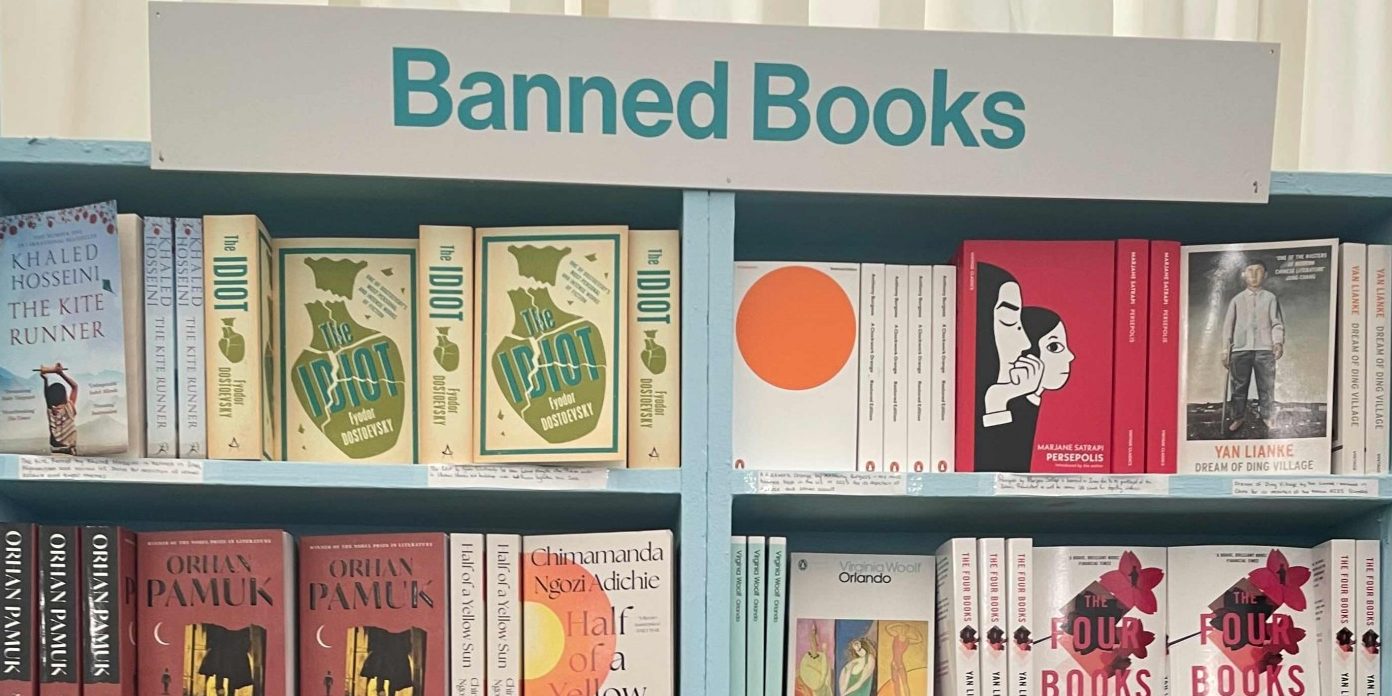
Banned Books Week 2026: Is reading at risk?
From 4-10 October this year it was Banned Books Week, highlighting the importance of protecting the freedom to read. For as long as books have been written, they have been contested. Religious groups have accused Harry Potter of promoting the occult; Lady Chatterley’s Lover was banned in England for being too erotic; Wilde’s editor removed scenes of homosexuality from The Picture of Dorian Gray; the list goes on.
In the 21st century, banning books can feel more like something out of 1984 than reality. However, throughout the 2020s, book banning has been on the rise. In 2025, the American Library Association (ALA) recorded 4,235 separate titles as either challenged or banned.
Here in Warwickshire, the County Council leader, Reform’s George Finch, has argued that books containing ‘contested gender ideology’ should not be promoted in libraries, suggesting that these books teach children ideas disguised as facts. Earlier this year, a school in Manchester removed the book Queerly Autistic from its library, saying that it was age inappropriate. What once felt like a problem of angry church members in America may now shape your local library’s display.
So, what does censorship look like, and who gets erased?
In the US, books that tackle LGBTQIA+ identity are at the forefront of censorship. According to the ALA, 40% of titles challenged in 2025 contained themes of queer identity or race. Maia Kobabe’s memoir Gender Queer was the third most banned book of 2025. Other banned book lists include George M. Johnson’s memoir-manifesto All Boys Aren’t Blue; the lesbian fantasy novel, Cinderella is Dead; and Casey McQuinston’s queer utopia Red, White and Royal Blue. Often, anti-book drives describe these works as ‘age inappropriate’ or ‘sexually explicit’, yet their straight counterparts go unchallenged.
LGBTQIA+ characters and themes can help readers navigate queer identity, understand themselves, and feel represented within media
These types of books have always been considered a threat. In 1928, Radcliff Hall’s novel, The Well of Loneliness was banned for depicting lesbian relationships, with the fear that Hall would corrupt woman readers. In some ways, the book’s prosecutor was right: books are powerful. Hall exposed a generation of women to the concept of queer female relationships. Today, LGBTQIA+ characters and themes can help readers navigate queer identity, understand themselves, and feel represented within media. Even in a post-Chappell Roan and Heated Rivalry world, many young people lack an image of queer adulthood or representation of intersecting identities. Access to queer literature will continue to inform both current and future generations of readers.
Alongside LGBTQIA+ books, book bans disproportionately affect novels by black writers. Classics including Maya Angelou’s I Know Why the Caged Bird Sings and Zora Neale Hurston’s Their Eyes Were Watching God are often challenged or removed from libraries. Young Adult novels, The Hate you Give and Ghost Boys have also faced push-back. Even when these books don’t get an outright ban, challenging them creates the perception that certain themes or identities are inherently controversial. Schools in Missouri banned Toni Morrison’s novel The Bluest Eye, citing themes of racism as a reason for doing so. If non-white youth are already experiencing racism in everyday life, then who is being sheltered from it? It seems only white youth can avoid the topic.
Storytelling can ease young readers into other lives… understanding and empathy lay the groundwork for bridging social divide
A common trait among these banned books isn’t just their themes, but their age demographic and location. School libraries are often the first to remove a book, limiting young people’s exposure to different perspectives and experiences. While social media algorithms reward extreme and un-nuanced opinions, storytelling can ease young readers into other lives. Understanding and empathy lay the groundwork for bridging social divide – a scary prospect for the right-wing.
Seeing your identity in print is essential for the confidence and community-building of marginalised youth. There’s no unbiased way to ban books; by erasing an identity, you allow only one side of the story, reinforcing a ‘right’ and ‘wrong’ way to be.
Censorship is not the future of literature. By keeping track of book bans (especially in your local area), you can ensure books don’t silently disappear. By supporting organisations such as Warwickshire Pride, you can help push back against the attempted library policies of Reform’s George Finch. In short, adding a banned book to your reading list supports the circulation of these novels, and can broaden your perspective.
Comments