UK Youth Parliament looks set to be axed
The UK Youth Parliament is at risk of being axed in the near future, after the government confirmed that it would not commit to its future funding.
Government grants from the Department for Culture, Media and Sport (DCMS) are essential to the organisation’s survival, with it receiving £453,000 of taxpayer funding last year. Such hesitancy follows the immense pressure to slash public spending amid the ongoing cost-of-living crisis.
Though no decision has been made on its funding beyond March 2027, the government’s refusal to commit to the programme may be an unfortunate sign of what is to come.
Established in 1999, the scheme intends to boost political interest amongst young people and provide opportunities for them to engage in parliamentary process.
Currently, over 300 young people sit as Members of Youth Parliament (MYPs). Elections are held in over 70% of constituencies every two years, allowing local young people to participate in the electoral process by either standing, or voting for a candidate.
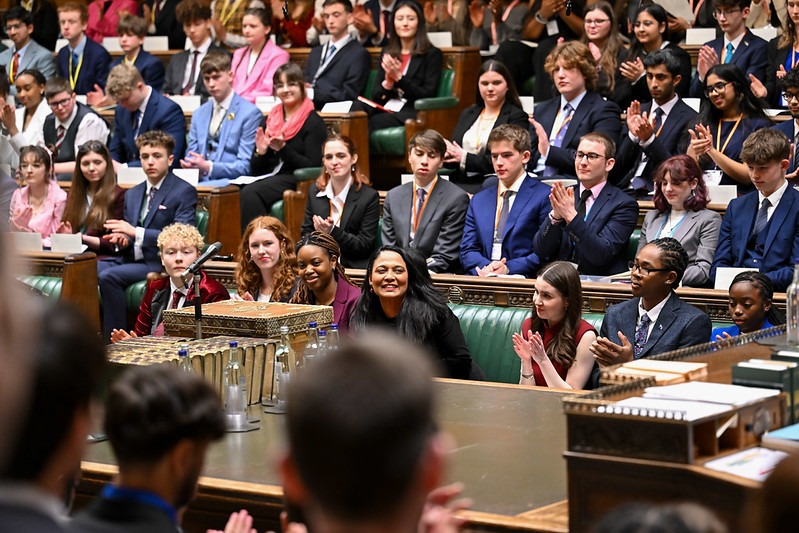
Once a year, MYPs hold debates in the House of Commons chamber. These sessions provide a platform for youth to discuss the key issues which impact their generation.
Recent topics have included bringing attention to the youth housing crisis, calling for the right to vote for 16-and 17-year-olds, and campaigning for free period products in public spaces.
There is fierce debate on the value of the current scheme. Many see it as crucial in promoting Britain’s liberal democratic values and encouraging participation among an already politically-distant demographic.
Only 26% of young people were familiar with it, and some schools felt ‘excluded’ from the organisation
Former Conservative leader, Iain Duncan Smith has condemned the proposal. He urges the Labour government to develop a scheme that “reconnects those becoming disengaged” and “gives the next generation a real stake in our democracy”.
However, a 2025 government review found that only 26% of young people were familiar with it, and some schools felt ‘excluded’ from the organisation.
This has prompted questioning on whether public money is being wasted on the scheme, with many voicing concerns over taxpayers’ money being spent on an organisation with low public awareness.
For many disappointed young people, Youth Parliament provides a pivotal opportunity to hold the government to account and have a say on their future.
While the government has stated it is working on a replacement, little has been said about what form this will take. It seems the decisions taken in the coming months will be critical to its survival.
Comments