A summer in retrospect: Is the Commonwealth Games dying out?
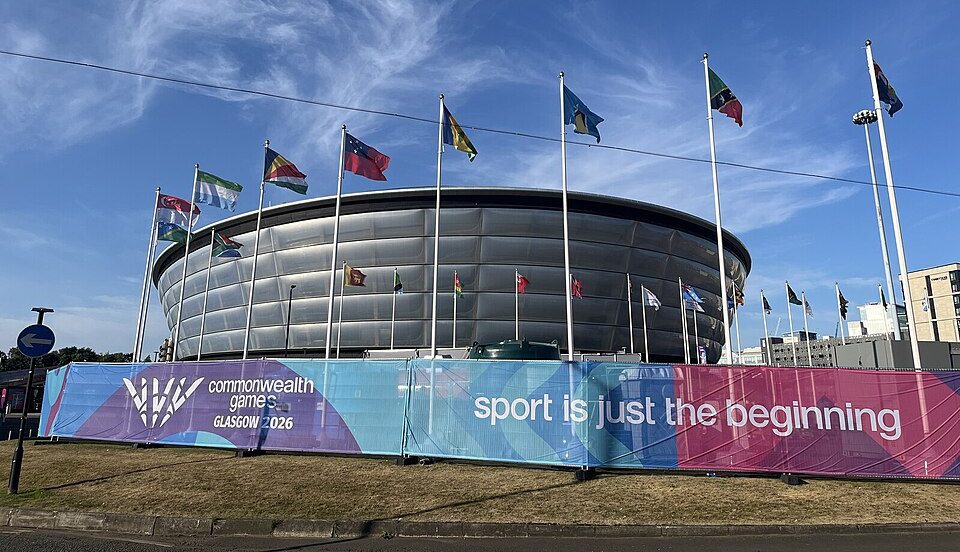
This summer saw the return of the Commonwealth Games to Glasgow for the second time in 12 years, albeit a rather threadbare affair, with stripped-back production and just 10 sports across 11 days of competition. Now that the dust has settled on Glasgow, the question remains whether its minimalist approach was a temporary fix or the permanent future of the event.
Despite Scotland’s largest city hosting the competition, the funding came almost entirely from the other side of the world in Australia.
Phil Batty, chief executive of Glasgow 2026, hailed the Games as a ‘phenomenal 11 days’
The opportunity to host the Games was first given to the Australian state of Victoria in August 2022, only to be cancelled just 11 months later by the state’s government due to concerns over how much it would cost to run.
Daniel Andrews, Victoria’s Premier, announced the decision after estimated costs for the games tripled to USD $4.92 billion, stating simply that the expenses were “well and truly too much” for the state to endure.
In some rather damning comments at a televised press conference in Melbourne, Andrews admitted: “[I’ve] made a lot of difficult calls, a lot of very difficult decisions in this job. [Cancelling the Games] is not one of them.”
With a budget of just £150 million, several key sports were cut from the competition – including diving, badminton, and table tennis – which organisers believe is helping create a blueprint for a smaller, more sustainable tournament.
With that being said, Glasgow held the first Games to fully integrate para-disciplines with their counterparts, allowing para-athletes equal promotion and visibility on the world stage.
Phil Batty, chief executive of Glasgow 2026, hailed the Games as a “phenomenal 11 days” and a shining example for how “major events can flex and evolve to be fit for purpose in the future“.
For the first time since 1954, the BBC did not televise any of the events
The financial viability of the ‘Friendly Games’ has been called into question after the withdrawal led to concerns that the Games might be postponed to 2027 or cancelled entirely. Glasgow’s heroic rescue had initially been overshadowed by a disappointing turn-out: only half a million tickets were sold across the tournament, compared to the nearly 1.5 million brought in by the city when it last hosted in 2014.
And, for the first time since 1954, the BBC did not televise any of the events, with viewers having to fork out a monthly subscription to TNT Sports to watch the live action. With no free-to-air coverage, generating interest in the British public proved difficult, with only 950,000 people tuning in for the opening ceremony this year. However, interest remained high in Australia and Canada, where 11.4 million and 4 million tuned in respectively. Both countries made the Games available to watch on free national broadcasters.
The relief efforts of one very last-minute, but auspicious, Commonwealth Games provided an encouraging response to growing criticism over the years. With another four years to go until they are held again in Ahmedabad, India, the next chapter for the Commonwealth Games remains a matter of public, and political, interest.
Comments