Why Europe needs data to tackle wildfires
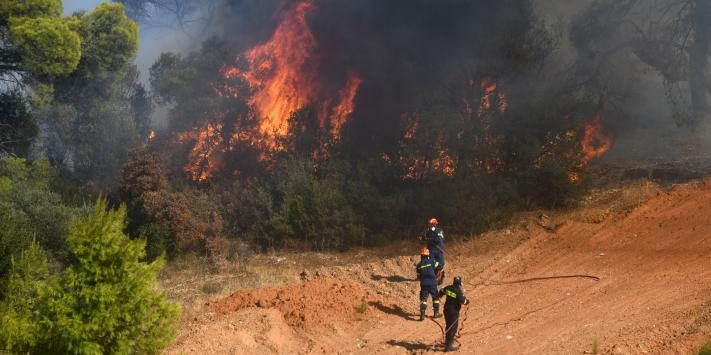
The word ‘summer’ in Europe is becoming increasingly synonymous with wildfires. In the past month alone in Gironde, a region of France, 220,000 people have been evacuated and more than 42,000 hectares of land have burnt due to wildfires. So far, 2026 has been a disastrous year across Europe for wildfires, partly due to heatwaves that have made vegetation drier and more flammable. EFFIS—a European database on forest fires—reports that between 1 January and 29 July 2026, 576,000 hectares of land burned across the 27 EU countries, an area equivalent to nearly twice the size of Luxembourg. It is also far above the average of 243,000 hectares burned over the same period between 2006 and 2025. In this article, I will examine data on wildfires in Europe between 2008 and 2025, discuss the shortcomings of the European approach to the problem and propose suggested solutions.
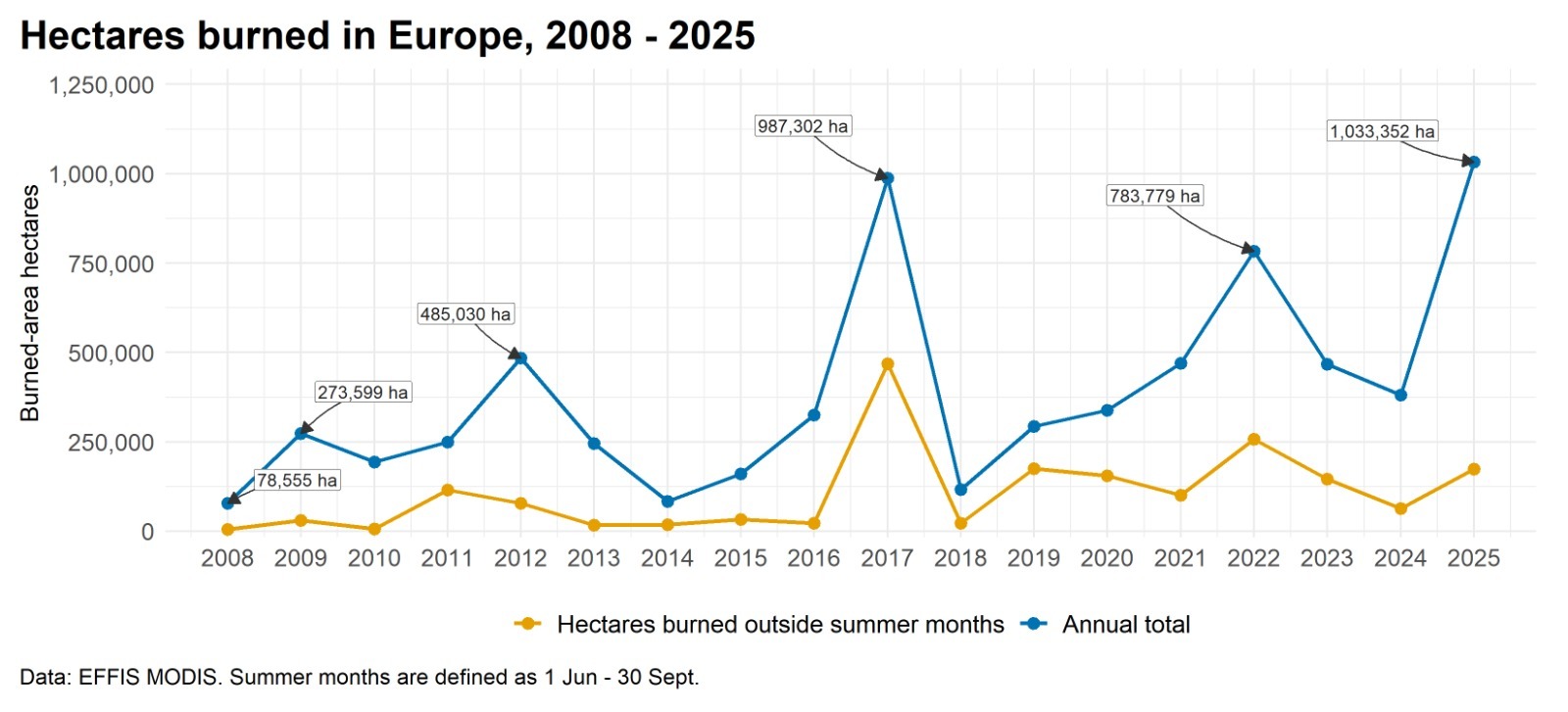
Looking over a longer time period, it becomes clear that wildfires have been an increasingly serious phenomenon in Europe. Since 2017, increasingly higher peaks in the area of land burnt have been recorded than preceding years. Moreover, during the non-summer months of the 2018–2025 period, an average of 137,562 hectares burned each year. Compared to just 36,324 during 2008–2016, this shows how the gradual rise in temperatures is extending the wildfire season beyond the summer months.
By the end of the 21st century, climate change will make weather conditions even more conducive to wildfires in areas of central and western Europe
Wildfires pose a threat to more than 160 million hectares of forests and other wooded areas, covering around 41% of Europe’s total surface area. When they spread to agricultural land, this can disrupt local and international supply chains. According to a 2025 report by the European Court of Auditors (ECA), direct economic losses, in terms of damaged assets and casualties, amount to around €2 billion per year. However, these costs have long been overlooked, as demonstrated by the fact that this report is the first on the subject in 10 years. Moreover, its estimates do not account for some of the indirect and long-term costs of wildfires, including biodiversity loss and emissions of fine particulate matter and greenhouse gases, which can fuel a vicious climate cycle: higher temperatures make vegetation drier and more flammable, increasing wildfire risk. In turn, larger fires release greenhouse gases and reduce forests’ capacity to absorb carbon, contributing to further global warming.
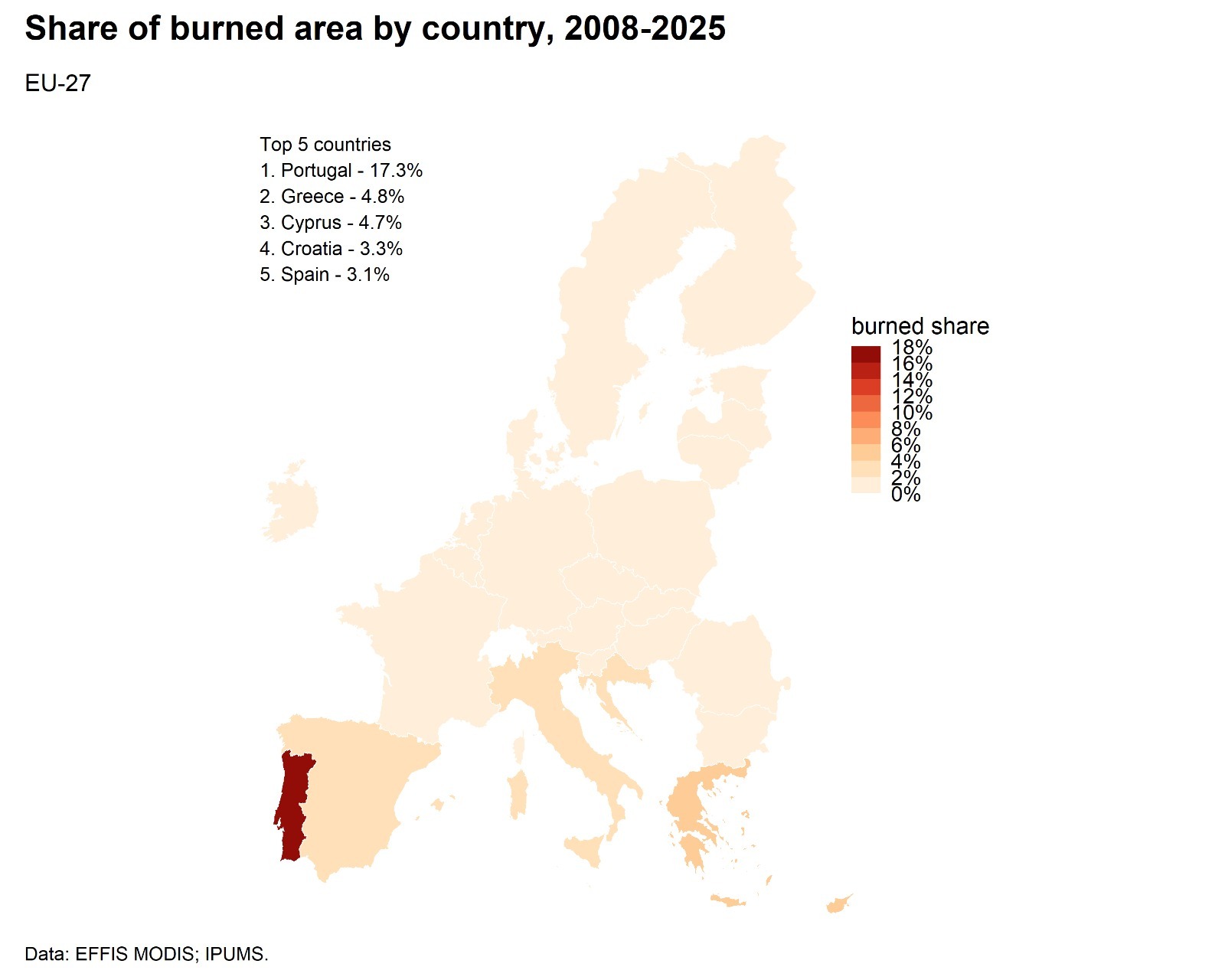
This figure shows that, over the period, fires burned a substantial share of the territory of several southern European countries. Portugal in particular was the most affected, with up to 17.3% of its surface area burned between 2008 and 2025. This picture might suggest that wildfires are a problem confined to a small group of countries, but the European Environment Agency has projected that, by the end of the 21st century, climate change will make weather conditions even more conducive to wildfires in areas of central and western Europe that are currently less exposed. This means that the direct costs of wildfires will fall on a growing number of countries, the indirect costs, by contrast, are already widely shared, since the effects of wildfires cross national borders by disrupting transport, interrupting supply chains and causing widespread environmental and health damage through smoke drift, the movement of particles, and gases by the wind.
It is therefore necessary to confront this threat through a clear and effective European institutional framework. The ECA report, however, highlights a different reality. First, forest policy is the responsibility of member states, while the Commission is limited to supporting individual countries’ forestry programmes. The main problem here is that the procedure for accessing funds allocated to these programmes does not require countries to distinguish between wildfires and the other types of natural disasters they intend to address, nor does it require them to report the impact of implemented programmes on wildfire damage. As a result, the Commission has no clear overview either of the total amount spent by individual countries on preventing or fighting wildfires, or of the impact of projects financed with European funds.
An effective wildfire-prevention strategy must therefore use data to allocate more resources to the areas at greatest risk
Given the growing severity and frequency of wildfires, this lack of clarity is problematic, but it can be addressed. First, the application process for accessing European funds for agricultural and forestry policies should require a distinction between projects concerning wildfires and those concerning other natural disasters, not least because, according to the European Environment Agency (EEA), around 95% of wildfires are caused, either directly or indirectly, by human activity. This recognition should take the form of a European fund devoted exclusively to tackling wildfires, managed by the Commission and based on common criteria for all member states to allocate its resources to national prevention programmes. In addition, countries should be required to report the effectiveness of the programmes implemented, again according to common metrics.
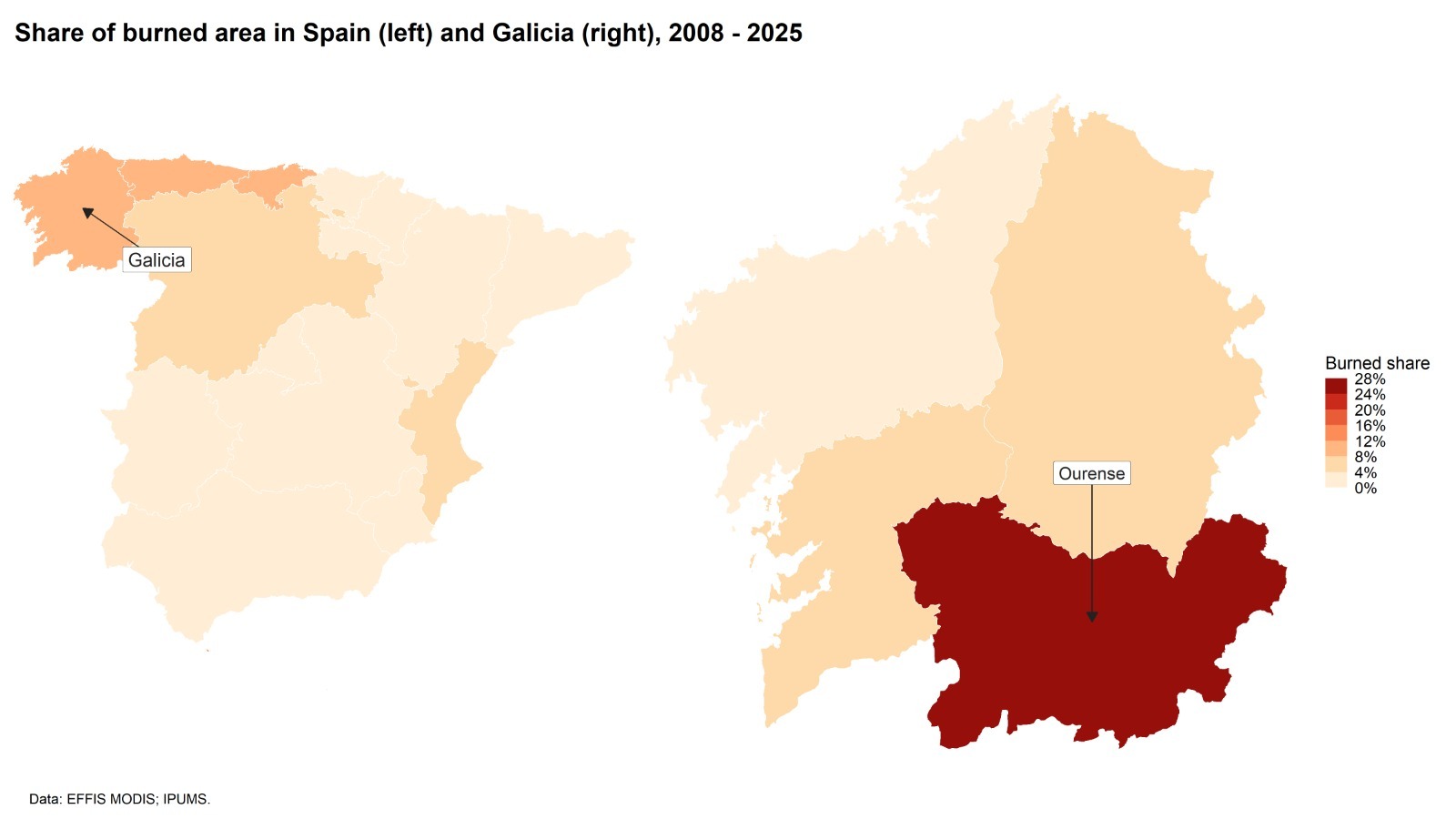
Policies to prevent and fight wildfires should also be guided by historical data, such as those provided by EFFIS, and by forecasts of high-risk areas, but this does not always happen. The ECA report discusses the case of two unnamed Spanish regions which, during the process of selecting wildfire projects, prioritised ensuring uniform geographical coverage across their provinces rather than allocating more funds to higher-risk areas. One region, for example, required each province to propose six projects, after which three projects per province were funded regardless of their relative score: the other region classified its entire territory as being at high wildfire risk and distributed funds evenly across all provinces.
In the figure above, I analyse EFFIS data for Spain and Galicia, a region in the north bordering Portugal and among the most affected. Over the 2008–2025 period, a strategy designed to ensure uniform coverage of the regional territory is ineffective, because wildfires have historically been distributed unevenly across Galicia’s provinces. The most affected province is Ourense, on the border with Portugal, and therefore most of the funding should have flowed there. An effective wildfire-prevention strategy must therefore use data to allocate more resources to the areas at greatest risk and rely on coordination between different administrative units and across countries, since these high-risk areas often extend beyond administrative boundaries.
Climate change and its consequences, such as the extensive wildfires that are increasingly ravaging Europe, are a collective challenge and responsibility. For this reason, Europe already has a common response capacity. At present, however, this capacity is not supported by a common regulatory framework. Funding for projects designed to prevent and fight wildfires would be more effective if a dedicated fund were created and if member states referred to a common system of criteria both to access it and to report the impact of the policies implemented. In addition, greater use should be made of data, such as those provided by EFFIS, to identify the areas at greatest risk and estimate wildfire damage, particularly indirect and long-term damage, for which the data remains scarce and fragmented.
Comments