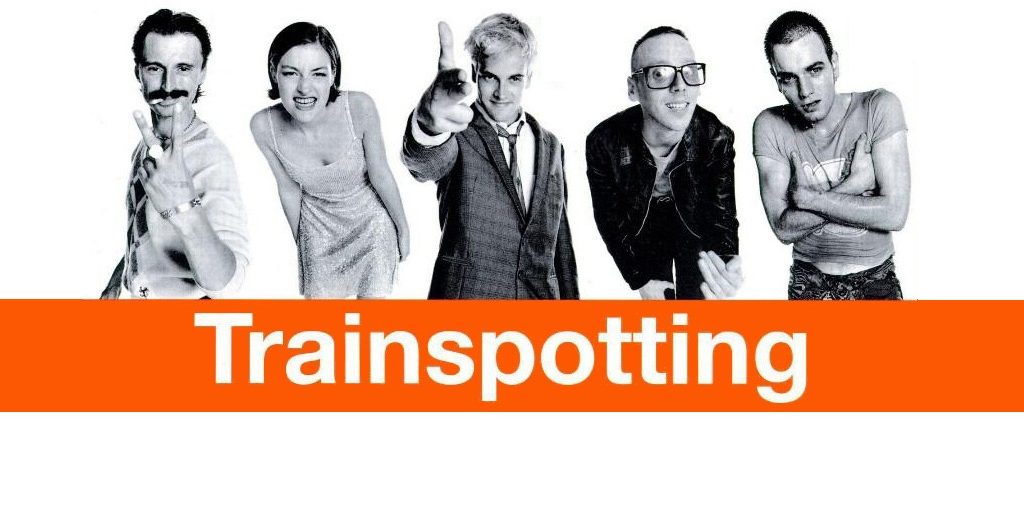
Thirty years of choosing life: Why Trainspotting still matters
Thirty years after its release in 1996, Trainspotting remains one of the defining films of British cinema. Danny Boyle’s adaptation of Irvine Welsh’s novel is more than a story about addiction; it captured the frustrations of a generation growing up under Thatcherism. Boyle revolutionised the look and feel of British filmmaking, challenging audiences to reconsider how addiction is represented on screen. And three decades later, its message feels just as relevant.
This article contains references to addiction and drug abuse.
The opening scene is instantly recognisable, with Renton (Ewan McGregor) sprinting through the streets of Edinburgh, his footsteps leading into the needle drop of Iggy Pop’s ‘Lust for Life’, before launching into the iconic “Choose Life” monologue. Boyle immediately throws audiences into a world of relentless momentum and chaos, with fast-paced editing, handheld camerawork, and the soundtrack creating an intoxicating sense of exhilaration that mirrors the same rush Renton is chasing.
While the sequence feels exciting, the image reminds audiences that this is not freedom, but survival
Visually though, Boyle undercuts any glamourisation of heroin use. A freeze-frame on Renton captures his pale, gaunt face with the streets appearing grey and grimy, exposing the bleak reality behind his addiction. While the sequence feels exciting, the image reminds audiences that this is not freedom, but survival. The “Choose Life” speech initially sounds proud, but the irony of this rant on the absurdity of conformity in a world devoid of meaning quickly becomes apparent.
Renton’s speech is ultimately a rejection of the consumerist ideals that defined Britain. His sarcastic list of choosing careers, washing machines, and mortgage repayments exposes his belief that society has reduced life to little more than consumption. He asks, “who needs reasons when you’ve got heroin?” presenting addiction as an escape from a society that has already failed many of its young people. It is this political frustration and sense of alienation, rather than the drugs themselves, that gives the opening its enduring relevance.
The film’s messages are conveyed best through clever filmmaking, using colour symbolically within the opening scene. When we first see the group do drugs, the room glows red to foreshadow the danger beneath their euphoria. This, accompanied by crosscuts between Renton falling during a football match, and falling because of drugs, emphasises how let down he feels within a society that continues to fail him. Hyper-realistic sound creates an uncomfortable reality that prevents spectators from becoming seduced by Renton’s lifestyle and instead be forced to simultaneously understand and be repulsed by it.
This complexity meant that Trainspotting was accused of glorifying drug use, especially in the energetic first half. However, Boyle’s filmmaking consistently undercuts any glamour, seen best in the infamous “Worst Toilet in Scotland” sequence. While the audience recoils at the revolting surroundings, Renton imagines himself diving into an underwater world searching for his lost suppositories. Boyle purposefully contrasts objective reality with Renton’s subjective experience, presenting the seductive illusion addiction creates. Boyle is not glorifying heroin; he is portraying why people become trapped by it.
Empathy distinguishes the film from other depictions of addiction, with Boyle not condemning his characters but encouraging audiences to understand them
Ewan McGregor echoed this interpretation when reflecting on the film. He explained “there was obviously a huge escapism involved in heroin, but right from the start Renton doesn’t want to be doing it; that’s what addiction is.” Rather than reducing addiction to weakness, Trainspotting humanises its characters by showing why they seek escapism. This empathy distinguishes the film from other depictions of addiction, with Boyle not condemning his characters but encouraging audiences to understand them. This balanced portrayal remains remarkably modern, emphasising addiction as a public health issue rather than simply a criminal one.
This fundamentally transformed British cinema, with Boyle fusing social realist filmmaking with bold colour, surreal imagery, rapid editing, and a Britpop soundtrack. British cinema suddenly felt youthful and stylish, changing the rhythm of the 1990s from period dramas into real-life stories. This opened doors for films such as This Is England, and Lock, Stock and Two Smoking Barrels, presenting modern Britain with energy and honesty.
Trainspotting‘s enduring impact arguably lies in the binary opposition created between the opening and closing sequences, contrasting the chaos of addiction with a hope for cleanliness
Trainspotting’s enduring impact arguably lies in the binary opposition created between the opening and closing sequences, contrasting the chaos of addiction with a hope for cleanliness. Renton delivers the “Choose Life” speech but the tone has changed, speaking with quiet sincerity. Boyle replaces the frantic movement of the opening with a long shot of Renton walking across London Bridge, with the white buildings and blue skies fundamentally contrasting the dingy environment of Scotland. Renton has physically moved away from the habits that defined his past, with the bridge metaphorically representing the transition between two lives.
The final image allows him to look forward, embracing the identity of modern Britain rather than rejecting it. As the camera slowly zooms into Renton’s smiling face, the image slips out of focus to reflect the uncertainty of his future. Boyle does not promise that recovery will be easy or permanent, but Renton’s future will undoubtedly be more positive than his past.
The closing scene also reflects the political optimism surrounding the film’s release, with the conservative rule coming to an end, capturing a Britain in search of renewal. This is encapsulated in the hypnotic rhythm of ‘Born Slippy’ which conveys the liberation at the end of Thatcherism. Renton’s decision to “choose life” mirrors a wider belief that another future could be possible after years in which working-class communities had experienced mass unemployment and the effects of the north-south divide.
Thirty years later, this optimism feels familiar, with Britain once again finding itself debating how to rebuild public services, reduce inequality, and create opportunities for younger generations. Although the political landscape has changed, the emotional question at the heart of Trainspotting remains relevant: what does it mean to choose life when so many people feel the choices available are limited? Boyle refuses to offer easy political answers, but he insists that change begins by imagining a different future. The film reminds us that the greatest high was never heroin, but choosing your future. Choosing life.
Comments