The rise, fall, and rise (again) of Olivia Wilde
The transition from actor to director is rarely a smooth one. For every Clint Eastwood, there have been many more Nicolas Cages and Ryan Goslings, whose brief attempts to step behind the camera were met with critical panning and commercial failure.
It came as a welcome surprise, then, when Olivia Wilde of The O.C. and House fame hit the directing scene with the acclaimed Booksmart in 2019: a quirky coming-of-age comedy which effectively challenged genre conventions and is still often cited among the likes of Eighth Grade and Lady Bird as a shining example of a contemporary high school movie.
Though its quality failed to translate to box office success, it did create enough buzz to instigate an 18-way bidding war on Wilde’s next project, the psychological thriller Don’t Worry Darling.
Don’t Worry Darling garnered significant attention and modest returns, but for all the wrong reasons
For fans of Booksmart eager to see her career progress, what happened next was a much less welcome surprise. It was, more or less, an opposite situation: Don’t Worry Darling garnered significant attention and modest returns, but for all the wrong reasons.
A slew of issues, from a very public divorce to rumours of Harry Styles spitting on Chris Pine, plagued the discourse surrounding the film’s release. Chief among them was controversy over Shia LaBeouf’s departure from the cast – the way information surfaced suggested Wilde had twisted the narrative to portray herself more positively. Equally, however, she and others rightly pointed out that far more condemnation-worthy male directors have been able to promote their new releases with disproportionately less backlash.
Putting infamous scandals aside, the project itself near-unanimously failed to meet expectations. Critics agreed that an overabundance of tired dystopian tropes alongside a lack of effective exploration of its more interesting ideas made for a film which overstayed its welcome and wasted a potentially interesting premise.
While the dominance of unproductive speculation is one potential explanation for the lack of meaningful discussion sparked by the film’s themes of misogyny and escapism – and that certainly played a part – it could be argued that a failure to present those themes in new and interesting ways is equally to blame.
Once the release date passed, the well of rumours fuelling internet chatter soon ran dry. But among those who still looked back fondly on Wilde’s directorial debut, one question lingered: was it just a fluke?
The Invite is a refreshing comedy which finds endless humour, gripping tension and powerful moments of tenderness
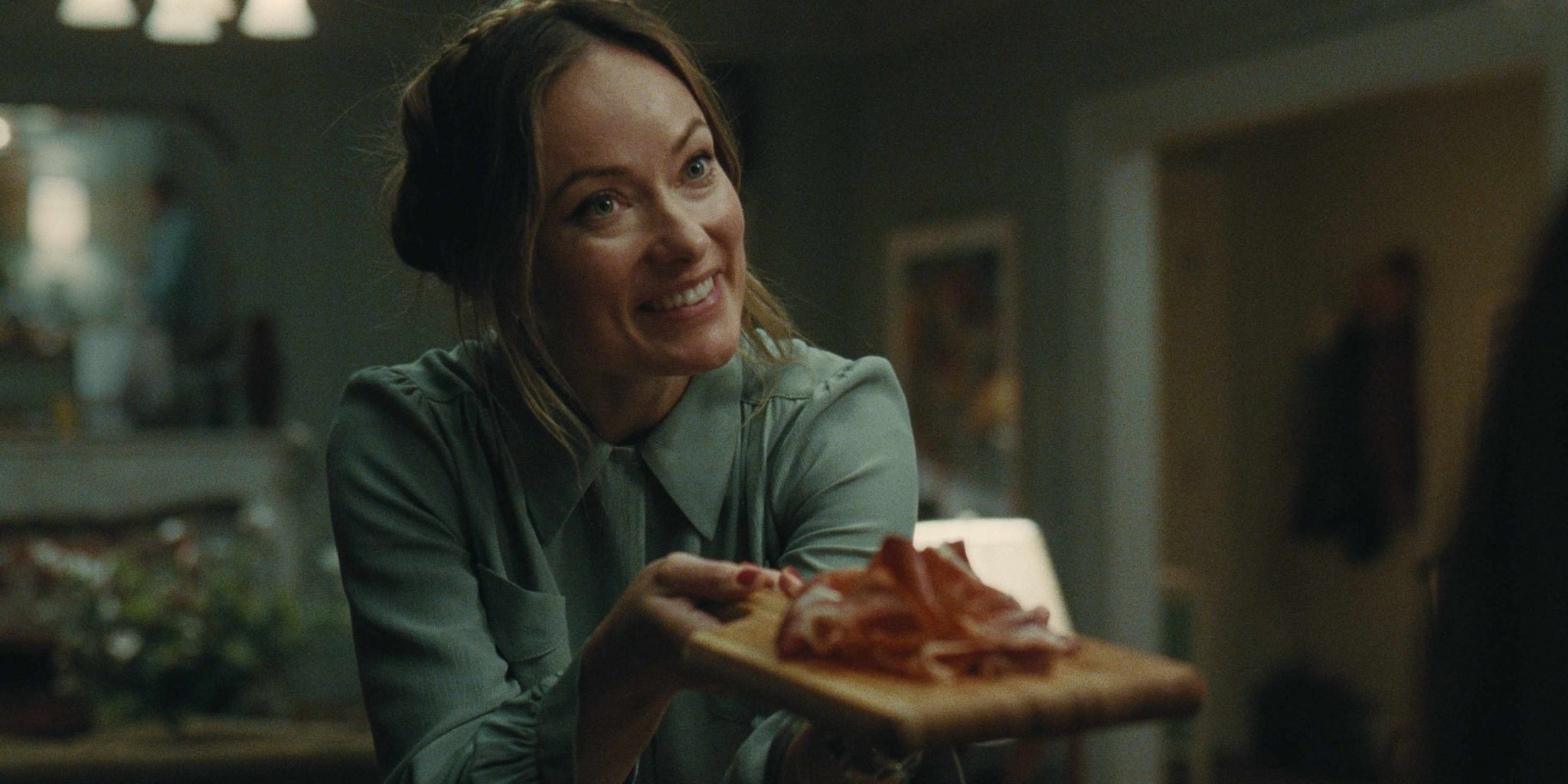
Four years later, we finally have an answer in the form of her latest film – and it is a resounding no. Based on Cesc Gay’s The People Upstairs, The Invite is a refreshing comedy which finds endless humour, gripping tension and powerful moments of tenderness in the relationships each of its four characters have with sex and each other.
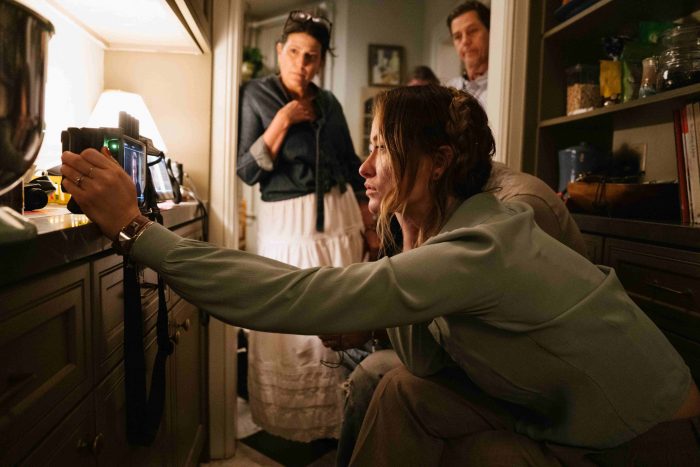
Image: Atsushi Nishijima / A24
It has received special praise for the performances from Seth Rogen, Edward Norton, Penélope Cruz and Wilde herself, made possible by a boldly unconventional filmmaking strategy. Following rehearsals, the film was shot in chronological order over 21 days, with the cast working in close cooperation with writers Will McCormack and Rashida Jones to improvise and rewrite the script as they began to understand and fully embody their characters.
It is an approach undoubtedly dependent on Wilde’s assured direction, and her work has paid off. The Invite has become the latest unexpected word-of-mouth hit, enticing audiences with an exceptional communal experience at the cinema.
No matter how the public feel about Olivia Wilde … her filmography so far is proof of one thing: no number of creative projects is enough to make definitive claims about a person’s talent or potential
Ultimately, no matter how the public feel about Olivia Wilde – and whether or not their feelings are justified – her filmography so far is proof of one thing: no number of creative projects is enough to make definitive claims about a person’s talent or potential, especially when it comes to directing. If one film suffers from a messy script and an unusual production at the height of a pandemic, the next can just as easily push through delays and come together flawlessly.
Whether it turns out to be another offbeat comedy masterpiece or newsworthy disaster, the 2027 release of her recently-greenlit fourth feature, Naughty – as well as the rest of her career – will no doubt be fascinating to watch unfold.
Comments