The never-ending poem: Why The Odyssey has withstood the test of time
People often refer to the story of Ozymandias, the idea that all great things are washed away by time, but I think The Odyssey has proven to be an exception. Homer’s epic poem has lasted for thousands of years and has shown no signs of irrelevancy, still being read, and now watched, by millions of people in the 21st century.
Perhaps one day it will be forgotten, but that day doesn’t seem soon. Why is that? I argue that it is because the notions and themes at the core of it are about humans as a species, and because the story contains universal elements, both simple and complex, which have informed pretty much every work of fiction written after it.
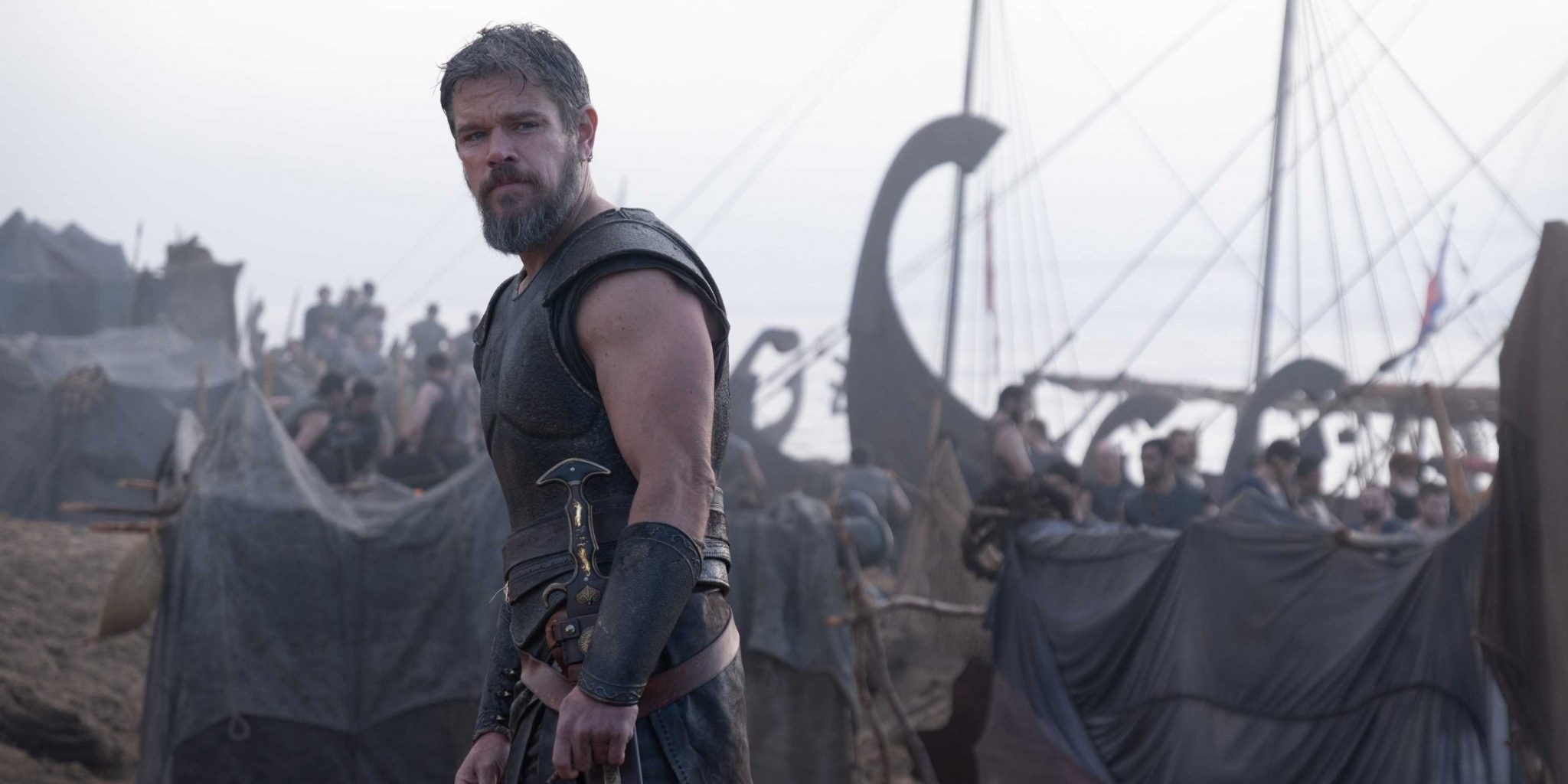
To prepare for this article I read the original poem and watched Christopher Nolan’s new film adaptation, and I will use both to examine the staying power of this great story.
This article contains spoilers for both iterations of The Odyssey.
The film emphasises and reveals certain themes from the poem and tells it in a modern way just as excellently as it deserves, and I can’t recommend it enough if you haven’t already seen it. There are of course many interpretations of the story, but I see the core themes as being the struggle against fate, the inner nature of humanity, and the desire for connection and honour contrasting against our desire for conflict.
Beneath this simple plot are messages which are so universal that they have been relevant in every period of history since the story was written
In the story, Odysseus goes through extreme hardship in order to get home to his family, displaying wisdom and perseverance along the way. This is a very simple idea that anyone can get behind and understand, perhaps comparing it to the hardships and loved ones in our own lives. The set pieces of the story are also iconic and can be easily understood, whether it is the cyclops or the sea monsters Charybdis and Scylla, the audience understands the threats facing Odysseus and want to see him back home with the people he loves. The story was the original hero’s journey from point A to point B, and any audience can get behind it and be familiar with its structure because of that.
Beneath this simple plot are messages which are so universal that they have been relevant in every period of history since the story was written. The bigger questions asked by the story involve how people should treat one another, the deep flaws within us, and our paradoxically monstrous and courageous nature. The idea of the ‘Law of Zeus’ is explored, the notion that people should always treat each other how they would want to be treated, showing hospitality, honour, and humility to everyone regardless of who they are.
Acting in this way is not supposed to be an easy thing to do and even Odysseus struggles with it at certain times in the story, but his good qualities are ultimately what allow him to survive and earn him the favour of the gods. Other characters who do not offer hospitality and don’t show honour or moderation are punished for it, including Polyphemus the cyclops and the suitors. Odysseus is the only member of his crew who, out of respect and resilience, doesn’t eat the Sun God’s sacred cows, and he is thus the only one who isn’t struck down by Zeus. Despite all temptation, Odysseus moves past the more flawed parts of himself in this instance, and the story clearly suggests that if we all act in this way towards one another, we will be rewarded with a better tomorrow.
“The blessed Gods don’t like foul play. Decency and moderation are what they respect in men”
– Eumaeus, The Odyssey
The suitors, the villains of the story, aren’t so different from Odysseus’ crew in the sense that they also give into their deepest temptations, making foolish decisions out of greed and anger and expecting good things to be given to them when they treat others with no respect at all. Odysseus has to accept that some of his men will die, and in the original epic he accepts that even the more respectable of the suitors will also die because of their actions. Both groups receive their comeuppance from the gods, with good characters like Odysseus, Telemachus and Penelope being the only ones left standing in the end.
Similarly, Agamemnon, especially in the film, is a complete manifestation of the greed and hubris of humanity and receives a brutal death at the hands of his wife, representing the fall of man into our darker temptations, and what is in store for us if we indulge in them. The idea of conquering our worst temptations and emotions and choosing to be better than them is completely universal, and for Odysseus to be rewarded for doing this serves as a blueprint for how we should all act, allowing the story to be translated into the lives of everyone reading.
Nolan’s film expresses the themes of cooperation and conflict even more strongly, as it portrays the usage of the Trojan horse as wicked, dishonourable and evil. While the use of it by Odysseus won the war, it also ushered in a new age of humanity where people disregarded the bonds between them and ‘Zeus’ Law’ and instead gave into their darkest emotions like hate and greed.
Odysseus reminded me a lot of another Nolan protagonist, Oppenheimer, in the sense that he spends much of the film guilty for the evil he has unleashed upon the world
Odysseus reminded me a lot of another Nolan protagonist, Oppenheimer, in the sense that he spends much of the film guilty for the evil he has unleashed upon the world, but unlike the harrowing ending of Oppenheimer, I find that The Odyssey ends on a more hopeful note. Odysseus, despite his sins, is able to survive and be with his loved ones because he acted mostly in the right way on his journey and understood the horrors of conflict, expressing his guilt to others and showing them how wrong the symbolic Trojan horse was.
Telemachus may therefore represent a hope for the future, as he has learned from the mistakes of his father and will likely not forget the old ideas of connection, moderation and honour in his rule. Odysseus laments that people will forget and relearn the same lessons repeatedly, which is partially true, but the film also suggests that if we teach virtue to every new generation, there is still hope for us yet.
Comments (1)
Interesting perspective. I’ll test this out on my system.