The many sounds of silence in cinema
Like a portrait without a face, or a book without sentences, a movie’s silence encourages its audience to look for meaning, emotion, and story in other types of language. Tense shoulders, widened eyes, a hurried flap of the hand… These all, for example, convey urgency without the discord of shouting and screaming. When one sense is eliminated from the viewing experience, when characters go without dialogue for minutes on end, silence can be just as loud as noise and just as telling as a script.
Throughout film history, silence has served various purposes across a range of genres. Building tension in a horror movie, making a conversation awkward, reflecting a character’s concentration – the list goes on. Scenes may omit speech or music, prompting the audience to follow the story through subtle sounds or visual cues.
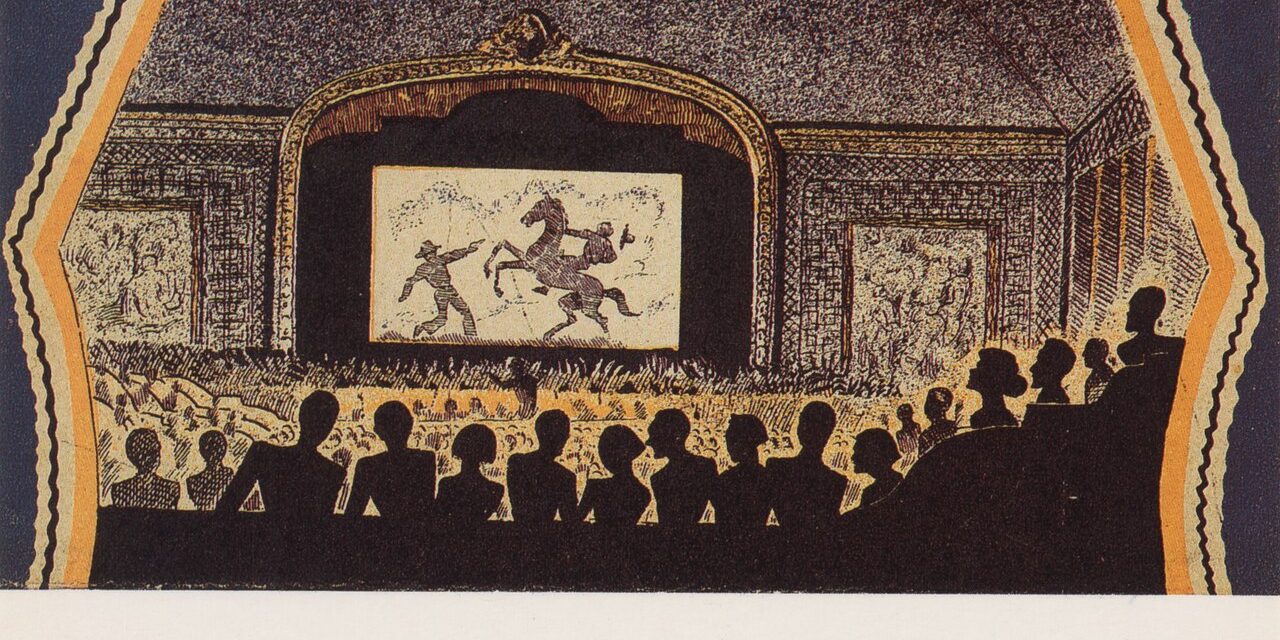
In older cinema, entire films were mute, such as adaptations of several Shakespearean plays. The early 1900s omitted famous lines and relied on the audience’s recognition of movement and expression to progress the well-known stories.
Whilst undoubtedly a creative challenge, this choice, working with the technology of the time, makes the silent film an interesting watch
Of all the genres that Shakespeare has been adapted to, silent film thus stands out for eliminating a core part of the famous dramas: performance through voice and speech. Whilst undoubtedly a creative challenge, this choice, working with the technology of the time, makes the silent film an interesting watch.
Though many different plays are easily accessible to watch as silent films today, from Twelfth Night to Hamlet, the one I highlight here is Gerolamo Lo Savio’s 1910 version of King Lear. The scene which sets the play into motion originally relies on dialogue: Lear’s three daughters must give a speech about how much they love him, with the most flattering daughter inheriting the most land from the retiring king. By erasing the daughters’ voices, the film magnifies other details about their performances.
When there are no flowery lines to pick apart, the eye focuses on the exaggerated smiles of Goneril and Reagan as they flatter their father, and the indifferent body language of the only non-performative daughter, Cordelia. Lear’s body language communicates a shift from adoration, kissing his two pandering daughters as they bow at his feet, to anger, physically dragging Cordelia away.
Though completely silent films are more of a rarity nowadays, modern sound design is meaningful with what it mutes in scenes
Though King Lear is completely silent, the later 1922 silent adaptation of Othello utilises music alongside emphasising gesture and expression. Here, we can trace the evolution of sound design through Shakespearean adaptations, until cinema began evolving past silent film in the late 1920s with the development of synchronised sound.
Though completely silent films are more of a rarity nowadays, modern sound design is meaningful with what it mutes in scenes. The film adaptation of Cormac McCarthy’s novel, No Country for Old Men, is unique for its distinct lack of music and background noise, for instance.
This is a key example of where, in modern cinema, silence amplifies smaller sounds to their fullest potential. For No Country for Old Men, which follows a killer’s chase for the two million dollars picked up by a hunter, these sounds define the movie as a crime thriller. They force audience members to focus on uncomfortable last breaths, or even sounds that appear mundane and insignificant out of context, like the crinkling of a wrapper or the clinking of a coin upon a counter. It’s uncomfortable, it’s immersive, and it works remarkably well in bringing the disorienting sense of realism that cinematic silence is praised for. The sounds, and lack thereof, of No Country for Old Men characterise the hunt for money as a tense, chilling reminder that, in reality, there is no soundtrack for a life-or-death decision.
Elsewhere, silence can mark the dramatic contrast between a movie’s loudest and quietest moments. Split criticisms regarding its performance as an adaptation aside, recent common consensus around Christopher Nolan’s The Odyssey is that the audience feared for their eardrums – the cyclops’ roar, the turmoil of war, the thundering wraths of Zeus and Poseidon… The movie is, memorably enough for its three-hour-long stretch, a wall of noise.
On both extreme ends of the volume adjustor, The Odyssey thus constantly surfaces the risks of war, trickery, and, in some cases, tempting fate
However, other moments, where the soldiers are piled atop each other in the Trojan Horse, staying deathly silent even as their comrades drown beneath them, tense watchers in their seats. Through silence as a medium, the soldiers’ trepidation, their fears and anxieties, become the audience’s own. On both extreme ends of the volume adjustor, The Odyssey thus constantly surfaces the risks of war, trickery, and, in some cases, tempting fate.
Across time, the art of cinematic silence has proven to be as flexible as it is powerful. Using it sparingly or in a movie’s entirety, silence is a tool that can be more memorable than the louder moments. Listen closely to the next movie you watch – what is the silence telling you?
Comments