Nolan’s The Odyssey: A modern meditation on morality, guilt and power
Thought-provoking, narratively complex, and visually engaging, Nolan once again captures the psychological turmoil of a man at war – though this time the man stands at the centre of an ancient epic.
Following Odysseus (Matt Damon), The Odyssey traces the perilous and morally fraught journey of this Trojan warrior whose path homeward leaves him and his men stranded and endangered. Through this epic voyage, Nolan interrogates morality, family, loyalty, guilt and power.
This review contains spoilers for Christopher Nolan’s adaptation of The Odyssey.
The film’s slower and more introspective scenes – Odysseus grappling with overwhelming guilt and the consequences of war – stand in stark contrast with the vast, chaotic encounters with figures like the Cyclops and Circe. This juxtaposition emphasises the instability of the world Odysseus moves through and the fractured state of his own psyche.
Nolan’s restrained use of CGI, instead favouring practical effects and artistic ambition, gives … a raw authenticity and originality
Nolan’s cast delivers commanding performances. Anne Hathaway brings a striking blend of wrath and beauty to Penelope, while Robert Pattinson embodies the duplicity of man, along with cowardice and greed. Samantha Morton, as Circe, delivers one of the film’s most unforgettable performances; the horrific transformation of Odysseus’ men into animals is depicted with such brutality and visceral intensity. Nolan’s restrained use of CGI, instead favouring practical effects and artistic ambition, gives to these moments a raw authenticity and originality.
One of the film’s most intriguing choices is the casting of Travis Scott as a poet-bard who recounts the fall of Troy: “A face…a fleet…a war…a man…a thought…a trick to break the walls of Troy…and burn it screaming to the ground!”
His rhythmic, incantatory delivery evokes the oral tradition of The Odyssey before it was written down. Nolan describes this casting as a “nod towards the idea that this story has been handed down as oral poetry, which is analogous to rap,”. It allows the audience to feel the story as something spoken, performed and inherited across generations.
This blending of ancient narratives and contemporary Black cultural expression also gestures towards the long history of storytelling as performance
By fusing traditional epic storytelling with modern cultural forms, the film suggests that stories like The Odyssey endure precisely because their themes remain relevant across time. This blending of ancient narratives and contemporary Black cultural expression also gestures towards the long history of storytelling as performance – drawing parallels between modern rap artists and the ancient Greek bard.
Much discourse has emerged around Nolan’s portrayal of women, who often appear as extensions of male psychology rather than figures with autonomy. Athena, for example, manifests not as a divine guide but a projection of Odysseus’s guilt. Yet, despite limited screen time, Zendaya delivers a compelling performance. Lupita Nyong’o, appearing briefly as both Helen and her sister, Clymnestra, captures the simmering rage of Clytemnestra’s marriage to Agamemnon with remarkable precision.
Rather than presenting individual gods as characters, Nolan interestingly portrays divine presence through extreme natural forces – storms, lightening and violent winds. As he explains, he wanted viewers to “fear the ocean, fear the wrath of Poseidon, the way characters do,” a choice far more powerful than literal divine apparitions.
Zendaya’s brief but striking performance … leaves an incredibly lasting impression
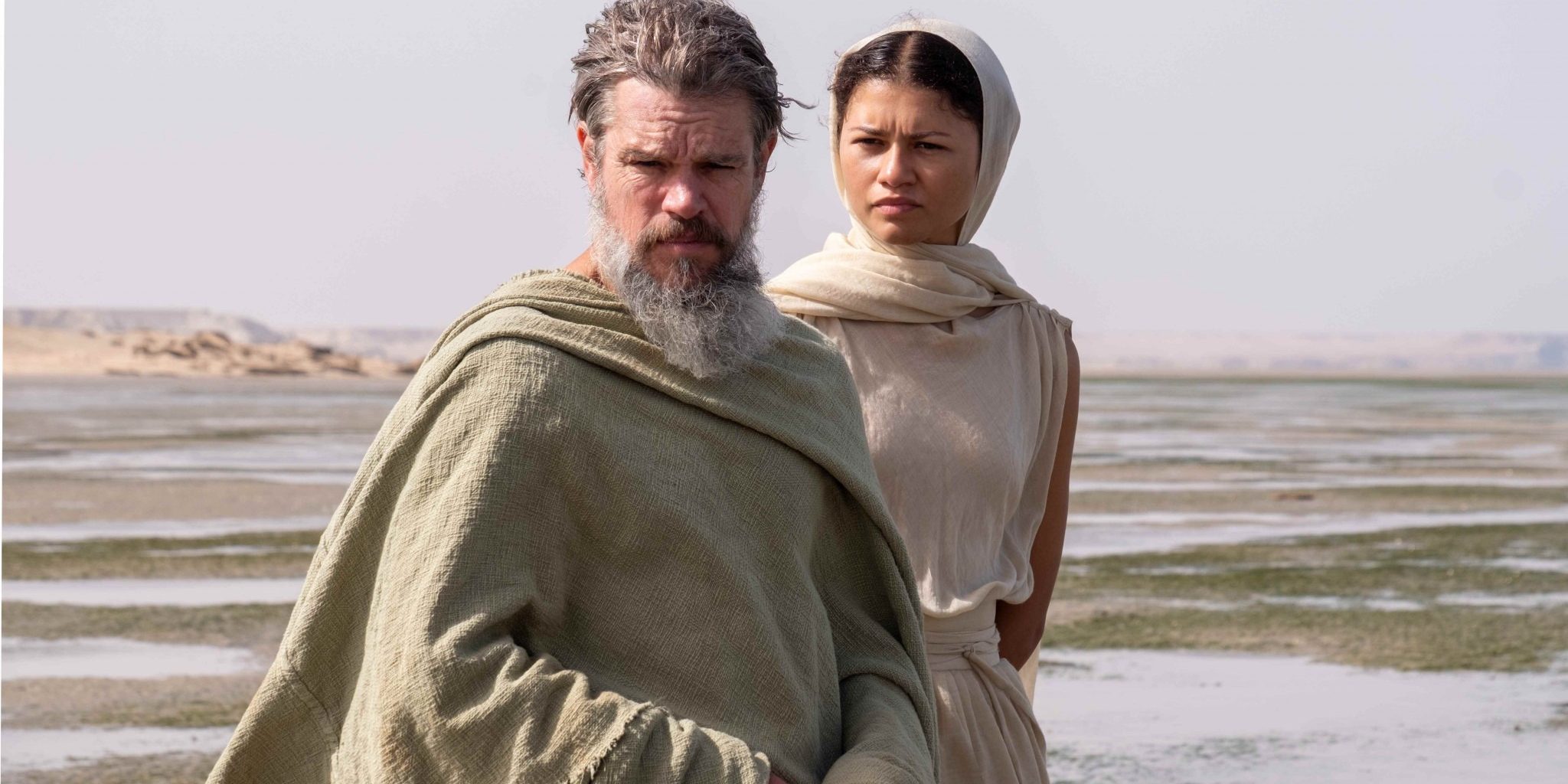
Athena is the sole exception, yet even she appears only in disguise, embodying a villager who eventually becomes the vessel of Odysseus’ guilt and a reminder of Zeus’ law. Zendaya’s brief but striking performance in this role leaves an incredibly lasting impression and her beheading by Odysseus’ soldiers becomes a symbolic violation of xenia, the sacred obligation to treat every guest with kindness in case they are a god in disguise.
Ultimately, Nolan’s interpretation of the ancient text reframes the epic as a meditation on moral failure. The Trojan war is not depicted as a heroic triumph, but as an eruption of lawlessness. Odysseus and his men – the so-called “sea-people” – become monstrous not because of the creatures they encounter, but because of the choices they make. After years spent fighting ‘monsters’, Odysseus comes to recognise that the true horror lies in how humanity, including himself, has been deformed and corrupted by violence.
★★★★
Comments