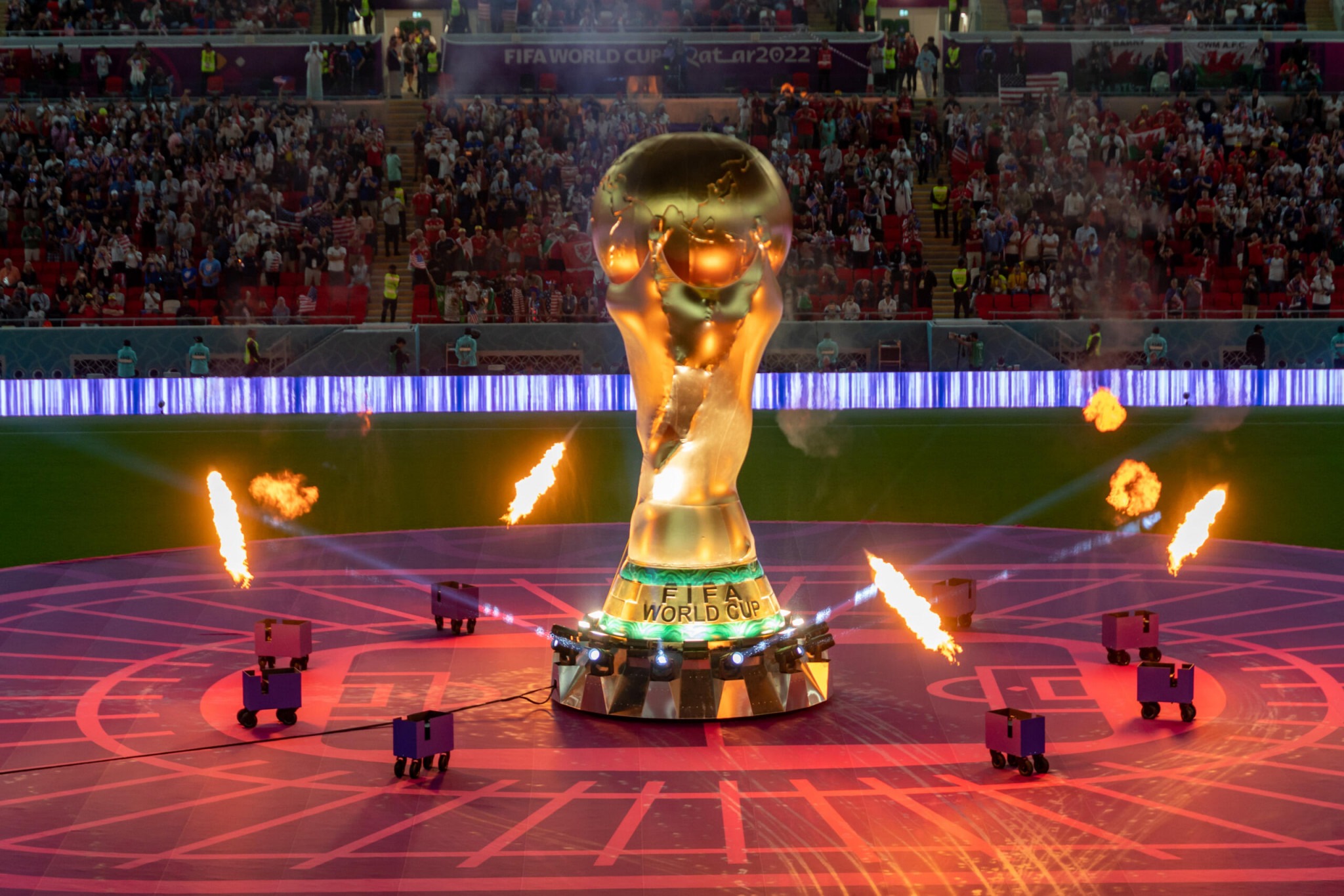
Goal for team Trump! Who’ll score the political points in the World Cup?
2026 is proving an eventful year for the World Cup. The largest in the tournament’s history, “soccer” is coming this year to 16 cities in Canada, Mexico, and the biggest host with 11 locations: the United States. Chief amongst the billions tuning in worldwide is none other than President of the United States and winner of the FIFA Peace Prize, Donald J. Trump. Trump’s had his eye on this year’s World Cup since as far back as 2018, when the US, Canada, and Mexico’s United Bid was awarded hosting rights for the 2026 cycle. With his penchant for glamour, the president knows hosting such a mega-event can be a much-needed political prize in a year dogged by war abroad and political crises at home. Here’s the kicker, though: this political trophy may turn out to be fool’s gold, and may cost him instead. Or maybe all the sports glitz is just that: politically insignificant in either direction. Can Trump manage to score his political goals in the World Cup?
The increased demand attracts investment and generates jobs in these sectors as cities prepare to cater to the influx of fans
The economic benefits suggest he may. An estimated 6.5 million fans are headed to the 3 host countries, boosting demand for hospitality businesses like restaurants and hotels along with transportation and retail in the host locations. The increased demand attracts investment and generates jobs in these sectors as cities prepare to cater to the influx of fans. The US’ 11 host cities, for example, are expected to reap above-average GDP growth in sectors like hospitality and leisure, especially Houston, Dallas, and New York, though the latter’s benefits may not be as pronounced due to its already strong tourism industry. The winnings are already being seen: the Bank of America claims consumer spending in the 16 host cities across the 3 host countries has increased 6.3%, while consumer spending gains from non-local visitors into New York City, Dallas, Los Angeles, and Kansas City has skyrocketed 16.7%. Never shy from touting an economic win, the Trump administration bombastically projects the World Cup overall generating a $17.2 billion windfall and creating 185,000 jobs.
The World Cup, being the widest-watched sporting event ever, offers its host the chance to strengthen their international brand by celebrating their culture and country before the eyes of millions of visitors and billions of viewers worldwide
But the bigger prize may come from a different source than raw economic terms: soft power, a country’s influence through its cultural attractiveness and image to others around the world. Football is a universally loved sport, and countries invest in their teams to compete and promote themselves to a global audience. The World Cup, being the widest-watched sporting event ever, offers its host the chance to strengthen their international brand by celebrating their culture and country before the eyes of millions of visitors and billions of viewers worldwide. And coinciding with America’s 250th anniversary, Trump’s planning to seize the initiative by using the World Cup to trumpet “an opportunity to showcase the nation’s pride and hospitality” on the world stage. This is not mere Trumpian bluster: the administration established a Task Force coordinating federal agencies to smoothly run the event way back in March of 2025, personally headed by the president. An opportunity to host a worldwide mega-tournament festooned with Americana doesn’t come often, and Trump knows it: the US last hosted the World Cup in 1994, and Trump even joked that his loss to Joe Biden in 2020 – a touchy subject as he still insists the election was rigged against him – allowed him to return to preside over this year’s tournament.
The administration’s draconian immigration policies are already damaging the tournament’s purported soft power benefits. Omar Artan, a Somalian referee, was denied entry into the United States on allegations that he was associated with “suspected members of terror organisations”
Alternatively, however, the World Cup may turn out to be an own goal for the White House. The administration’s draconian immigration policies are already damaging the tournament’s purported soft power benefits. Omar Artan, a Somalian referee, was denied entry into the United States on allegations that he was associated with “suspected members of terror organisations”. Upon his return to Mogadishu, he was hailed as a hero and greeted by throngs of supporters and even government members indignant at this shot to their national pride as he commented that “I am now in my country, and there is no other place I want to be”. Artan’s home country has been particularly subject to the president’s ire of late, with Trump blasting Somalia as “hell” and calling Somalis “garbage” as he revoked Temporary Protective Status for Somali refugees in the United States, rendering them subject to deportation, and imposing a travel ban on Somali nationals along with those of 12 other countries.
This creates the rather awkward situation that a host nation will admit a team from a country it is currently at war with, let alone potentially play against
It’s not just Somalis whom Trump is striking fouls at: an Iraqi striker was detained and interrogated for 7 hours at Chicago O’Hare Airport, while the team’s photographer was held for even longer and denied entry altogether after his phone was searched. Fans from 4 participating nations: Senegal, Haiti, Cote d’Ivoire, and Iran are either banned entirely or have severe restrictions imposed on obtaining visitor visas to watch their teams in the United States. Iran especially is the (non-Republican) elephant in the room. The United States and Iran are shooting rockets instead of balls at each other. This creates the rather awkward situation that a host nation will admit a team from a country it is currently at war with, let alone potentially play against. The good news for the tournament is the players will be allowed in, but the Iranian team was forced to move its camp to Tijuana, Mexico as the US government banned it from staying in the country overnight, over a dozen support staff were barred from entry, and Iranian nationals are also subject to a travel ban, meaning most fans can’t visit the US to see the World Cup. The immigration crackdown has hence created a climate of exclusion around what is supposed to be a globally unifying tournament, particularly since European nationals are not subject to these same restrictions. In the words of the Jordanian football federation’s leader, who was also denied entry, “This World Cup is not ours… it’s for them.”
Though it is believed he will “help hand over the trophy” to the winners, he has yet to attend a single match, citing his “busy schedule”
Even so, the World Cup could instead have little political impact. Though there have been bipartisan legislative pushes, for example to award security funding to host cities, or by the Republicans pressing to extend Section 702 of the Foreign Intelligence Surveillance Act to stop “potential terror attacks” at the World Cup, neither political party has made the event a centrepiece of its political agenda of late. Rather than capitalising on the tournament himself, Trump has been absent from the scene. Though it is believed he will “help hand over the trophy” to the winners, he has yet to attend a single match, citing his “busy schedule”. Host nations’ leaders usually attend their country’s opening match, but Trump sent Secretary of State Marco Rubio instead to the US’ opener against Paraguay while he personally attended the UFC wrestling match marking his 80th birthday two days later. This may be because he is ducking a potential bad reception: he was booed at the NBA finals earlier in June, and some host cities like Los Angeles and Seattle are firm Democrat strongholds unlikely to warmly welcome his arrival. Regardless, Trump plans to attend the final match.
The costs, on the other hand, are high: infrastructure construction/maintenance, security, and transportation expenses are funded by the taxpayer.
Trump is not the only 2026 host leader to skip their first game: Mexican President Claudia Sheinbaum also skipped her country’s opening match and gave away her ticket, citing the costliness of the tournament’s tickets. Despite the high price tag to watch, the economic benefits from the World Cup may be short-lived or even incur costs on the host cities. FIFA, which is expecting to make $11 billion from the tournament, will arguably financially benefit more than the hosts, as it controls the most lucrative revenue streams such as broadcasting rights, merchandise, or corporate sponsorships. Little new infrastructure has been built for the tournament, as all matches will be held in existing stadiums (mostly for American football) refitted to FIFA’s standards, limiting long-term benefits and new investment, although also reducing risk from building venues that won’t be used after the tournament ends. The costs, on the other hand, are high: infrastructure construction/maintenance, security, and transportation expenses are funded by the taxpayer. It’s estimated each host city will have to cover $100-200 million in costs, so the total $625 million the federal government has earmarked won’t come close to enough to break even for each host. And while local businesses in host cities may see increased demand as visitors flow in, this effect is transitory, and demand will likely fall back to normal levels as visitors leave post-tournament. It’s hence highly unlikely the hosts will see anywhere near the financial windfall FIFA will gain.
At this point, the politics of the World Cup is anyone’s game. The economic and soft power benefits could be a welcome boon for a president who never turns down a chance to tout his own and his country’s greatness. Trump’s hardline immigration policies, however, could turn his coveted World Cup into a poisoned chalice. Perhaps the score will be nil-nil for the tournament’s benefits and costs. It remains to be seen which way the political football will go.
Comments