What we’ve learnt at Warwick (that wasn’t on the syllabus)
When prospective students sit in lecture halls on open days, they are told what the University of Warwick will teach them. Details of the seminars they will sit in and the texts that they will read are explained, whether they be for modules on macroeconomics, world politics, or quantum phenomena. What is not shared, however, are the lessons that will be learnt outside of the classroom. From the late nights that turn into early mornings to the responsibilities picked up at sports clubs and societies, the University of Warwick teaches its students much more than what it includes on its syllabus.
So, before they put on their best clothes and walk across the stage on their graduations, The Boar has heard from three members of the class of 2026. Through vulnerable, honest, and – at times – comedic conversations, we have gone beyond the module catalogue to see what these undergraduates will truly be taking away from their time at university.

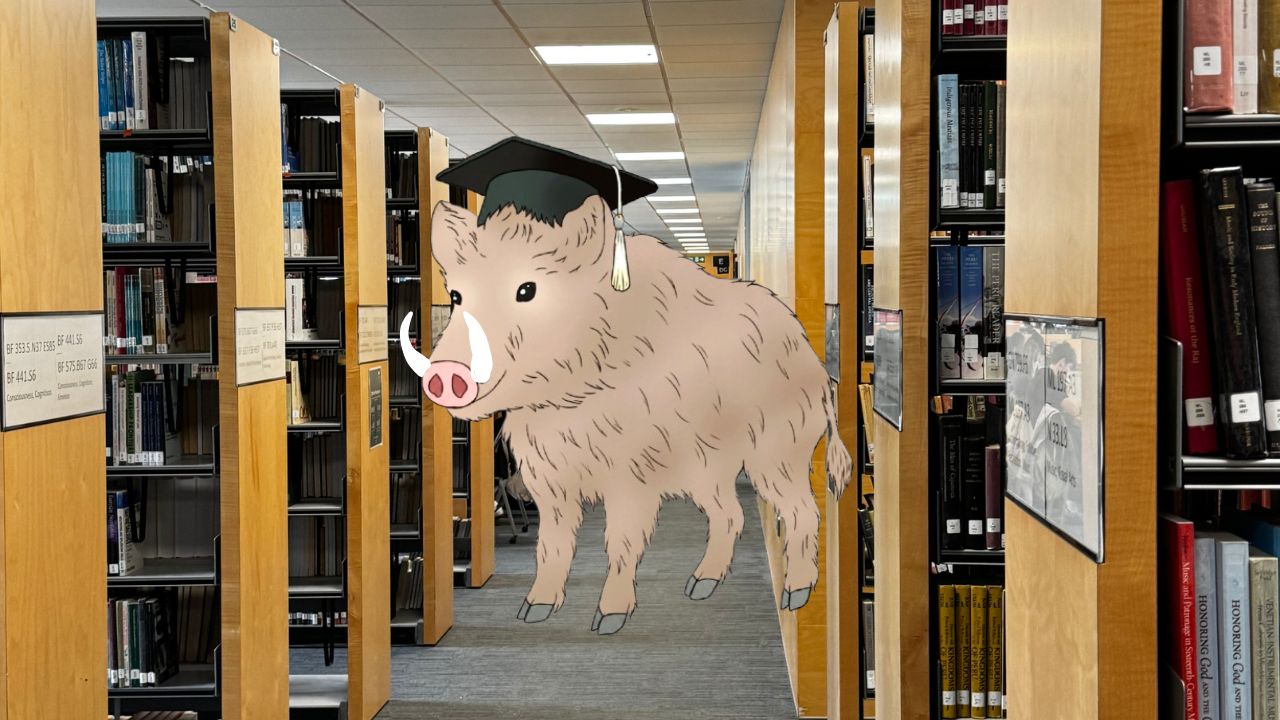
Illustration: Anais Hidalgo Melendez / The Boar
Josephine Greenhalgh
Josephine Greenhalgh had what could be described as a chaotic first year at Warwick. From losing her campus accommodation keys an impressive 31 times to accidentally jumping on a three-point plug head and ending up in A&E, it is safe to say that she learnt a lot from that year alone.
The main thing I’ve learnt from Warwick is to not go into things with expectations
– Josephine Greenhalgh
That hospital trip for her injured foot, complete with stitches and crutches, ended up being a blessing in disguise. It forced her to take a break from rowing, during which she realised that the sport she had previously loved was not for her at university. “I really thought I’d spend a lot of my time at Warwick rowing, but I didn’t enjoy it and that’s okay”, the former competitive rower told The Boar. “The main thing I’ve learnt from Warwick is to not go into things with expectations because things will be different, and work out better, than you thought.”
One of these things that she never would have expected as an 18-year-old is that she would be so involved in Warwick’s Jewish Society (JSoc). Growing up, Greenhalgh struggled to feel at ease in her Jewish community and was therefore “worried” that when she came to university the JSoc would not be what she wanted it to be. The reality was, however, a happy surprise for her: “JSoc actually turned out to be the place I felt the most comfortable at university, weirdly, and I’ve made some of my best friends there”, she explained. It was these friends, and those she met elsewhere, who taught her to let go of the idea that you always had to be happy while at university.
“It’s nice that we can all support each other and I’ve really seen that, I was worried about people not being emotionally there for each other, but it’s actually been the opposite”, the Philosophy, Politics and Law (PPL) student said. Often this support has come through small unremarkable moments, like chatting in the FAB while “pretending to study” or arriving home to a bunch of flowers in the living room bought by a housemate. Although, it is also there in the harder moments, when it becomes less about debriefs in campus study spots and more about hospital chairs and fluorescent lighting. Greenhalgh has been to A&E seven times in her three years at Warwick, twice for her own injuries, with the other visits spent accompanying her friends when they found themselves unwell. For her, this pattern shows how often the support has gone both ways.
These peers have not only been there to comfort Greenhalgh but have also held her accountable, particularly when she took on roles in various society executive committees. Being in these positions, the former PPL social secretary realised that people were “relying” on her and that she had to step up to the plate. Throughout her degree, Greenhalgh has not only leant on those her own age but also on multiple academic staff members who have transformed how she views herself. “Both of my female law lecturers have been incredible teachers and made me feel like nothing’s ever dumb, I’m always learning. And their own achievements have made me think that I want to change the law like they have done”, the finalist explained. If her degree has shown Greenhalgh what legislation she hopes to change, it is the messier moments at Warwick that have changed her.
The Londoner will leave the University having realised, in all the chaos, that it is best to let go of expectations but hold on to those around you.

Illustration: Anais Hidalgo Melendez / The Boar
Scott Steer
If unathletic, nerdy, and awkward are three words that come to mind when thinking of a stereotypical physicist, then Scott Steer is proof that stereotypes are there to be broken. Steer’s time at Warwick has been anything but defined by Physics. His decision to name Freshers’ Weeks as a standout memory of his time at the University, despite admitting that “I don’t know how I had the confidence to meet new people and go to club nights”, reflects the all-in approach that the STEM student has taken to higher education.
It was absolutely insane to find out how much you can learn from an exec position
– Scott Steer
When asked by The Boar what first-year Steer would be most confused about if they were to see him four years on, he said: “The societies I’ve joined, 100%”. Admitting that he started university by “not doing much outside my degree”, it was Steer’s housemates at the end of his second year that encouraged him to join Latin & Ballroom. Although he initially joined “as a joke”, as per his friends’ request as they left for their year abroad, Steer went on to compete with the club and even became one of its two social secretaries. “It was absolutely insane to find out how much you can learn from an exec position like that”, Steer said. More than just running, in his words, “cultish” circle games, he said the role taught him how to “make new connections” and “work as a team”.
And while Steer will of course be citing those skills in job interviews, it is the friendships and lessons learned at Warwick that he will be taking away with him more than anything as he dons his graduation cap and gown in July. Whether it has been embracing new cultures and learning to “compromise” when living with housemates or drinking into the early hours of the morning after a ball, it is the time spent with friends that has underscored Steer’s experience at Warwick the most.
However, as one chapter closes and another one opens, the physicist isn’t necessarily seeing his time at Warwick as being the end of those friendships: “I feel like I’m the kind of person where I don’t think the end is always there. If there’s people I want to see, I’ll see them. If there are things I want to do, I’ll do them”, he explained. That attitude is perhaps unsurprising from someone who says the biggest lesson he has learned at university is how to “fail” – in academics, but also when it comes to day-to-day life. “I feel like university was a great way to just think: ‘Yeah, I’ve messed up pretty badly’. There are so many people out there in the world, and it doesn’t really matter what you do because they don’t care. And because they don’t care, it should mean that you don’t either.”
In true student fashion though, rather than ending our conversation on his advice, Steer finishes by mentioning the one thing he’ll really miss the most about university: those £9 student haircuts.

Illustration: Anais Hidalgo Melendez / The Boar
Sanjana Iyer
When Sanjana Iyer first stepped onto the University of Warwick campus in autumn 2022, she thought she had her next three years neatly mapped out. She would “tick boxes” by studying Politics, Philosophy and Economics (PPE) and acquiring a corporate job that she would begin post-graduation. What she did not plan for, however, was that she would chase after magazine deliveries, spend the early hours of the morning chatting with her friends in the kitchen, and build a shed to house newspapers in the pouring rain. And she certainly did not think that her three years at Warwick would become four after she decided to spend several months studying abroad in France.
Life is so much bigger than the boxes to be ticked
– Sanjana Iyer
“I used to stress about being super organised and having a routine, but I’ve realised that as much as planning is important you kind of have to let go,” Iyer explained. She continued: “If there’s a day that you don’t wake up as early as you wanted to, or whatever, you’ll find ways to make up for it. You’ll always get everything that you wanted to do done, even if it doesn’t look exactly how you wanted it to.”
Iyer truly did get a lot done during her time at university. Not only did she immerse herself into the world of student media, which, to her initial surprise, included lots of “manual labour”, but she also hosted TEDxWarwick and completed two of RAG’s LOST charity challenges, making her way back to campus from both Liverpool and Southampton without spending any money. These experiences have taught Iyer that “there is so much more to life than academia”, a lesson which she knows is “ironic” to have learnt while at a Russell Group university. Her peers have reiterated this point to her by showing her that it is possible to “be ambitious and care about your grades and your future without sacrificing having fun”.
“I think I always thought it had to be one or the other but people at Warwick have really taught me that you can do both and showed me how to have a great work life balance,” she explained. It is this balance that has, in many ways, come to define Iyer’s time at Warwick. The plan she arrived with gradually gave way to a more fulfilling experience that was shaped as much by late nights, international adventures, and newspaper design as it was by academic and professional ambition. As the PPE student told The Boar: “life is so much bigger than the boxes to be ticked”.
Comments