The championing genre of television: Sitcoms
Comedic television has been around for decades, and sitcoms remain at the heart of it. From the iconic, nostalgic production of Friends to the hilarious cultural phenomenon that is The Office, I introduce to you my favourites – and arguably some of the best sitcoms ever made.
Miranda
At the very top of my list is the British sitcom Miranda. Written by and starring the eponymous comedian Miranda Hart, the show follows a socially awkward woman whose chaotic life never ceases to entertain. From her overbearing mother to her almost‑failing love life, her undoubtedly ‘quirky’ personality fuels the witty and hysterical script.
The slapstick humour, paired with her constant breaking of the fourth wall – making audiences feel directly involved in her messy life – creates a more personal and engaging watch. Her frequent physical comedy, whether knocking into tables or tripping over chairs, combined with the outright awkwardness of her character, heightens the show’s comedic charm.
Not only is she relatable, but I’ve even adopted some of her expressions
As she navigates life and encounters all kinds of people, what really stands out to me is how much I relate to her. Perhaps not physically – with her tall stature and theatrical presence – but her social tendencies, like singing after hearing a lyric in public or lying to avoid awkwardness, feel incredibly familiar. These exaggerated traits mirror how so many people, including myself, react in certain situations; her extreme awkwardness simply amplifies this relatability.
Not only is she relatable, but I’ve even adopted some of her expressions. Her iconic catchphrases – “such fun” and “bear with…” – are infectious. She even taught me the meaning of a euphemism, and as she says, “I’ll always find a euphemism in anything.”
From the clever screenwriting to the wonderfully chaotic slapstick, all alongside Miranda’s awkwardness and her hilarious relationships, Miranda remains my favourite sitcom. Nominated for four BAFTA awards, it continues to be a comfort show that many return to for a guaranteed chuckle.
The IT Crowd
Written and directed by Graham Linehan, The IT Crowd follows three employees at the fictional Reynholm Industries who constantly find themselves in situations they are wildly unprepared for. The dysfunctional trio – ironically not very skilled with technology – are thrown into bizarre and unpredictable storylines.
The show’s use of a multi-camera format filmed in front of a live audience, rather than the typical rockumentary style, heightens its chaotic energy
The familiar catchphrase, “Have you tried turning it off and on again?”, encapsulates the mundane nature of their jobs, yet the situations they end up in are anything but mundane.
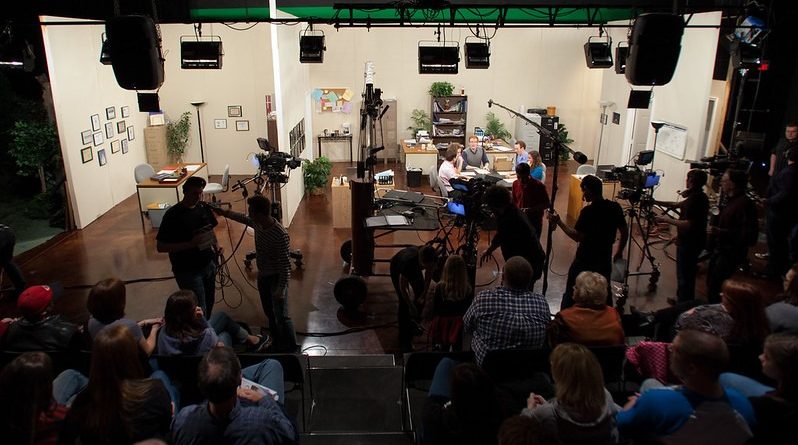
The show’s use of a multi‑camera format filmed in front of a live audience, rather than the typical mockumentary style, heightens its chaotic energy. The shifting camera angles make it easy to flit between Moss typing and Roy screaming. The audience’s immediate reactions to the alternating coverage provide genuine laughter, and pace the comedy of the show.
The physical humour, straight‑faced line readings, and the sharp visual contrast between the bleak basement where they work and the glamorous, yet inept upper management all emphasise the sitcom’s brilliantly absurd tone.
Modern Family
An early Saturday morning: my parents are asleep, I reach for the remote in the comfort of my kitchen, and Modern Family plays. For me, the show is a reminder of childhood, where comfort and laughter were at the centre.
If you’re unfamiliar, Modern Family follows the hectic and hilarious lives of three interconnected families living in suburban Los Angeles. Siblings Claire and Mitchell, along with their father Jay, each have families of their own whose lives are simultaneously connected and separate. As the seasons progress, they become familiar faces – characters we know and love.
The comical yet relatable plot-lines create points of connection between the show and its viewers
What begins as a fresh take on the family sitcom became a critically acclaimed show that is relatable, comforting, and for many, a reference point for humour and warmth. The comical yet relatable plot-lines create points of connection between the show and its viewers. This is heightened through the mockumentary style, where characters express their real feelings directly to the camera. The seriousness associated with documentaries is completely subverted, turning the format into a comedic device.
A significant reason for the show’s success lies in its characters. Audiences adore Phil’s relentless optimism, Claire’s intense determination, Cam and Mitchell’s iconic relationship, Gloria’s vibrant personality, and Jay’s dry humour. Watching the children grow older and the families grow closer makes the show feel like witnessing the evolution of a real family. The exaggerated comedy, paired with heartfelt and touching moments, reminds viewers of the importance of celebrating family, no matter the differences.
Even after its finale, Modern Family remains an incredible, rewatchable sitcom that instantly feels like home – and for me, a nostalgic reminder of Saturday mornings in the kitchen.
Comments