Laufey: Female protagonists vs critics
For a video game franchise that includes the ancient gods of the Greek, Nordic, Mongol, and Egyptian pantheons, it seems almost an oxymoron that some online would complain about unrealistic portrayals. Indeed, God of War (GoW) takes far more from modern portrayals of these pantheons than the works of Homer and Hesiod. However, the release of the first trailer for God of War Laufey and the reveal of Faye as the game’s protagonist have revived age-old debates about female representation in video games. This article will explore the motives for sidelining the traditional protagonist, Kratos, in favour of his godly in-game wife, why the controversy has emerged, and where Laufey shall fit into the ongoing internet frenzy about gender and video games.
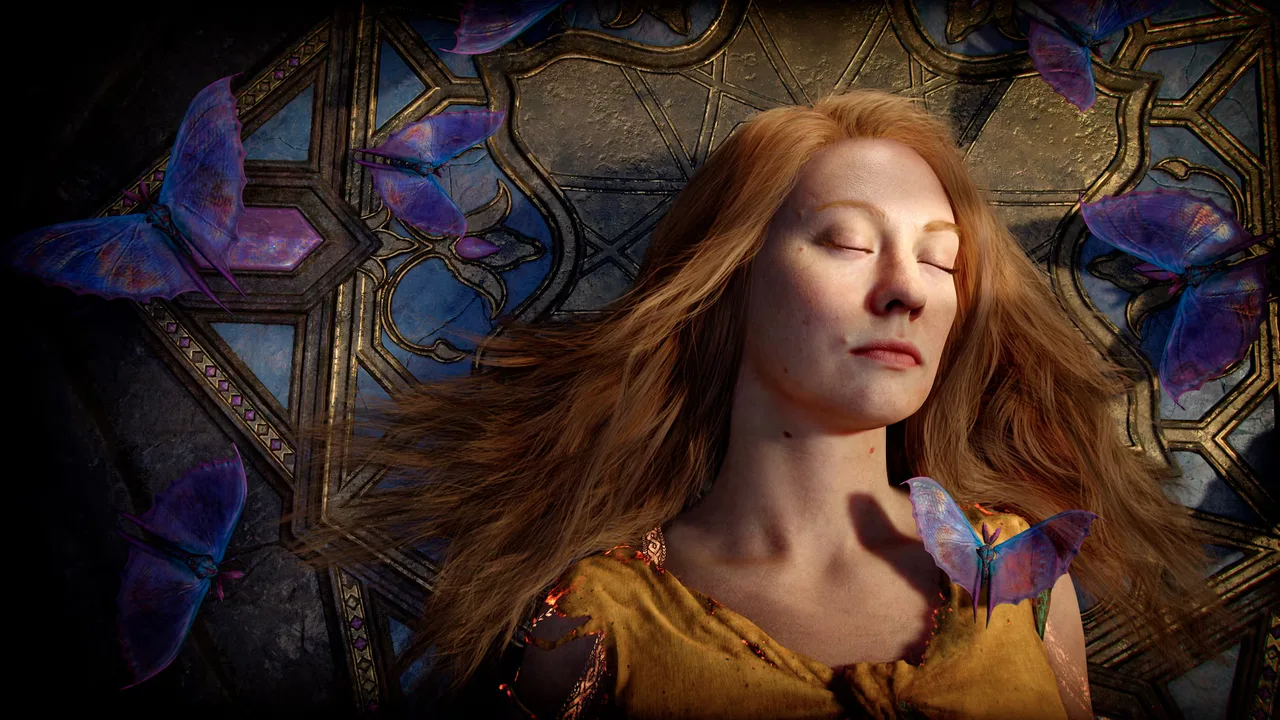
Though this is Faye’s first onscreen appearance in God of War, her presence has long lingered over the series since it reprised itself in Nordic myth. Santa Monica Studio creative director Cory Barlog told IGN that Faye is the “anchor to the rebirth of where we were going with the franchise.”
God of War (2018) follows Atreus and Kratos fulfilling Faye’s last wish to scatter her ashes across the highest peak in the realm. Indeed, the central antagonist Baldur is there to reach Faye. Thus, it seems quite understandable how, after hundreds of hours as Kratos, the development team at Santa Monica Studios may wish to explore a new narrative threat, showing the concurrent events of GoW (2018) and Ragnarök, as well as beginning the introduction of the Nordic and Egyptian Pantheon.
Faye, alongside a separate concurrent narrative function, also presents both the developer and player with a new character and environment to explore throughout their playthrough
Faye, alongside a separate concurrent narrative function, also presents both the developer and player with a new character and environment to explore throughout their playthrough. Rather than the paradise of the Elysium fields, Everwhen, the afterlife of the gods, is a brutish, nasty, and ironically hellish place. The presence of other gods of war, Sekhmet and Begtse, ensures the world is filled with “assholes.” Alongside her tricky predicament, Faye presents a distinct character from her husband. With a more fluid combat style, less stoic than Kratos, and gritty close-up combat mechanics, Faye promises a delightful experience for all players.
Thus, there is the question of why many seemed distinctly unimpressed by the reveal of Laufey, with original GoW director David Jaffe saying it was: “Really f***ing goofy, man. I didn’t like it at all.”
Many of these criticisms have nothing to do with Faye’s gender and instead reflect a general apathy with the direction Laufey shows Santa Monica is moving in with God of War. Using Faye, a previously unseen side character, as the protagonist will no doubt have promoted expectations of change from the impressive formulaic plot lines from Ragnarök and GoW (2018).
I think comparisons to another PlayStation exclusive, Insomniac’s Spider-Man, are apt, with a need to not only diversify plot but also character and gameplay mechanics. The technology-focused Peter Parker making way for Miles Morales and his “Venom Strike” has similarities to the stoic Kratos makes way for Faye. However, many were left disappointed by the gameplay footage, seeing little advancement in plot and gameplay mechanics that had already begun to tire in the much-acclaimed Ragnarök.
Though Faye is certainly the most important previously unseen character throughout the game, the complete absence of Kratos, whom the franchise has been built around, will doubtless have added to criticism
Moreover, the break from Kratos as protagonist is doubtless a factor in the criticism the next edition of God of War has received. While never the exclusive playable character throughout the series, Atreus featured prominently as a playable character in Ragnarök, Kratos has always been the centrepiece around whose actions the God of War has progressed. To a certain extent, Kratos, more than the gritty combat or pantheons he visits, defines God of War. Having a new character, especially one the audience has never before interacted with directly, doubtlessly disturbs long-running fans of the franchise. Though Faye is certainly the most important previously unseen character throughout the game, the complete absence of Kratos, whom the franchise has been built around, will doubtless have added to criticism.
However, the question of Faye’s gender has been central to the critique of Laufey since its reveal. Within a franchise whose protagonist has been so ruggedly masculine and whose plots have always centred around violence, the introduction of any female protagonist was bound to attract the attention of the worst corners of the internet.
Right-wing streamer Asmongold TV, just moments into the new trailer, declared the new game “war of kitchen” while his chat declared it “gay of war” or “god of cooking”. No doubt this reaction was extreme, given the Asmongold community, but it reveals a general dissatisfaction with the game, not as a result of legitimate critiques over gameplay or a reasonable missing of the fan favourite Kratos, but a direct attack on Faye’s gender and a supposed unsuitability of female characters to lead violent video game franchises. This is an expression of misogyny and patriarchal gender norms, within a world where myths become reality.
This reaction is hardly unique. In fact, it is becoming increasingly common that, where a woman is placed at the centre of previously male-dominated games and the communities around these games, they are attacked for their gender. The announcement of The Witcher IV with Ciri as its protagonist saw immediate outrage, with accusations of “woke” CD Projekt Red running both the game and the lore of the Witcher series by inserting a “girl-boss” into the lead role. Again, Ciri replaced a fan favourite protagonist in Geralt as well.
Indeed, some might say these critiques are not exclusively misogynistic, but rather expressing frustration at their favourite characters seemingly being disregarded for female characters in the desire by developers to seem “woke.” However, the gendered critique extends beyond just the gender of their characters and onto their appearance. Asmongold questioned the appearance of Faye, suggesting the character design was uglier than her voice actor. Meanwhile, Ciri was critiqued for a more hardened and androgynous appearance.
Faye’s journey, and the game itself, will thus be judged on two distinct criteria: its quality and the symbolic value within a culture war
The controversy that surrounds Laufey is a microcosm of a larger culture war within gaming. The tensions surrounding the franchise’s need to adapt within an established fan attachment to Kratos and the franchise’s identity are revealed. The misogyny of some should not distract from legitimate concerns regarding innovations in gameplay mechanics and a plot in the absence of Kratos. Yet these critiques are co-opted by a reactionary backlash that seeks to delegitimise and stigmatise a female-led narrative.
Faye’s journey, and the game itself, will thus be judged on two distinct criteria: its quality and the symbolic value within a culture war. For Santa Monica Studio, Laufey is a creative necessity to create a compelling story and gameplay. For the gaming community, the challenge is to engage with Laufey on its merits. A fair assessment of its quality should not be blighted by either attacks or performative support of the character’s gender. Whether Laufey becomes a celebrated new chapter or a cautionary tale will depend not only on its own quality but on whether players and critics alike can move beyond the gender of its protagonist to see the game for what it truly is.
Comments