‘In a minute there are many days’: Robert Icke’s Romeo and Juliet
After hearing that the girl he’s been yearning for will be at the Capulet party on Sunday evening, Romeo sneaks in, hoping to find Rosaline, but by an act of chance he instead meets Juliet. The next day, Romeo and Juliet are married, shortly afterward Tybalt kills Mercutio, and Romeo kills Tybalt. On Tuesday, after hearing she is being forced into an arranged marriage, Juliet takes the potion and fakes her own death. On Wednesday, Juliet is laid in the tomb, Romeo arrives to find her ‘dead’, he takes the poison, dies, she wakes up, finds her lover dead, she takes the dagger… you know the story.
In fact, everyone watching any adaptation of Romeo and Juliet knows the end from the very beginning; the prologue tells us within the “two hours traffic” of their stage both Romeo and Juliet will be dead. As this is Shakespeare’s second most adapted play, the question is obvious, why are these feuding families taking to the stage once more?
What if Romeo and Juliet never even met? What if the letter reached Romeo in time? What if Juliet was awake when Romeo entered the tomb?
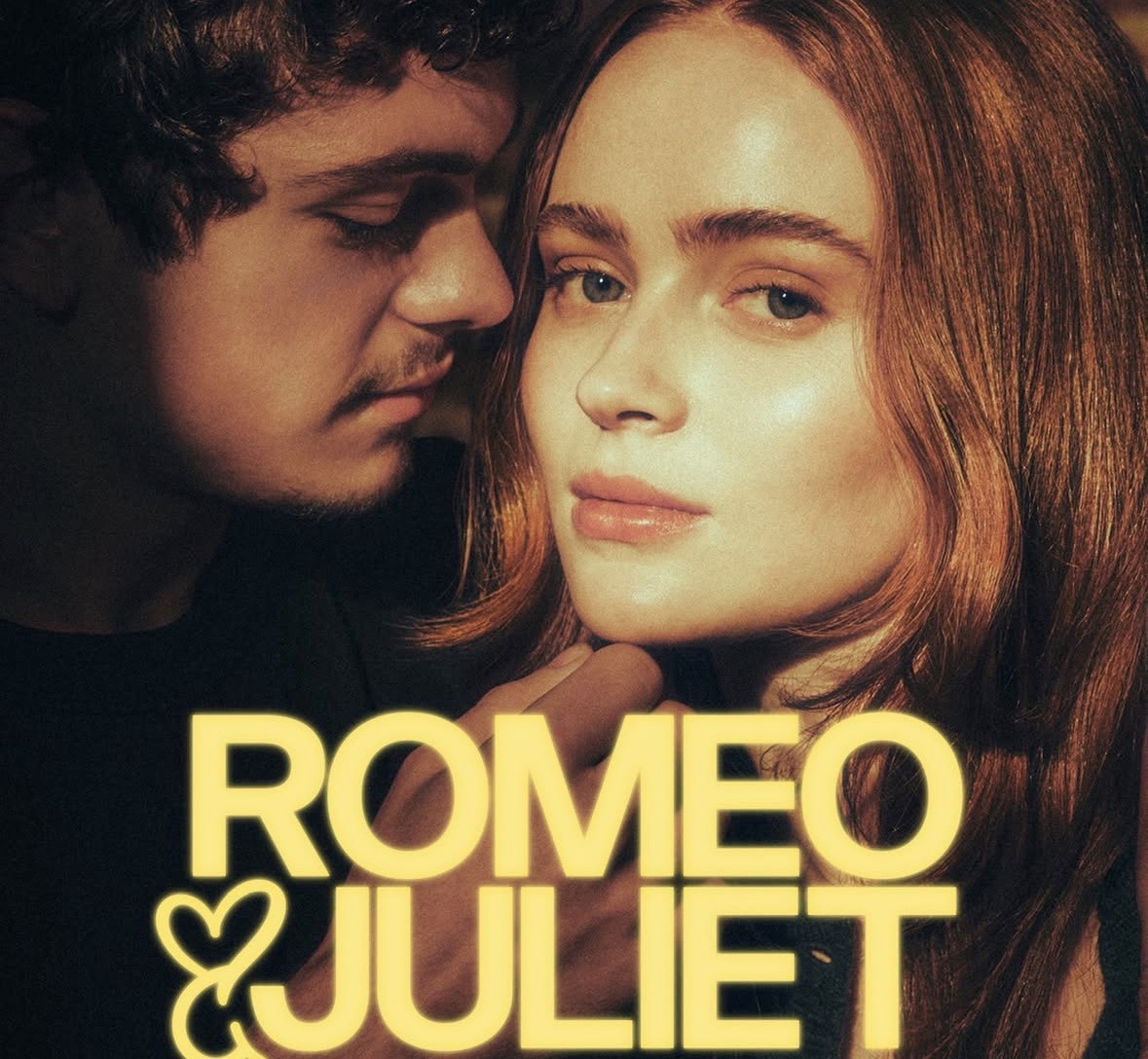
Romeo and Juliet, directed by Robert Icke, is being performed in London at the Harold Pinter theatre from 18 March to 20 June this year. The play stars Sadie Sink and Noah Jupe as the star-crossed lovers, utilising Shakespeare’s original text within a modern setting, similar to Baz Luhrmann’s 1994 film adaptation. Icke’s adaptation quickly transforms from a comedy to a tragedy in the space of four days. Romeo and Juliet is a play constrained by time, and Icke’s adaptation of Shakespeare’s (arguably) most famous work heightens the play’s aspect of coincidence. As he told Vogue, “it’s the sort of play that says, ‘if you stop for a coffee at the wrong time, you might miss your soulmate’”. Icke stays true to the original text, but reimagines the outcomes of certain series of events. In an interview, Sink explained the importance of the “what if moments” in the play: What if Romeo and Juliet never even met? What if the letter reached Romeo in time? What if Juliet was awake when Romeo entered the tomb?
In Icke’s production at the back of the stage, there are two large screens, each presenting a digital clock – when a series of events could have had a different outcome, the screens flash bright, and the stage goes into blackout. The scene is reset, and the events play out with a minute alteration – which makes all the difference. Much like the 1998 film Sliding Doors, small changes to certain events cause serious consequences to the story.
The production examines the “idea of how fickle time is”
These ‘rewind’ scenes show alternate outcomes of certain situations: Juliet only meets Romeo because Paris has a drink spilt on him, and there is a strong emphasis on the chance of the lovers meeting. Tybalt’s anger at Romeo being at the party, “to strike him dead I hold it not a sin”, is taken to the extreme – in one scene he attacks Romeo. But perhaps the most poignant and emotionally provoking of these alternate scenes is Romeo entering the tomb to find Juliet alive. With the backdrop of Adrienne Lenker’s ‘not a lot, just forever’, we see the different ending Juliet could have had; Romeo cradles a baby, then we see her and Romeo as an old couple, dancing together. As Jupe says, this production examines the “idea of how fickle time is… the events of the story… wouldn’t have happened in the way that they did if things had been just slightly different”. These consequences “hanging in the stars” emphasise the aspect of chance, or fate, if you’d rather, driving the events of the play.
Sink plays Juliet as earnest when meeting Romeo for the first time, and it is evident that Icke highlights the aspect of teenage love in Shakespeare’s text. Juliet’s excitement “what’s he that now is going out of door?”/ “go ask his name-” is clear: Sink’s delivery of these lines was so genuine that I forgot they are in the original text. Centre stage from the beginning is Juliet’s bed, which provokes the idea of the entire play being Juliet’s dream. The idea of dreaming occurs throughout this production, an element which supports the multiple scenarios in the play. The events of the play, like dreams, twist and change with alternate outcomes.
Jupe asked Vogue, “How do we get people so invested that they forget that they knew the story already?” – I would argue this production has succeeded: Sink and Jupe provide an alternate perspective amongst the multitude of Romeo and Juliet adaptations. As Sink herself argues, “it’s a reminder of how fragile this story is, how fragile time is”. Icke’s direction weaves Shakespeare’s text into the modern tragedy of young love, and leaves us with the realisation – one minute can change the course of the rest of your life.
Comments