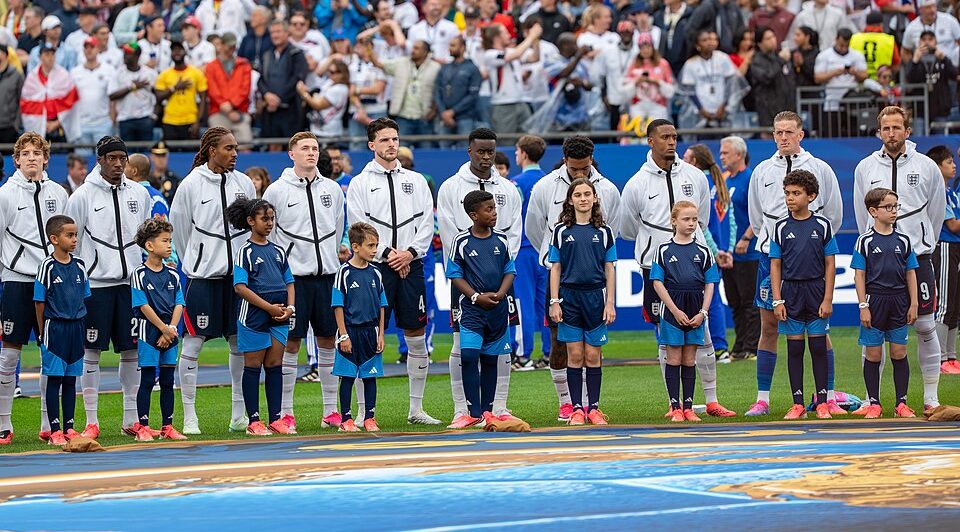
And then there were two: FIFA World Cup semi-finals round up
The Semi-finals. The best of the best. By this stage of the tournament, the fairytale runs are meant to be over, with every team left in the competition an elite side with a real shot at winning it.
This has not always been the case. Perhaps with an eye to the fact that at the last World Cup Croatia and Morocco made the semi-finals, with the former having gone all the way to the final in 2018, FIFA decided to seed the knockout draw for the first time. The aim was clear: keep the four highest ranked teams in the world (and in all honesty, the four best as well) apart until the semi-finals, so that they would be the final four to compete for the Jules Rimet trophy. Spain, France, England, and Argentina all duly won their groups and — albeit not seamlessly — navigated a series of knockout opponents in the first three rounds to get here. France vs Spain. England vs Argentina. A place in football’s biggest game awaits.
Spain 2-0 France
Despite losing to Spain in the Euro 2024 semi-final and the 2025 Nations League Final, France entered this game as favourites by virtue of the fact they had been without question the best side at the tournament up to this point. Their ‘fab four’ frontline of Kylian Mbappe, Michael Olise, Ousmane Dembele, and a PSG winger (Desire Doue and Bradley Barcola fought for the position) is an embarrassment of riches, and at fair market rate would probably fetch in excess of £500m on the transfer market. France had strolled into the semi-finals, their toughest test coming in the form of a stoic Morocco who barely put a foot wrong against them — yet despite Mbappe missing a penalty, they comfortably won 2-0.
[Lucas Digne] got none of the ball and all of the opportunistic Yamal
Spain, like the French, had won all of their knockout games within 90 minutes, but their successes were more laboured. The Spanish opened up their World Cup with an embarrassing 0-0 draw against Cape Verde, and required last minute Mikel Merino winners to vanquish Portugal and Belgium. We had yet to see Luis De La Fuente’s side hit the heights they did during EURO 2024, in part due to star man Lamine Yamal entering the tournament needing minutes managed after a gruelling season with Barcelona.
The game began cagily, with no side particularly on top. The first key moment in the game came when soon to be PSG left back Lucas Digne turned to clear a ball away in the box, and carelessly neglected to check his surroundings. He got none of the ball and all of the opportunistic Yamal, who dutifully fell to the floor and left the referee with no choice but to award a penalty, which Oyarzabal converted. On the 30 minute mark, France suffered another crucial blow, with Arsenal defender William Saliba being forced to come off injured. On in his place came Maxence Lacroix of Crystal Palace, a very capable defender but by no means a player of Saliba’s calibre.
Spain held their lead until the break, and came out for the second half as a transformed team. They began to control possession a lot more, creating the best of the chances. A silky, intricate passing move resulted in Oyarzabal having the ball taken away from him just as he was about to tap it into the France net. Yamal was sent through one on one, but went too wide and left Maignan with an easy save to make. Then Pedro Porro fired in a pass to Dani Olmo on the edge of the area, and — out of Lacroix’s line of vision — the midfielder deftly flicked it behind him into the area and into the path of the onrushing Porro, who had continued his run past the oblivious Lacroix. Left one on one with the keeper, Porro made no mistake to put Spain in cruise control.
When Spain didn’t have the ball, they were compact and impossible to break down, reducing France to pot shots and aimless crosses
From this point on, Spain were imperious. When they had the ball, they were the dominant side of all, seemingly impossible to get it back from. When they didn’t have it, they were compact and impossible to break down, reducing France to pot shots and aimless crosses. A special mention must go to Rodri, who underlined once again why he is considered as the best defensive midfielder on the planet, and possibly of all time as he marshalled the game. Spain put the ball in the net a third time through Yamal, and although it was ruled out for a narrow offside, it summed up the night for the Spanish, who never looked like giving the French a sniff all night. The whistle went, 2-0. Spain are into their fifth major tournament final, having won all of the previous four.
England 1-2 Argentina
Now the second semi-final. Sigh.
Lionel Scaloni’s Argentina are a juggernaut of recent years. They arrived at the 2022 World Cup unbeaten in over three years and won it, before adding Copa América titles in 2021 and 2024. In CONMEBOL World Cup Qualifying, five teams were separated by just one point — apart from Argentina, who finished ten points above them. Thomas Tuchel’s England had a far smaller sample size, and it was thoroughly less convincing. In his five international breaks as Head Coach prior to the World Cup, Tuchel had made short work of the likes of Albania, Serbia and Andorra, but oversaw losses to Japan and Senegal in friendlies, as well as a draw to Uruguay, who went on to finish on just two points, plum last in a group including Cape Verde.
Yet neither semi-finalist had cruised through the knockouts. Cape Verde ran the Argentinians close in the round of 32, twice pegging them back before losing 3-2 in extra time, and they might have completed the upset had they defended corners better. Argentina’s fragility here was not unique to Cape Verde. With 20 minutes to go they appeared to be on the brink of elimination against Egypt, only to win 3-2 again in a Messi-inspired comeback. In the quarters, they offered precisely zero attacking threat against Switzerland until Breel Embolo’s needless second yellow allowed them to prevail 3-1 in extra time.
The first half saw 19 fouls between the two sides in a 45 minutes full of drama and tactical back and forth but very little in the way of chances
England’s route to this point was no simpler. What should on paper have been a routine win against DR Congo was headed towards disaster until two Harry Kane goals bailed them out, before a famous win against Mexico at the Azteca in the Round of 16, in which they valiantly defended with ten men for over 40 minutes. In the quarters, they again fell behind before being bailed out by their other world class superstar, Jude Bellingham, setting up this semi final clash. England’s knockouts have been made harder by a series of injuries to key players, including Reece James, Bukayo Saka, Tino Livramento and Jordan Henderson, whilst Jarell Quansah’s red card against Mexico ruled him out of the Norway and Argentina games. Although James returned for the semi-final, Saka was fit only for the bench, leaving Morgan Rogers to fill in on the right.
As expected, the Argentinians took a liberal interpretation of the rules, with Enzo Fernandez slamming into Elliot Anderson within a minute. The first half saw 19 fouls between the two sides in a 45 minutes full of drama and tactical back and forth but very little in the way of chances. The two sides combined to create just 0.08 xG, with an ambitious John Stones header the best chance and a fierce 30-yard long shot from Enzo Fernandez (one of many throughout the game) coming the closest to finding the net. England’s star man was Djed Spence, who started the game at left back over Nico O’Reilly and somehow ended up being the most dangerous player on a pitch with Lionel Messi, Jude Bellingham, and Harry Kane during the opening stages.
After the break, Argentina began on top before an England counter attack resulted in Rogers sending in an expertly placed cross which was poorly defended by Nahuel Molina, allowing Anthony Gordon to nip in ahead of him and direct the ball into the bottom corner. Get in.
This was an entirely self-inflicted defeat for England, and one for which Tuchel must take responsibility
Having gone 1-0 up, England sat back — presumably, we all thought at the time, just until the hydration break, where Saka could come on and England continue. At the break though, Gordon was withdrawn for centre back Ezri Konsa, with Tuchel switching to a five at the back system, as he did to close out the game against Mexico and Norway. Less relevant than the formation change, however, was the plan. Whereas before the hydration break it had appeared England were playing for time, their continued insistence on sitting incredibly deep in their own half signalled the hope was that they could somehow withstand intense Argentinian pressure all the way to the final whistle.
By the 85th minute, England had already been bailed out twice by the post and another time by Pickford, and had six defenders on the pitch (in stark contrast to Argentina, who withdrew a left back and defensive midfielder for a winger and a striker). Eventually, pressure told and the ever-ambitious Fernandez let off what must have been his fourth or fifth long shot of the night, only this one found the corner. Bedlam in the Argentina end. From that moment, England were beaten, and Lautaro Martinez’s late winner from a poorly conceded and poorly defended Messi cross was an inevitable formality. England ended the match hopelessly pumping balls to a front two of Dan Burn and Ivan Toney, who never looked like troubling an Argentina side who keep finding ways to win.
This year’s semi-finals are a testament to the fact that it is the team, not any one individual player, who wins you games of football
This was an entirely self-inflicted defeat for England, and one for which Tuchel must take responsibility. Argentina made fantastic use of the space they were afforded, with Messi, Fernandez, and Gonzalez all magnificent in the final stages, but the unavoidable fact is that England made it far too easy for them. They will now face France in perhaps the most pointless game in world football: the third place playoff match, which Tuchel has already said no players on either side want to play in.
So it is Argentina against Spain, who this writer tipped to win the tournament back in June, for the World Cup. Argentina are looking to level Italy and Germany with four titles, while Spain search for their second World Cup. For the first time the final will be played between the champions of Europe and South America, a matchup that we were meant to see in March in Qatar for the Finalissima, only for the Iran War to force a cancellation. In both semi finals the side with the stronger squad lost, but in truth both results saw the side that has been a stronger side achieving better results over the last three years progress. If the last World Cup will be remembered for Messi vs Mbappe, this year’s semi-finals are a testament to the fact that it is the team, not any one individual player, who wins you games of football. It promises to be a game of passion and exceptional quality between the two best international sides in the world of recent times. Neither side has been faultless across the tournament, but have ultimately found a way to get over the line. Whether it’s Lamine’s first or Leo’s last, the 2026 World Cup final promises nothing if not drama, entertainment, and legacy.
Comments