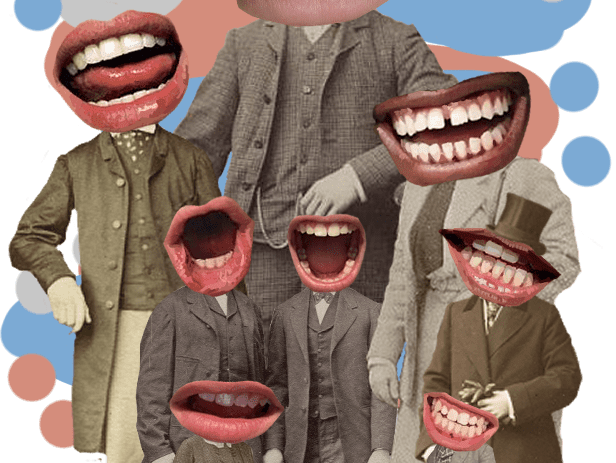
We’re all watching each other pretend: How students curate their lives across LinkedIn, Instagram, and TikTok and what the edit reveals as much as the post
It begins, as so much does, with the thumb. A slow Sunday morning, phone face-up on the duvet, and the scroll begins almost before the eyes are properly open. Within two minutes, you have seen someone’s placement offer, someone else’s Rome holiday, a TikTok of a student’s morning routine that begins at 5:47 am and involves a French press, a resistance band, and 30 minutes of journalling. It is 10:15 am, and you have not yet brushed your teeth. The day feels, quietly and absurdly, already lost.
Nobody announces that they’re doing this to you. That’s what makes it so hard to push back against. It’s not a bad day you can point to, just a slow, ambient sense that everyone else is further along. For students navigating early adulthood in near-constant view of each other, this is not a peripheral experience. It is close to a defining one. The question is not whether social media shapes how we understand our own progress and worth – it plainly does – but how, and at what cost, and whether we have even begun to reckon honestly with either.
There were no LinkedIn posts at 20. There were no personal brands. There was just your life, mostly unobserved
Walk through the main platforms that structure student life online, and a clear pattern emerges: each one has developed its own language of aspiration, and students have become fluent in all of them – often posting differently on each to serve a different version of themselves. LinkedIn is the career-facing self: purposeful, polished, written – as one second-year law student put it – “like a cover letter that’s pretending to be casual.” It is where the internship is announced, where the conference attendance becomes a post about leadership, where adversity is repackaged, with neat retrospective clarity, into a lesson. The platform, once considered stiff and corporate, has become increasingly saturated with younger users performing professional identity–sharing. “I’m excited to announce” posts with a fervour that would strike their parents as completely alien. There were no LinkedIn posts at 20. There were no personal brands. There was just your life, mostly unobserved.
Where LinkedIn demands you demonstrate your trajectory, Instagram demands you demonstrate your life. The resulting feed is curated to within an inch of itself: the candid that took eight attempts, the study setup with the candle positioned just so, the street in a city made golden by the right filter at the right hour
Instagram operates on a softer register but with the same underlying machinery. Where LinkedIn demands you demonstrate your trajectory, Instagram demands you demonstrate your life. The resulting feed is curated to within an inch of itself: the candid that took eight attempts, the study setup with the candle positioned just so, the street in a city made golden by the right filter at the right hour. The point is less to document life as it happens than to present a version of life that confirms you are thriving. Proof, addressed to no one in particular and everyone at once, that things are going well.
TikTok complicates this picture, but only slightly. Its grammar of authenticity – the slightly shaky camera, the self-deprecating caption, the confessional tone – is itself a performance. ‘Soft life’ aesthetics, ‘that girl’ routines, and the endless proliferation of ‘study with me’ videos create their own aspirational standards. The informality is real; the pressure it generates is no less so. What all three platforms share is the mechanism of the edit. Not simply the photo filter or the drafted caption, but something more fundamental: the selection of what enters the frame and what remains outside it.
Ask a student what they post, and the answer comes quickly. Ask what they do not post, and there is often a pause. “I posted about my internship on LinkedIn before I’d even told most of my friends in person,” says one final-year student studying law. “But when I had a really bad mental health month in the second year, nothing. That didn’t go anywhere.” This asymmetry is almost universal. The gap year that was actually a period of directionlessness, the first-class mark posted without mentioning the three resits that preceded it, the friendship group photo from the night out, and silence about the argument beforehand. All of it quietly existed. What remains is a life in which things go well, consistently and photogenically, and progress, if occasionally hard-won, is always consistent and eventually secured. The journey is tidy. The destination is always in sight.
Everyone is struggling in private and succeeding in public, and the gap between the two has started to feel, for a lot of people, like personal failure
The cruelty of it is that no one is being malicious. It is just that a thousand small edits, each one reasonable, each one just putting your best foot forward, add up to a world that doesn’t exist. Everyone is struggling in private and succeeding in public, and the gap between the two has started to feel, for a lot of people, like personal failure. “I know logically that people aren’t posting their bad days,” says a third-year psychology student. “But emotionally, when I’m having one myself, that knowledge doesn’t really help.
By the final year, the accumulation of others’ visible milestones can make ordinary progress feel like stagnation
The word students return to, again and again, is narrative. There is a felt pressure not merely to share achievements but to maintain a coherent story across platforms – one in which each post connects to the last, in which the personal brand remains consistent and progress visible. This is particularly acute on LinkedIn, where the expectation of professional development creates an implicit timeline. Starting university, people begin to clock the announcements of others: the early internship, the society presidency, the summer research programme. By the final year, the accumulation of others’ visible milestones can make ordinary progress feel like stagnation.
“It’s not that I think I’m failing,” says a second-year engineer. “It’s more than I can tell if I’m on track because I’ve got nothing to compare it to except what people are posting. And people only post wins.” This is one of social media’s most corrosive and least discussed effects: it generates comparison, and it corrupts the benchmarks by which we compare. The reference point drifts silently upward. Progress that would once have felt real and sufficient now arrives with a low-grade anxiety attached: Is this enough to post? And if it isn’t yet worth posting – if it isn’t yet legible as an achievement – does that mean it isn’t yet real? The answer, of course, is no. But that answer is very hard to hold onto at 10 pm on a Tuesday when someone from your seminar has just announced their graduate scheme.
Not everyone is playing. Some stepped back gradually, others all at once, most without making any announcement about it – which is, when you think about it, exactly the point. “I deleted LinkedIn for six months in the third year,” one recent graduate recalls. “Every time I opened it, I felt behind. I’d see someone from my course announce a graduate scheme, and my stomach would just drop. It wasn’t their fault. It was the platform.”
Others stay on the platforms but go silent within them – watching without contributing, present without being legible. This is its own strange discomfort. Visibility and progress have become so entangled that to opt out of one can feel like admitting the absence of the other. You aren’t posting because you’re failing. Except you’re not failing. But try telling your nervous system that at midnight, scrolling through someone else’s highlight reel while your own feed sits empty. “I don’t want to perform my degree,” one student tells me.
It could be argued that exposure to peers’ achievements can sharpen focus and ambition. Conversely, many find that it undermines self-control, increases anxiety, and quietly corrodes confidence
The question of whether social media motivates students or diminishes them is unlikely to have a single answer, and the research reflects this ambiguity. It could be argued that exposure to peers’ achievements can sharpen focus and ambition. Conversely, many find that it undermines self-control, increases anxiety, and quietly corrodes confidence. Both can be true, for different people, in different moments, on different days.
What seems clearer is that the platforms themselves do not distinguish between these effects. They are not designed to. They are designed for engagement – and comparison, it turns out, is one of the most potent engines of engagement that exists. What this means for students navigating their early adult lives in near-constant view of each other is that the question is no longer simply what to share, but how to remain in a relationship with these platforms that does not slowly rewrite how you understand your own progress, worth, or pace. The post you did not make – the ordinary Tuesday, the stalled draft, the afternoon you spent doing very little of significance – is not evidence of failure. It is simply evidence of a life, unedited. Most of them look exactly like that.
Comments