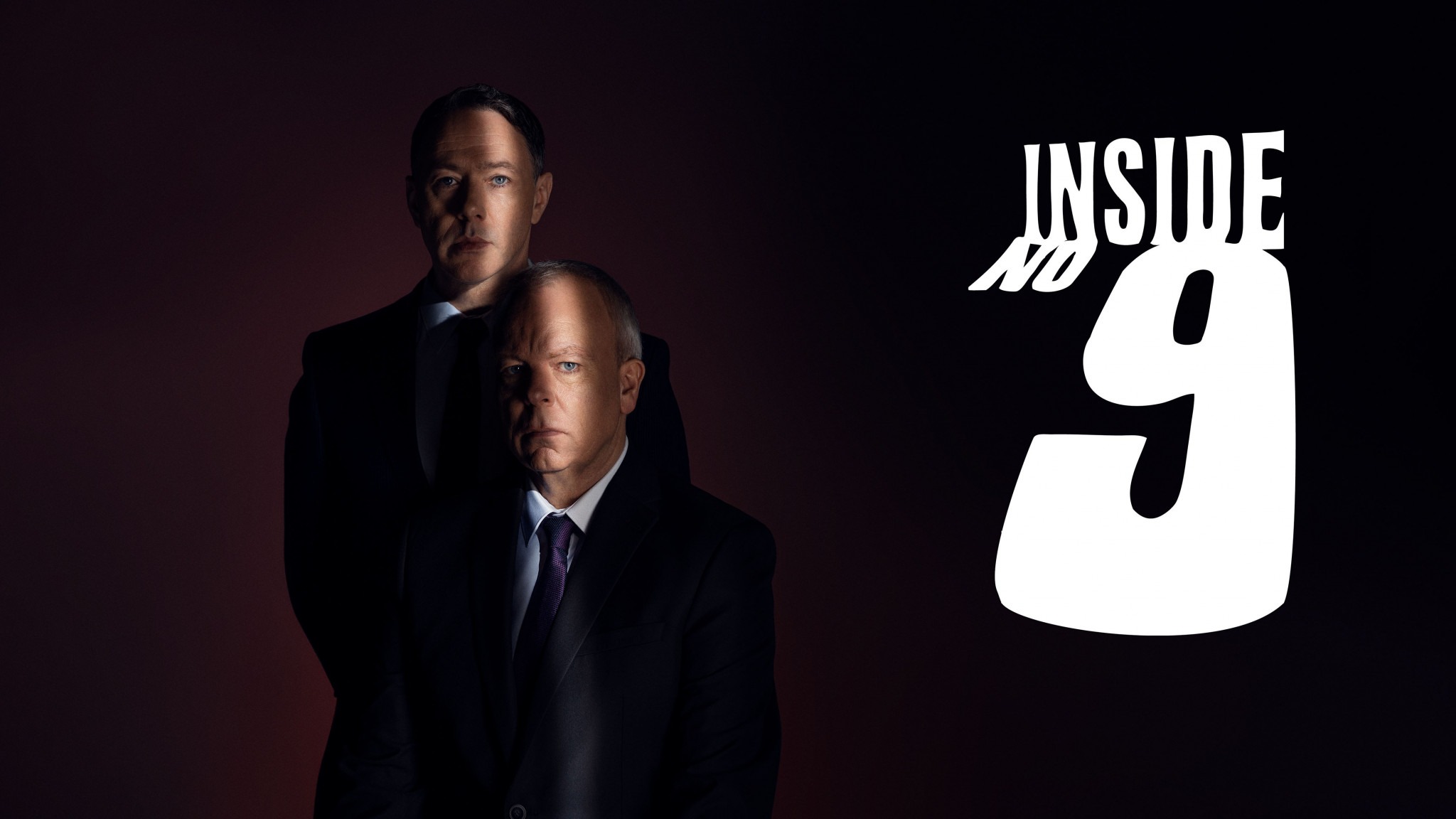
Weird Britannia: Inside No.9 and the burden of the past
A while ago, in January, I wrote about the significance of the 1970s in The League of Gentlemen. In that series, the past – most prominently the seventies – exists alongside the present. It is therefore inescapable.
As the creators of The League of Gentlemen moved on, two of them, Reece Shearsmith and Steve Pemberton, would continue writing together, eventually finding their way to their own anthology series, Inside no. 9.
In short, the past is portrayed as something of a burden
Inside no. 9, despite its anthology format, is also heavily pre-occupied with the past, just like its spiritual predecessor. Moreover, the way in which it uses the past is sophisticated: despite the conceit of self-contained episodes confined to a specific place and time, episodes are dragged down by past events that confine their characters to an endless cycle of repeated occurrences. In short, the past is portrayed as something of a burden.
The series’ first episode, ‘Sardines’, establishes Inside no. 9’s relationship with the past: the premise of a group of adults playing the children’s game of ‘sardines’ in of itself creates the impression of arrested development. The character of Rebecca, whose engagement party it is, seemingly requested the game due to her fondness for it growing up.
However, as is later revealed, there’s more to the repetition of childhood games than pure nostalgia. The significance of ‘sardines’ for the characters, Carl, John, and Ian/Pip is far darker, carrying with it associations with historic abuse at the hand of the family patriarch, Carl and Rebecca’s father.
The confinement of the episode to this singular game henceforth exposes the underlying darkness beneath the surface.
Even some of the comedic ones have their darker aspects
As the title card suggests, the overarching theme that ties all of Inside no. 9’s episodes together is the idea of opening a door into dark and shadowy corners. Whilst this may not uniformly apply to all episodes, even some of the comedic ones have their darker aspects.
This sense of darkness has been left festering over the years until each individual episode peels it back. The episode ‘To have and to hold’ is a classic example of this.
The episode recounts the seemingly mundane marital troubles of couple, Adrian and Harriet. Their issues are initially presented as a result of years living together. However, it is more so a singular off-screen event that has had far more impact on their relationship, whether they are aware of it or not.
In a narrative adjacent to the real-life story of Josef Fritzl, the revelation that Adrian has kept a former cleaner and their child locked away in their cellar is chilling. Nevertheless, it also acts as a more literal representation of the past being ever-present, as with the lost years of the cleaner or Adrian’s fixated control over her.
Just as Adrian keeps the past prisoner, other characters are incapable of letting go as well. In ‘Diddle diddle dumpling’, the death of a twin becomes an obsession for a grieving father. The idea of a missing shoe becomes all too much to bear and leads to a very dark place, all coloured by the loss of one child.
The series is exhausted by instances of lives continually haunted by the past, unable to escape
For other characters, the past catches up to them. The ghost of a dead child in ‘séance time’ comes back to haunt a cruel tv presenter; in the live Halloween special, the ghosts of the very real Granada studios appeared to ward the programme off their territory; in ‘How do you plead?’ the Devil himself comes back to fetch Webster as part of an earlier deal.
In the same episode, Webster’s nurse, Urban, also finds himself unable to escape his past actions and, just as much, he is made well aware that the Devil will be back for him one day come the episode’s end.
The series is exhausted by instances of lives continually haunted by the past, unable to escape.
There is one exception to the rule however…
‘Wise Owl’ reproduces the underlying darkness of an entire decade in Britain
The episode ‘Wise Owl’ plays out much the same as other episodes for the most part. Main character, Ronnie, returns to his father’s home, evidently bearing the weight of past trauma. Frequent cuts away to the ‘Wise Owl’ public information films (great renditions of the types of films produced by the Central Office of Information in the 1970s) are later revealed to reflect Ronnie’s dependence on his father, who played the titular ‘Wise Owl’.
Even so, they also reflect his general man-child status.
Akin to other characters from the series, Ronnie appears trapped in time but also out of time, a relic of the 1970s. He lives as a manifestation of the old ‘Wise Owl’ films but paradoxically despite his admiration of ‘Wise Owl’ it is his relationship with his father that is the source of his trauma: his negligence that led to the death of Ronnie’s sister and his abuse of Ronnie have kept Ronnie in this perpetual state.
Like The League of Gentlemen then, ‘Wise Owl’ reproduces the underlying darkness of an entire decade in Britain – one that still serves as a point of national trauma.
However, whereas Royston Vasey is lost to this world, Ronnie flips the script: he rejects his father’s advances and realises it was he who was in the wrong. He abandons his trust in ‘Wise Owl’ and in turn he leaves that world behind.
In accepting and recognising the past therefore, he can finally move forward. Doing so ourselves, we too can leave the past behind and look toward a brighter future.
Comments (2)
great read, inside n9 is my favourite series of all time !
This is an excellent and perceptive look at this astonishing series. You really bring out this theme in the series
Also worth noting how Merrily Merrily explores how three university friends have drifted apart over 30 years but that there is still a.bond between them and how Bernie Clifton’s Dressing Room not only explores the complex impact of 1970s comedy but the deep psychological impact of that a breach of a close friendship has in two men over decades.