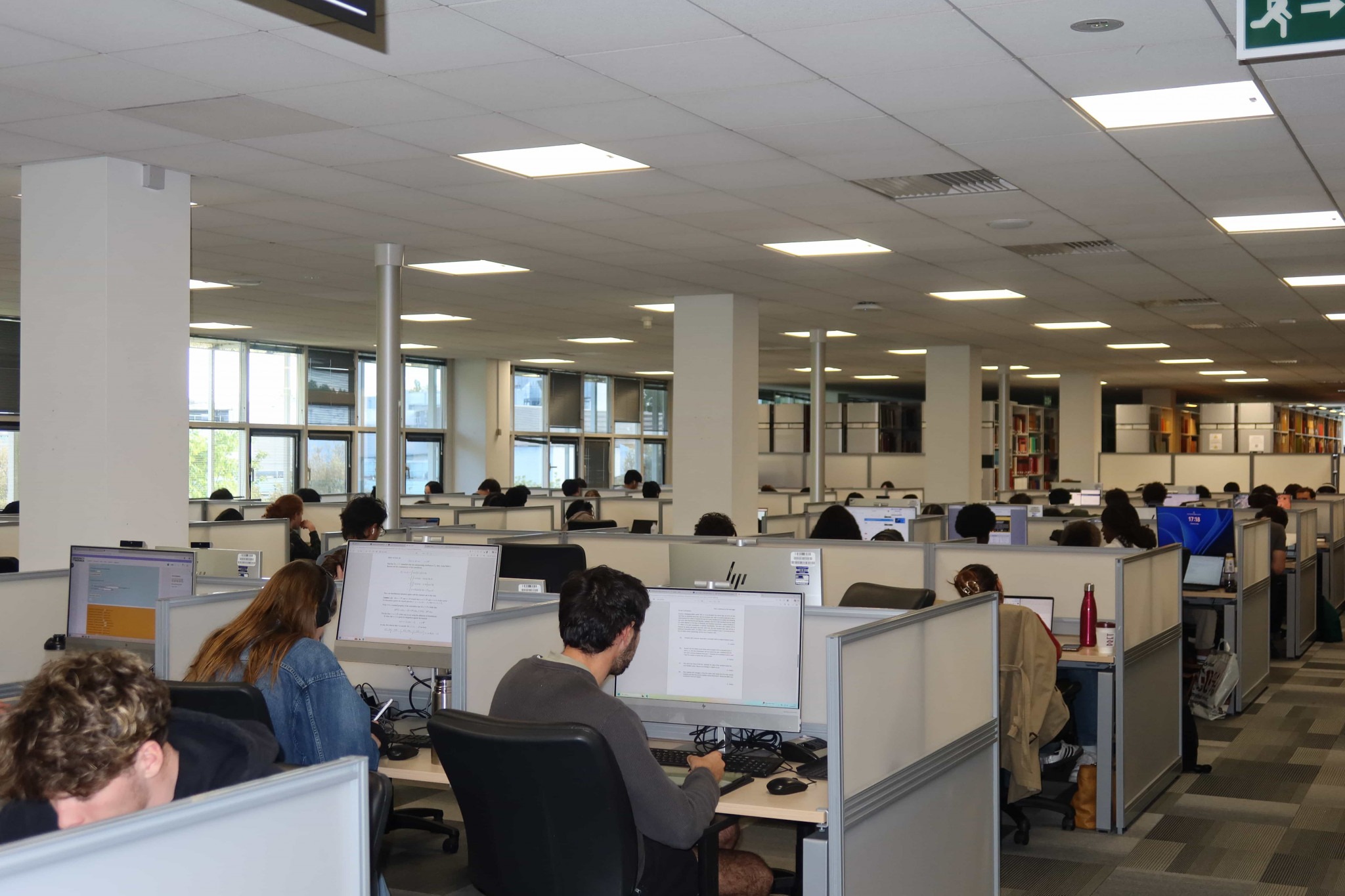
Growing pains: Warwick staff warn of overcrowding as student intake surges
Higher-than-anticipated undergraduate enrolments are placing mounting pressure on teaching space and timetabling at the University of Warwick, leading staff to warn of risks to the student experience.
Departments “accepted teaching in undersized rooms” during the current academic year
Departments “accepted teaching in undersized rooms” during the current academic year, according to meeting minutes seen by The Boar, which also warn that “a similar student number increase in 26/27 would cause major issues for teaching space”.
Already academics are fearing that the rises in numbers could cause overcrowded classrooms, later teaching slots, and knock-on effects for exams.
For many, the “strain” on space is already visible.
Individuals were left sitting on the steps of a lecture theatre in the Zeeman building during a geometry module with all the seats being occupied, according to one Maths and Physics Student.
Over in the library spaces have also been difficult to come by, with a second year telling The Boar that during exam season they have struggled to find a seat for themselves, let alone two seats next to each other which would allow them to study with a course mate.
In May 2025, staff described the “potential for over-recruitment”
In response to growing pressure on facilities, the use of Wednesday afternoons, which are typically reserved for sport, for teaching has been discussed. This suggestion highlights the effects that expanding numbers could have on the wider student experience.
It has also been suggested that “potential support’ in resolving ‘teaching space issues” could come from the Arts Centre next year.
Speaking on this, the University told The Boar that “like many universities with vibrant in-person teaching and student life, levels of activity can vary throughout the day and academic year”. Therefore, it continues “to monitor usage and refine timetabling and space planning to improve the overall experience”.
The scale of the increase in undergraduate (UG) enrolments, cited as contributing to these problems of space, is significant.
In May 2025, staff described the “potential for over-recruitment”, and by June the University projected it would exceed intake targets and was expecting nearly 1,200 more students than the previous academic year. This came after earlier guidance that urged departments to “take more students”, according to documents reviewed by The Boar.
Accommodation capacity was stretched to the point that 628 first years were ultimately housed off campus this year
This growth has also made its mark elsewhere.
Accommodation capacity was stretched to the point that 628 first years were ultimately housed off campus in partner provider blocks this year. There is no record of this having happened at the University before.
Beyond these immediate pressures, internal discussions have spotlighted concerns about how the University will manage continued growth in student intake without compromising teaching quality.
The “pedagogical approach” taken by Warwick has been mentioned, as has the need for conversations with departments “about the risk of over teaching”, suggesting that the number of contact hours could be reconsidered for future cohorts if student numbers continue to rise.
It is not only the standard of teaching that is emphasised, but also the academic standard of students that are offered places at Warwick.
“There are challenges…as [we] want to maintain a level of student quality”, the minutes state.
Staff warned that such growthcould “create a resource issue”
The University manages enrolment “to ensure academic standards and student experience remain high,” it told The Boar.
A spokesperson confirmed that the institution “continues to see strong demand from prospective students, reflecting both the quality of our teaching and the value of the wider student experience”.
With the goal of maintaining “student quality” in mind, some departments are being viewed as better placed to absorb future growth.
Law and Politics, Philosophy, and Economics (PPE) have been identified as courses that could potentially expand “without decreasing on quality of intake” due to the “volume and standard of applicants”. Yet even then staff warned that such growthcould “create a resource issue”.
Resources are already under pressure across the University, particularly in terms of staffing. Documents warn that rising student numbers could push student-staff ratios (SSR) beyond the recommended limits.
The current SSR sets a maximum of 20 students per member of staff as its target.
The University told The Boar that it is “committed to ensuring that students have appropriate access to academic staff and support throughout their studies”
As this threshold begun being strained last February, the University approved the hiring of two additional full-time teaching staff on one-year fixed-term contracts.
Although, internal discussions suggest that longer-term recruitment may soon become unavoidable, with the possibility that fixed-term teaching fellow roles will have to be converted into long-term posts.
“Student-staff ratios are regularly reviewed across departments,” according to the University, who told The Boar that it is “committed to ensuring that students have appropriate access to academic staff and support throughout their studies”.
“Decisions on student numbers are carefully considered each year, balancing demand, student experience, capacity, and the long-term sustainability of our programmes,” the spokesperson added.
While the University aims to ensure that its departments can “deliver a high-quality educational experience”, concerns over growing pressures on resources remain.
Comments